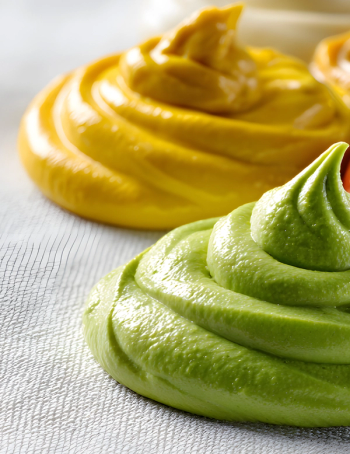
Gas chromatography–mass spectrometry (GC–MS) and ion chromatography profile wasabi and mustard heat and acidity.
Linear? Branched? Rings? What molecular architecture do my polymers have? How can I apply SEC for my analysis? Why is this of practical importance? Live Tuesday, Jul. 30, 2019 at 11am EDT | 8am PDT | 4pm BST | 5pm CEST On demand available after airing until Jul. 30, 2020 Register free
Register free:
Event Overview:
This webcast will discuss the analysis of polymer architectures-including linear random coil, branched (star, random, hyperbranched), and ring structures-using high-resolution, multi-detector size-exclusion chromatography (SEC). Multi-detector SEC combines macromolecular separation by SEC with online multi-angle light scattering (MALS), differential refractometry (dRI), ultraviolet (UV) absorbance, differential viscosity and quasi-elastic light scattering (QELS, a.k.a. dynamic light scattering, DLS). The rich data afforded by this system provides detailed characterization of polymer molecular structure and composition.
Key Learning Objectives
Speaker: Judit E. Puskas, Ph. D, PE., Ohio State University (OSU)
Time and Date: Tuesday, Jul. 30, 2019 at 11am EDT | 8am PDT | 4pm BST | 5pm CEST
On demand available after airing until Jul. 30, 2020
Sponsor: Wyatt Technology Corp
Register free: