News|Articles|October 21, 2026
UHPLC-HRMS Screens Alkaloids in Cereals and Spices
Author(s)Michele Suman, John Chasse
A QuEChERS/ultrahigh-performance liquid chromatography and high-resolution mass spectrometry (UHPLC-HRMS) method tracks 23 plant toxins in cereals and spices. Michele Suman discusses the method with LCGC International.
Advertisement
Advertisement
Alkaloids are natural nitrogen-containing chemicals made by plants. Many people assume that natural means safe, but some alkaloids are highly toxic and have caused poisonings. They can end up in food and animal feed when toxic weeds or their seeds are accidentally harvested along with crops. As more people eat plant-based foods, food safety authorities have grown increasingly concerned about this risk.

Related to this article

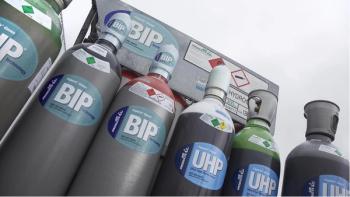
Ultra-high purity BIP® cylinders aim to give analytical laboratories cleaner baselines and lower detection limits

Polymer sorbent and dual microextraction boost gas chromatography with flame ionization detection (GC-FID) pesticide analysis.

Untargeted liquid chromatography–mass spectrometry (LC–MS) ties job stress in workers to plasma lipid changes.

Ultrahigh-pressure liquid chromatography–quadrupole time-of-flight mass spectrometry (UHPLC–QTOF MS) shows diet shapes honeybee metabolic responses to heat.

Sebastian Böcker discusses taking retention prediction beyond reversed-phase to HILIC, what changes elution order in method transfer, and sharing data via RepoRT.

Mariosimone Zoccali discusses the use of low-pressure gas chromatography-tandem mass spectrometry (LPGC-MS/MS) with a wide-bore chiral column to separate 107 pesticides in wine.
Advertisement
Advertisement