
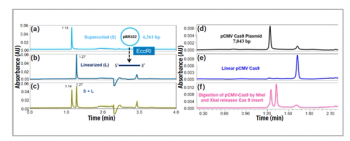
Slalom chromatography speeds mRNA QC—separating plasmid forms and spotting dsRNA impurities in minutes with higher sensitivity than gels or ELISA.
Balasubrahmanyam Addepalli is a Scientist Director at Waters Corporation (Milford, USA).
Slalom chromatography speeds mRNA QC—separating plasmid forms and spotting dsRNA impurities in minutes with higher sensitivity than gels or ELISA.
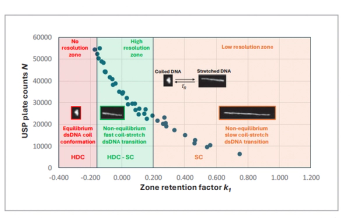
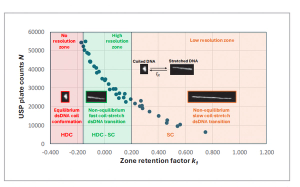
Part 1 of this two-part article series reviews the history of slalom chromatography (SC), the rationale for its recent revival, and the updated mechanistic framework of this technique. Rooted in the fundamental physical properties of deoxyribonucleic acid/ribonucleic acid (DNA/RNA) biopolymers and laminar flow dynamics in packed chromatographic beds, SC is highlighted for its most promising applications in cell and gene therapy. Recent two-year experimental investigations have revealed that SC operates through an out‑of‑equilibrium mechanism, coupling the entropic elasticity of double‑stranded deoxyribonucleic acid/ribonucleic acid (dsDNA/RNA) with the extension and shear forces generated within the interparticle spaces of ultrahigh-pressure liquid chromatography (UHPLC) columns. In contrast to gel permeation chromatography (GPC) or hydrodynamic chromatography (HDC), SC functions at high speed and uniquely elutes smaller dsDNA fragments first, followed by progressively larger ones. Unlike agarose gel electrophoresis (AGE), SC achieves separations of large DNAs in less than three minutes, with nearly twice the resolution power of typical AGE. These findings paved the way for the recent design of a new SC column intended for use in cell and gene therapy as an alternative to standard AGE. Further applications of this new SC column within cell and gene therapy workflows will be discussed in Part 2.
Hydrophilic interaction liquid chromatography (HILIC) has emerged as a promising alternative to traditional ion-pair reversed phase liquid chromatography (IP-RPLC) methods for separating oligonucleotides (ON). This work investigates the application of HILIC to the separation of ON sequence and length variants, duplexes, and single-stranded components.
New gene therapy modalities, such as CRISPR guide RNA (single guide ribonucleic acid [sgRNA]) and messenger RNA (mRNA), continue to make progress in both primate and first-in-human trials. As this progress builds, the industry remains accountable for characterizing these molecules to meet the requirements of regulatory authorities.
Published: April 6th 2026 | Updated: April 7th 2026
Published: April 6th 2026 | Updated: April 7th 2026


