
Summary: A preview of 2026 separation science trends, from PFAS and SFC to metabolomics, next-generation HPLC columns, oligonucleotides, and ADC analysis.

Bingchuan Wei is a senior principal scientist from Genentech Inc, a member of Roche Group. He is a scientific leader with nearly 15 years of experience in the analytical and CMC development of different modalities of therapeutics including small molecules, oligonucleotides, peptides, monoclonal antibodies, antibody-drug conjugates, and cell therapies. His research focuses on developing and leveraging advanced analytical technologies in drug development, understanding the structural-functional relationship of therapeutics, and fostering entrepreneurial spirit in the biopharmaceutical industry. He holds a Ph.D in analytical chemistry from Purdue University, a master of business administration from The Pennsylvania State University, and a B.S. in chemistry and mathematics from Peking University.
Summary: A preview of 2026 separation science trends, from PFAS and SFC to metabolomics, next-generation HPLC columns, oligonucleotides, and ADC analysis.
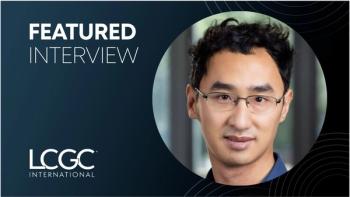
Bingchuan Wei describes how to cultivate a culture of innovation and calculated risk-taking while operating within the compliance demands of biopharmaceutical drug development.
Bingchuan Wei shares practical guidance for early-career scientists seeking to transition into industry drug development across diverse therapeutic modalities.
Bingchuan Wei reflects on how to connect high-level patient and medical goals to the highly technical analytical tools required to meaningfully support ADC drug development decisions.
Bingchuan Wei discusses how robust ADC characterization strategies meet regulatory expectations and how stronger methodologies can accelerate candidate selection to clinical approval.
Bingchuan Wei identifies the toughest unresolved analytical challenges in ADC development and highlights the emerging technologies he sees as most capable of closing those gaps.
Bingchuan Wei of Genentech explains how HIC-MS integrates separation and mass detection to resolve and quantify individual DAR species with greater precision than standalone HIC or MS alone.

LCGC North America
Professor Mary Wirth and graduate students Bingchuan Wei and Benjamin Rogers from Purdue University demonstrate a quantum leap in protein column efficiency. Using colloidal silica particles of submicrometer diameters (470 nm), they obtained plate heights that were as much as 15-fold lower than the theoretical limit for Hagen-Poiseuille flow.
May 20th 2026
May 26th 2026
May 28th 2026
May 27th 2026
May 19th 2026
