

Marinella Vitulli calls formal cross-laboratory proficiency testing, not better detection technology, the field's biggest gap in NIAS analysis.

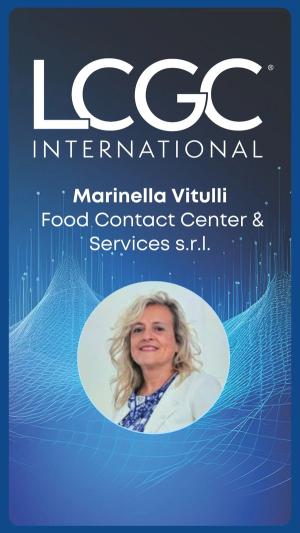
Maria Filomena Antonella Vitulli holds a degree in pharmaceutical chemistry and technology from the University of Pisa and is a nationally and internationally recognized expert in materials and articles intended to come into contact with food (MOCA). With over 25 years of experience, she has held leadership roles in Italian and multinational companies, focusing on analysis, consultancy, and regulatory compliance in the environmental, food and consumer goods sectors, with a strong specialization in packaging. In 2016 she founded Food Contact Center S.r.l., a laboratory specialized in the testing and analysis of food contact materials. In 2022 she established Food Contact Services S.r.l., a company dedicated to technical and regulatory consulting. She is an active member of the Order of Chemists and of AIBO Food Contact Expert and regularly participates in technical committees (ILSI Europe, ISS, Frep), conferences and university lectures both in Italy and abroad. She has extensive experience managing ISO 17025-accredited laboratories, developing analytical methods, ensuring food safety and conducting GMP inspections, Author of several scientific publications and a frequent speaker at international conferences, she is recognized for her technical expertise and innovative approach in the field of FCM and food safety.
Marinella Vitulli calls formal cross-laboratory proficiency testing, not better detection technology, the field's biggest gap in NIAS analysis.
Ruling out false-positive NIAS annotations using triplicate testing and matched oven blanks rather than spectral criteria alone.
Ranking non-intentionally added substance (NIAS) risk by consumer exposure and packaging use-case, not by hazard data alone.
Marinella Vitulli finds concentrated extracts reveal a broader contaminant profile than simulant migration tests, but filtration risks introducing cross-contamination.
The identification-confidence framework used to rank suspect and non-intentionally added substance (NIAS) detections is discussed.
Marinella Vitulli explains how her lab prioritizes and updates its PFAS and bisphenol screening libraries as new analogues emerge.

August 12th 2026
July 29th 2026
July 27th 2026
Published: August 18th 2026 | Updated: August 18th 2026