Articles by M.J. Ruiz Ángel
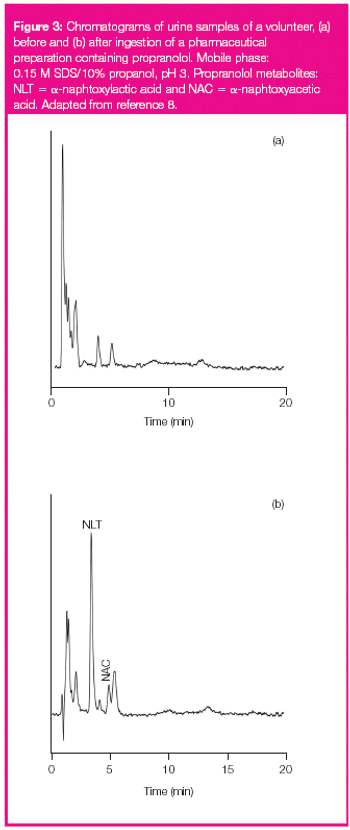
Micellar liquid chromatography (MLC) is a reversed-phase liquid chromatographic mode with a solution of surfactant forming micelles as the mobile phase. The interaction of solutes with the stationary phase coated with surfactant monomers, combined with the increased solubilization capability of micelles, have profound implications with regard to retention, selectivity and efficiency. Practical steps that a chromatographer involved in MLC should consider when developing an analytical procedure are described, including mobile phase preparation, column conditioning and cleaning.
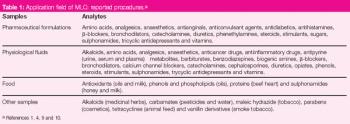
Micellar liquid chromatography (MLC) is a reversed-phase liquid chromatographic mode with a solution of surfactant forming micelles as the mobile phase. The interaction of solutes with the stationary phase coated with surfactant monomers, combined with the increased solubilization capability of micelles, have profound implications with regard to retention, selectivity and efficiency. Practical steps that a chromatographer involved in MLC should consider when developing an analytical procedure are described, including mobile phase preparation, column conditioning and cleaning.
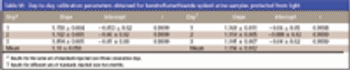
A simple HPLC procedure is described for the determination of bendroflumethiazide (BMFT) in pharmaceutical formulations and urine samples. No interferences from common additives or other drugs frequently administered with BMFT or from endogenous compounds in urine samples were found. The lack of an organic solvent in the mobile phase reduces the risk of environmental contamination and human toxicity.

In this article, the authors present a simple high performance liquid chromatographic procedure for the determination of bendroflumethiazide (BFMT) in pharmaceutical formulations and urine samples. They demonstrate how the lack of an organic solvent in the mobile phase reduces the risk of environmental contamination and human toxicity.