Testing Plastic Packaging for PFAS Without SPE: A Fast, Cost-Effective Direct Shoot LC-MS/MS Method on the QSight® 500 System That Meets Regulatory Requirements
PFAS rules now reach the packaging itself. Under the EU Packaging and Packaging Waste Regulation, food contact packaging containing 25 ng/g or more of any individual PFAS cannot be placed on the market, so labs need targeted data at production volume. This application note shows a Direct Shoot LC-MS/MS method on the PerkinElmer QSight 500 system that quantifies 26 PFAS in food packaging bottles, pharmaceutical packaging bottles and packaged drinking water. It uses a simple methanol extraction and no SPE cleanup. Calibration runs from 0.05 to 25 ng/g, with recoveries predominantly within 70 to 130%.
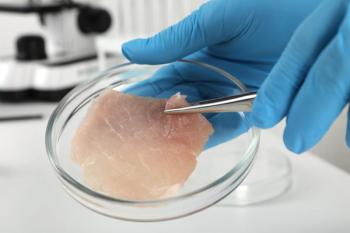
Optimized preparation and data-independent acquisition (DIA) liquid chromatography–mass spectrometry (LC-MS) detect up to 6500 proteins in laboratory-grown duck.
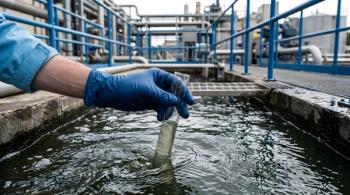
Directive (EU) 2024/3019 makes drug manufacturers financially responsible for removing pharmaceutical residues from wastewater and introduces stricter, standardized monitoring requirements that are set to increase demand for trace-level analytical expertise.
AOA Dx Chief Scientific Officer Abby McElhinny discusses with LCGC International how the company used high-resolution mass spectrometry-based multi-omics to develop Omira OC, a targeted blood test for early ovarian cancer detection, and how its lipid-based approach is showing promise across endometrial, cervical, and other cancers.
In this final part of " Conversations with Michael Dong," a series on fundamentals of HPLC in pharmaceutical analysis, LCGC International’s "Perspectives in HPLC" column editor presents a case study of a high-pH separation.
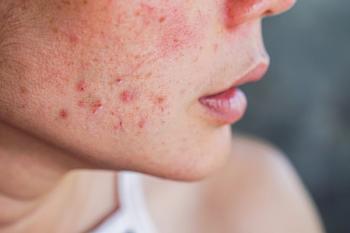
Ultrahigh-pressure liquid chromatography–quadrupole time-of-flight mass spectrometry (UHPLC–QTOF-MS) reveals lipid shifts in acne-prone oily skin of young women.
This week, Chromatography Online.com covered the looming chromatography expertise gap, HPLC myths, steroid and biopharmaceutical separations, AI in the laboratory, and new sample extraction tools.