


LCGC North America
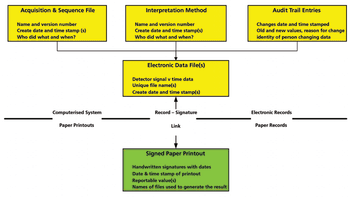
The meaning of the terms raw data and complete data are explored. One term is from EU GMPs and the other is from US GMPs. Do they mean the same thing?
Bob McDowall is director at R. D. McDowall Ltd, Bromley, Kent, UK. A company involved in process redesign, the specification, implementation and validation of computerized systems, laboratory digitalization, data integrity assessment and remediation, training in these areas and auditing regulated organizations in the pharmaceutical and allied industries. He is also a member of the LCGC International Editorial Advisory Board (EAB).
LCGC North America
The meaning of the terms raw data and complete data are explored. One term is from EU GMPs and the other is from US GMPs. Do they mean the same thing?
LCGC North America
A hybrid system is the worst possible choice for managing your regulated data.

LCGC North America
Data integrity is paramount when working in a regulated environment. Data process mapping is an excellent way to identify and mitigate data gaps and record vulnerabilities in a chromatographic process. This approach is simple and practical.

LCGC Europe
This is the final part of a trilogy looking at the impact of the new USP on analytical instrument qualification (AIQ) on data integrity in a regulated chromatography laboratory. This part will focus on the performance qualification (PQ) portion of the 4Qs model and, specifically, monitoring and requalification of chromatographs.
LCGC North America
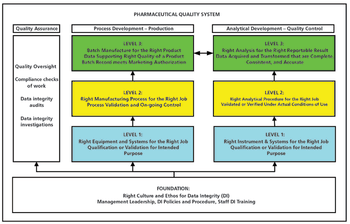
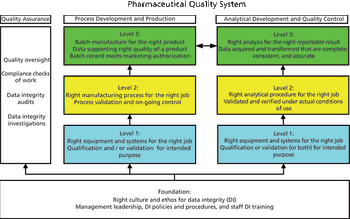
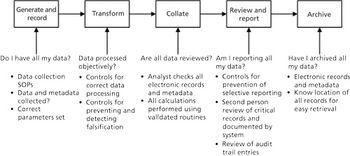
There are many factors to consider in a data integrity and governance program. Fortunately, a simple diagram can help us understand what needs to be covered.
LCGC North America
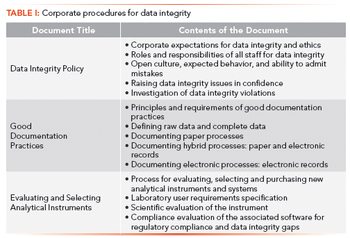
The final part of the series discusses the importance of an open culture, training, and monitoring metrics in the establishment and support of a regulated laboratory.

LCGC Europe
This is the second of three articles looking at the impact of the new United States Pharmacopeia (USP) on analytical instrument qualification (AIQ) on data integrity in a regulated chromatography laboratory. This part focuses on how the laboratory should supervise the execution of operational qualification (OQ) protocols by a third-party service provider. The principles described also apply to in-house metrology departments.
LCGC North America
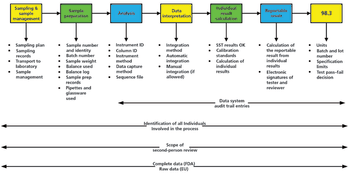
The series continues with a crucial scientific and regulatory necessity in ensuring reliable information-the second-person review.

LCGC Europe
This is the first of three articles looking at the impact of the new United States Pharmacopeia (USP) chapter on Analytical Instrument Qualification (AIQ) on data integrity in a regulated chromatography labora-tory. In part 1, user specifications for chromatography systems and the relationship between users and sup-pliers will be discussed.

LCGC North America
You need to ensure that your calculations of reportable results don’t get you into data integrity trouble. Here’s how.
LCGC North America
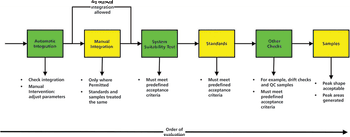
Integration is the heart of the chromatographic process and is subject to regulatory scrutiny. What should be done to control integration and interpretation of the chromatographic runs?
LCGC North America
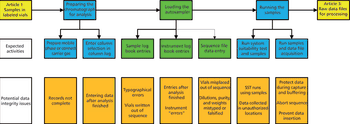
Part II of this series on practical perspectives on data integrity focuses on instrument setup, system suitability test samples, and data acquisition.

LCGC Europe
The United States Pharmacopeia general chapter on Analytical Instrument Qualification has been updated and became effective 1 August 2017. So, what has changed?
LCGC North America
Part I of this series on practical perspectives of data integrity focuses on sample management, transport, and preparation.

LCGC Europe
The authors discuss metrics for monitoring data integrity within a chromatography laboratory, from the regulatory requirements to practical implementation.

LCGC E-Books

LCGC Europe
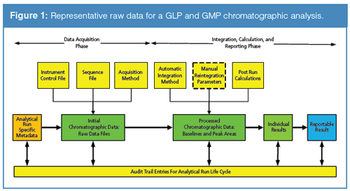
Raw data is a term that is used in both good manufacturing practice (GMP) and good laboratory practice (GLP) laboratories but it can create misunderstanding. What exactly does raw data mean and what electronic records are within the scope of the term?

LCGC Europe
One of the common threads in the six data integrity guidance documents published to date is the need to control any blank forms used in regulated GXP laboratories. This month’s “Questions of Quality” is focused on how to interpret the regulator’s requirements for this topic. We also pose the question: Is paper the best way to record regulated data?

LCGC Europe
In the world of data integrity, the focus is typically on the data and the numbers. How can technology, such as a laboratory information management system (LIMS), help to ensure data integrity?

LCGC North America
The first three articles in this series discussed where and how a CDS fits into a regulated laboratory, the overall requirements for the architecture of a future system, and additional items to enable effective electronic ways of working. The final part of this series looks at regulatory compliance of a future system as well as a summary of the 15 recommendations made in this series.

LCGC Europe
Data integrity issues are changing the way that we should be undertaking computerized system validation (CSV) of our chromatography data systems (CDSs). Do you understand what is required in the brave new world of CSV?

LCGC North America
In the first two parts of this series we have looked at where and how a CDS fitted into a regulated laboratory and the overall requirements for the architecture of a future system. In this part we focus on new electronic ways of working for chromatographic analysis.

LCGC Europe
Primary record is a term that was defined by the MHRA (Medicines and Healthcare products Regulatory Agency, the UK drug regulator) in data integrity guidance issued in 2015. In this instalment of Questions of Quality we explore what this term means in practice, and compare it with raw data in the European Union Good Manufacturing Practices (EU GMPs) and complete data in US Food and Drug Administration (FDA) GMPs. Why can’t we have harmonization of terms?
LCGC North America
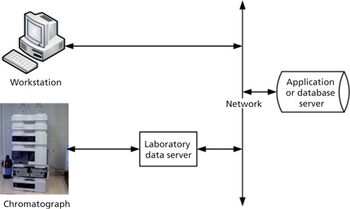
Here in the second part of this series, the key system architecture requirements for a CDS in a regulated environment are discussed.

LCGC North America
This is the first of a four part series looking at what functions and features the authors believe should be in a future chromatography data system (CDS) working within a regulated analytical laboratory. The first part of this series is aimed at setting the scene of where and how a CDS fits within the laboratory operation. In using the term CDS, in the future, this can refer to either a traditional CDS that is familiar to readers or the CDS functions could form part of another informatics solution such as Electronic Laboratory Notebook (ELN) or Laboratory information Management System (LIMS). In the next three parts we make 15 recommendations for improvements to the system architecture, the requirements for electronic working and regulatory compliance.

LCGC Europe
Where Can I Draw The Line?

LCGC Europe
This instalment of “Questions of Quality” looks at problems with an operational liquid chromatograph to see if they can be picked up in the performance qualification (PQ) or prevented in the operational qualification (OQ).
LCGC Europe
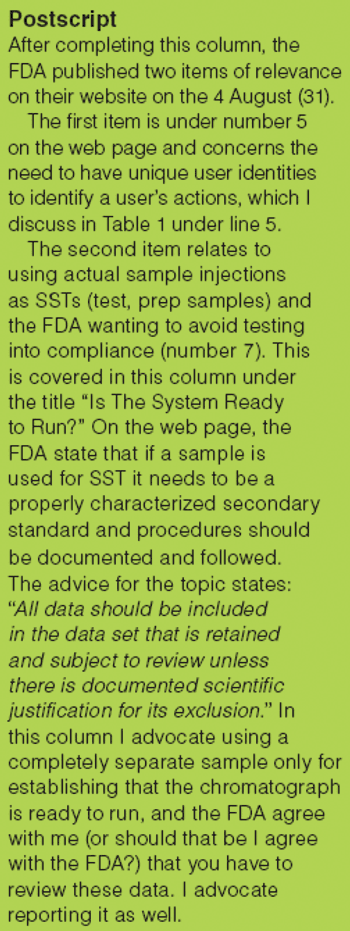
Chromatography data systems (CDSs) have had a starring role in many regulatory citations involving falsification and fraud in analytical laboratories regulated by Good Manufacturing Practices (GMP). In this instalment of "Questions of Quality" we will examine the citations and identify the technical and procedural controls required to ensure data integrity within these systems. Although focused primarily on the pharmaceutical industry, the principles described here are applicable to all laboratories working to established quality standards.