

Webcasts
Webinar Date/Time: Tue, Jul 7, 2026 11:00 AM EDT
Webcasts
Webinar Date/Time: Tue, Jul 7, 2026 11:00 AM EDT
Webcasts
Webinar Date/Time: Tue, Jan 27, 2026 11:00 AM EST

Sponsored Content
Ultrashort-chain PFAS (C1–C4) are important due to their widespread presence and here is an application solution for this analysis.

Webcasts
Webinar Date/Time: Wed, Oct 8, 2025 11:00 AM EDT

Webcasts
Webinar Date/Time: Tue, Sep 30, 2025 11:00 AM EDT
Sponsored Content
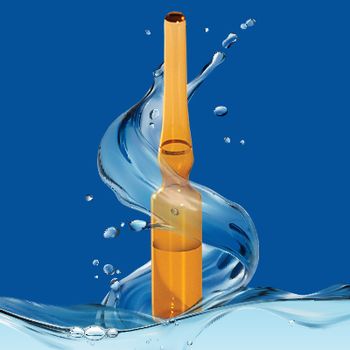
Discover Restek's new PFAS certified reference materials, designed to simplify lab analysis and enhance accuracy for water and food testing.
Sponsored Content
An LC-MS/MS method was developed to quantify C1–C4 PFAS in water, using direct injection to improve accuracy and reduce contamination in testing.
Sponsored Content
In this study, an accurate, reliable analytical LC-MS/MS method for PFAS in water was developed to specifically quantify C1 to C4 PFAS in both potable and non-potable sources. A direct injection workflow was implemented to simplify the testing process and to avoid potential contamination originating from poor sample preparation procedures.
Sponsored Content
Dairy milk is one commodity that can be impacted by environmental contaminants, such as PFAS, so it is important to implement extensive, robust, and accurate testing. In this work, a sensitive and reliable method was developed for the analysis of PFAS in milk by LC-MS/MS at levels as low as 0.01 µg/kg.
Sponsored Content
The following PFAS method collection, organized by region, provides an overview of the scope of current PFAS testing methods and guidelines as well as the recommended products used for each.
Sponsored Content
Finding suitable columns and products for PFAS analysis can be simplified using the product guide tables below, which detail the lab supplies for PFAS analysis that are appropriate for widely accepted test methods from around the world, including U.S. agencies (CDC, EPA, FDA, and USDA); European agencies (DIN); and international standards (ASTM and ISO).
Sponsored Content
Check out this short video that explains the importance of delay columns in managing background PFAS contamination.
Sponsored Content
Develop PFAS methods in seconds with Restek’s unique Pro EZLC Chromatogram Modeler. This powerful modeling tool is completely free and has a library of dozens of PFAS compounds that you can use to develop methods, reduce run times, and optimize run conditions.

Webcasts
Webinar Date/Time: Thu, Nov 14, 2024 10:00 AM EST
Sponsored Content
LPGC-MS Multiresidue Pesticides Analysis
Sponsored Content
Measuring ultrashort-chain PFAS (C1-C4) in water is crucial due to their ubiquity and potential human exposure. Standard RPLC tests struggle with these compounds.
Sponsored Content
Measuring ultrashort-chain PFAS (C1-C4) in water is crucial due to their ubiquity and potential human exposure. Standard RPLC tests struggle with these compounds.
Sponsored Content
Restek is a global leader in PFAS analysis with advanced sample prep and analytical techniques. We’ve gathered feedback from labs around the world to offer the latest insights, applications, and tailored solutions on this resource page. Count on Restek as your partner in PFAS analysis. Have questions?
Sponsored Content
Poly- and perfluoroalkyl substances, or PFAS, are rapidly emerging as some of the most important environmental contaminants to monitor around the world. Their widespread use and environmental persistence make them truly a global issue. Concerns about possible health risks are driving environmental scientists to look for these compounds everywhere. However, one other concerning place where at least some of these compounds are present is inside the very instruments used for PFAS analysis of environmental samples. PFAS delay columns can be used to manage this type of contamination.
Sponsored Content
Due to their ubiquitous occurrence in aquatic environments, measuring ultrashort-chain per- and polyfluoroalkyl substances (PFAS) in various source waters to monitor their presence and the potential for human exposure has become very important. However, with carbon chain lengths of less than C4, these small, highly polar compounds are difficult to analyze using standard PFAS tests that are based on reversed-phased liquid chromatography (RPLC). In this study, an accurate, reliable analytical LC-MS/MS method for PFAS in water was developed to specifically quantify C1 to C4 PFAS in both potable and non-potable sources. A direct injection workflow was implemented to simplify the testing process and to avoid potential contamination originating from poor sample preparation procedures.
Sponsored Content
A Survey of Existing PFAS Testing Methods and Guidelines from Around the World
Sponsored Content
Pro EZLC online tools make it easy to develop and optimize new LC methods or translate existing ones quickly and accurately. See the effects of parameter changes instantly at your desk without spending time in the lab or tying up an instrument. Take advantage of Restek’s years of chromatographic expertise at any time, from anywhere, with simple-to-use yet incredibly powerful EZLC method development tools.
Sponsored Content
A Methods-Based Reference to Lab Supplies for PFAS Testing

Webcasts
Webinar Date/Time: Wed, Jun 19, 2024 11:00 AM EDT
Sponsored Content
Analyze phthalates 1.4x faster and cut costs by reducing helium consumption 67%.

May 30th 2024
May 30th 2024
