

LCGC North America
Various strategies to improve LC-MS sensitivity in order to enhance signal-to-noise ratio, and help you realize the hidden potential of this method are discussed.
LCGC North America
Various strategies to improve LC-MS sensitivity in order to enhance signal-to-noise ratio, and help you realize the hidden potential of this method are discussed.

LCGC Europe
Liquid chromatography–mass spectrometry (LC–MS) has become the preferred analytical technique for many challenging assays based on its selectivity, sensitivity, and broad applicability to compounds of varying polarity. Despite its advantages, the complexity of LC–MS systems often leaves analysts struggling to meet method detection limits. In this instalment of “Column Watch”, several strategies will be discussed to improve method sensitivity through the reduction of contaminants, the careful selection of LC method conditions, and the optimization of MS interface settings. By understanding the relationship between these parameters and ionization efficiency, analysts can enhance their signal-to-noise ratio and realize the hidden potential of their LC–MS.

LCGC North America
A model set of analytes and selected applications are used to demonstrate the effects that buffers can have on the selectivity of a separation and the sensitivity of a reversed-phase analysis when using MS detection.
LCGC Europe
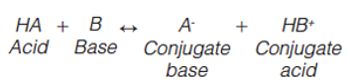
Buffers are commonly used in reversed-phase liquid chromatography (LC) to control the ionization state of analytes. However, the addition of buffers is much more complex than simple pH control. Complex equilibria exist between these mobile-phase additives, the analytes, the silica surface, and even the stationary phase in certain circumstances. The addition of mass spectrometry (MS) as a primary detection technique makes decisions about mobile-phase additives even more crucial. In this column instalment, we use a model set of analytes and selected applications to demonstrate the effects that buffers can have not only on the selectivity of a separation, but also on the sensitivity of a reversed-phase analysis when using MS detection.


The Application Notebook
Complete separation of critical pain management drug analytes from hydrophilic matrix components and isobaric interferences was achieved using the new Raptor™ SPP Biphenyl LC column in less than 5 min

The Application Notebook
Pain management LC analyses can be difficult to optimize due to the limited selectivity of C18 and phenyl-hexyl phases.

Special Issues
Pain management LC analyses can be difficult to optimize because of the limited selectivity of C18 and phenyl-hexyl phases.

The Application Notebook
Restek Corporation


