

HPLC 2026 highlights AI, 2D-LC, new materials, and pharma separations.
Dr. David S. Bell is currently Lead Consultant and Owner at ASKkPrime, LLC a consulting firm focused in the separation science arena. Dave also serves on the Editorial Advisory Board for LCGC Magazine and is the Editor for the Column Watch series of articles.
Over the past three decades, Dave has worked directly in the chromatography industry, focusing his efforts on the design, development, and application of chromatographic stationary phases to advance gas chromatography, liquid chromatography, sample preparation and related hyphenated techniques.Prior to focusing on chromatography device development and application, he spent a decade immersed in the pharmaceutical industry performing analytical method development and validation employing various forms of chromatography and electrophoresis.
Dave’s main objectives have been to create and promote novel chromatography technologies and to conduct and collaborate on research aimed toward understanding molecular interactions that contribute to retention and selectivity in an array of chromatographic processes. His research results have been presented in hundreds of symposia worldwide, and have resulted in more than 95 peer-reviewed journal and trade magazine articles.His efforts have also contributed to the development and commercialization of numerous products utilized in laboratories worldwide.
Dave’s undergraduate studies in chemistry were completed at the State University of New York at Plattsburgh (SUNY Plattsburgh). He earned his PhD in Chemistry from The Pennsylvania State University (State College, Pennsylvania).
HPLC 2026 highlights AI, 2D-LC, new materials, and pharma separations.

Capillary liquid chromatography (CapLC) offers compelling advantages in sensitivity, solvent reduction, and compatibility with modern mass spectrometry, yet remains underutilized in routine analytical workflows. This article synthesizes expert discussions from a Pittcon 2026 networking session to examine why CapLC adoption has lagged despite decades of development. Key themes include educational gaps, instrumentation limitations, robustness concerns, detection challenges, and supply‑chain constraints. The discussion highlights areas where CapLC already delivers clear value—such as proteomics, oligonucleotide analysis, and high‑throughput screening—and outlines practical pathways for broader adoption through targeted applications, improved instrumentation, and redefined expectations of “routine” chromatography.

The 54th International Symposium on High Performance Liquid Phase Separations and Related Techniques (HPLC 2025), was held from June 15–19, 2025, in Bruges, Belgium. This “Column Watch” installment presents many of the highlighted topics and trends observed at this symposium.


The latest edition of "Column Watch" features our annual review of new liquid chromatography columns and accessories, introduced at Pittcon and other events over the past 12 months.

This article delves into advancements in green chromatography, focusing on how innovative HPLC column design can drive eco-conscious practices.

In the world of liquid chromatography, innovative strides in column technology continue to take place. We are also reminded that there is always more to learn about “well-known” methodologies, and our craft is continuously influenced by important social concerns.

This article covers liquid chromatography columns and accessories commercially released after Pittcon 2023 through the 2024 conference.

This retrospective focuses on trends and topics that were discussed at the annual HPLC symposium in Duesseldorf, Germany.

This instalment of “Column Watch” presents many of the highlighted topics and trends observed at this exceptionally well-run symposium.

This article covers LC columns and accessories commercially released after Pittcon 2022 through the 2023 conference held in Philadelphia, USA.
Our annual review of new liquid chromatography columns and accessories, introduced at Pittcon and other events over the past 12 months.

The application of porous layer open tubular (PLOT) columns can be expanded beyond light compounds to separations of analytes with heavier boiling points.

The application of porous layer open tubular (PLOT) columns can be expanded beyond light compounds to separations of analytes with heavier boiling points.

At HPLC 2022, we heard about new research and developments, in areas such as column technologies, portable instrumentation, and machine learning, among others.

This instalment of “Column Watch” presents many of the highlighted topics and trends observed at the symposium.

In this issue, we feature fundamental and innovative efforts from within the walls of some the leading companies in the separation science industry. The theme was inspired by the continuous output of essential separation tools and the seemingly endless streams of pertinent information that these companies provide the scientific community.

Our yearly report on liquid chromatography (LC) columns and accessories commercially released over the past year.

Our annual review of new liquid chromatography columns and accessories introduced recently.
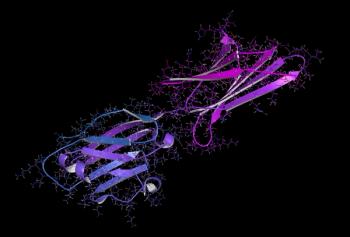
New developments in metal-organic frameworks (MOFs) for LC seek to control MOF distribution on the silica surface, improve understanding of the role of the substrate, and enhance robustness and reproducibility.

Due to the enormous interest in a 2018 “Column Watch” article on the subject and the high level of research in the field, this article explores recent (2019–present) activity specifically towards the application of MOFs for liquid chromatography.

Recent developments in open-tubular liquid chromatography (OTLC) are explored with an emphasis on advances in column technology.

Technology improvements have reignited interest in open-tubular LC, which promises high efficiency, low backpressure, and more environmentally sustainable separations.
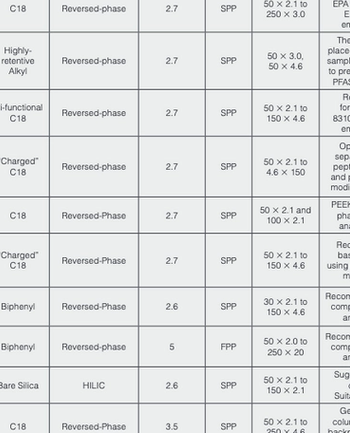
Our annual review of new liquid chromatography columns and accessories, introduced at Pittcon and other events over the past 12 months.

We present our annual review of new liquid chromatography columns and accessories, introduced between spring 2020 and spring 2021.

This article reviews historical bonding techniques still in use for manufacturing high performance liquid chromatography (HPLC) stationary phases today, and also examines some emerging technologies that may be able to tackle unmet needs in novel platforms and phase construction.

Mixed-mode chromatography columns are on the rise. This article reviews recent fundamental research, stationary phase development and design, and areas of application.
Mixed-mode chromatography columns are on the rise. We review recent fundamental research, stationary phase development and design, and areas of application.

This article will review historical bonding techniques still in use for manufacturing high performance liquid chromatography (HPLC) stationary phases today, and also examine some emerging technologies that may be able to tackle unmet needs in novel platforms and phase construction.

The traditional bonding techniques used to manufacture silica-particle-based HPLC stationary phases provide many benefits, but can emerging technologies tackle unmet needs? We assess current approaches and the potential for improvements.
August 22nd 2025

February 1st 2021


