Steven Ray Wilson's AFFL LC–MS system runs thousands of injections per column, but he calls validation and standardization the field's real barrier.

Steven Ray Wilson is a professor in analytical chemistry at the Department of Chemistry, University of Oslo, Norway. His research focuses on the development and application of LC–MS methods for studying laboratory-grown organ models, for example, organoids and organ-on-a-chip. He has a strong focus on medical and clinical applications, and collaboration with industry.
Steven Ray Wilson's AFFL LC–MS system runs thousands of injections per column, but he calls validation and standardization the field's real barrier.
Steven Ray Wilson defines organ-on-a-chip as organoids on microfluidic devices, tracing their small, complex samples to the case for automated online LC–MS.

Combining silicon micro-nanofabrication technology to create perfectly ordered separation beds on a silicon chip, such as micro-pillar array columns (µPACs), is a powerful innovation in liquid chromatography. This article discusses the numerous possibilities of micro-nanofabrication in the future of analytical chemistry in life science, covering sample preparation, separation science, and detection technologies.

An unexpected retention order for ketamine analogs was observed when using a biphenyl stationary phase for liquid chromatography-mass spectrometry (LC–MS).

The 26th Norwegian Symposium on Chromatography was held 21–23 January 2024. The symposium has strong traditions in the Norwegian separation science community, serving as a forum for excellent scientific talks, networking, and social events.

Organoids are predicted to become important tools for personalized medicine and are alternatives to animal models. Separation science and mass spectrometry (MS) are key approaches for studying organoids and organ‑on-a-chip systems. Applications include the study of organoid drug metabolism and biomarker discovery.

A micro-pillar array format for mapping the proteome of human stem cell-derived liver organoids using timsTOF–MS is presented.

LCGC Europe
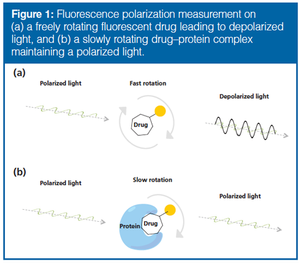
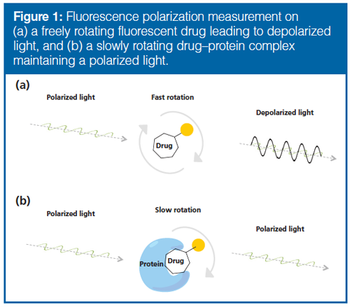
Fluorescence polarization (FP) is a highly regarded technique for studying drug–protein interactions, but has limited value regarding protein mixtures. As a novel approach to drug target discovery, the possibility of combining FP with liquid chromatography (LC) was explored. Nondenaturing protein LC principles such as size-exclusion chromatography (SEC), hydrophobic interaction chromatography (HIC), and ion exchange chromatography (IEX) were found to be orthogonal and compatible with FP because the mobile phases used do not negatively affect detection. For simple protein mixtures, the SEC/HIC/IEX–FP approach was able to identify tankyrase as the target of a triazole-based inhibitor of the Wnt signaling pathway, which is heavily associated with colon cancer. However, the total peak capacity of the three LC dimensions was not sufficient to resolve at cell-proteome level, calling for higher resolution of intact proteins to enable stand-alone drug target discovery with LC and FP.