
The Application Notebook
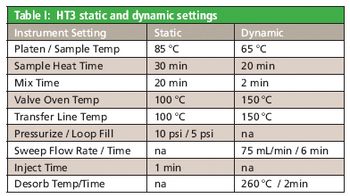
EPA Method 8260 provides for the analysis of volatile organic compounds (VOC) in various solid waste matrices.
The Application Notebook
EPA Method 8260 provides for the analysis of volatile organic compounds (VOC) in various solid waste matrices.
The Application Notebook
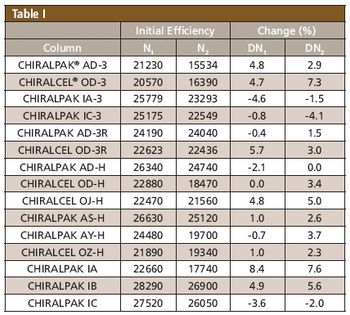
Analytical columns packed with both 3- and 5- μm polysaccharide-based wide-pore chiral stationary phases (CSP) are shown to be stable to high operating pressures over a prolonged period.
The Application Notebook
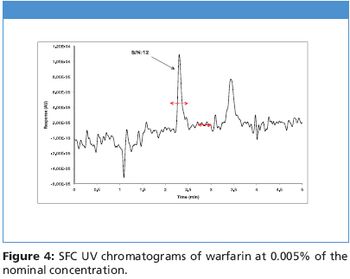
Regulatory requirements for the identification, quantification, and control of impurities in drug substances and their formulated products are increasingly being explicitly defined, particularly through the International Conference of Harmonization (ICH).

The Application Notebook
The analysis of polar, ionic metabolites is important for drug discovery and biomarker research. Often times, it is necessary to separate these metabolites from each other and biological matrixes prior to MS detection (1).

The Application Notebook
A recent poll indicated that millions of consumers were "very" concerned that their public water supplies may be contaminated with trace amounts of pharmaceuticals (1).

The Application Notebook
To guide the development of aggregate free protein formulations, there is an urgent need for formulations, there is an urgent need for complementary methods which allow a sensitive detection, characterization, and quantification of different types of protein aggregates.

The Application Notebook
The Pirkle Type Whelk-O®1 CSP was used several years ago to solve a challenging chiral separation for early phase drug development.

The Application Notebook
Oxidation of amino acid residues can alter a protein's biological activity, half-life, and immunogenicity.

The Application Notebook
Glycosylation is a post-translational modification process that can significantly affect the biological properties of therapeutic proteins.

The Application Notebook
Geosmin and 2-Methylisoborneol are organic compounds that have a distinct scent.

The Application Notebook
High-performance liquid chromatography (HPLC) methods are commonly used for the analysis of caffeine in beverages (1–3).
The Application Notebook
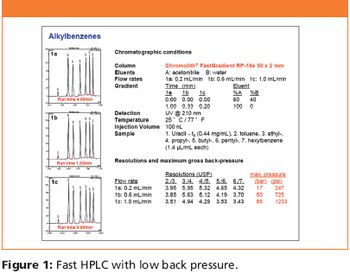
Since 2001 when they became available in North America, monolithic silica HPLC columns have become valuable analytical tools in the R&D and methods development laboratories.
The Application Notebook
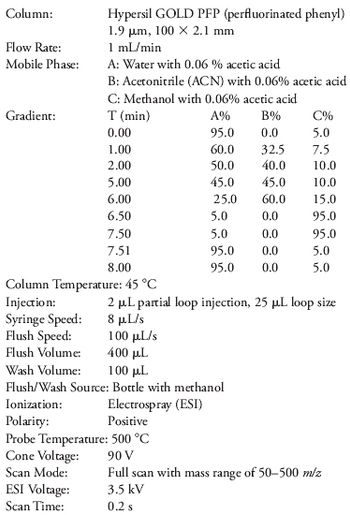
Positively identify trace amounts of cannabinoids in a complex food matrix quickly, with minimal sample preparation and no chemical derivatization.

The Application Notebook
Analysis of oral fluids has become a popular biological fluid to analyze for drugs of abuse as an alternative to blood and urine.
The Application Notebook
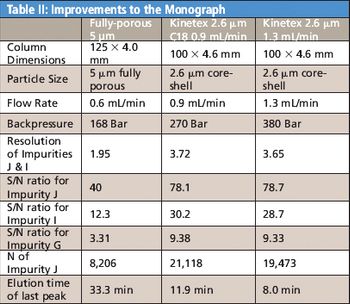
Recently a newly developed Kinetex 2.6 µm Core-Shell chromatographic particle has been commercialized that offers the performance benefits of sub-2 µm fully-porous particles but at substantially lower operating pressures.