

The Column
Nobel Laureate, Sir Harold (Harry) Kroto, will present the Wallace H. Coulter Plenary Lecture at Pittcon 2013.
The Column
Nobel Laureate, Sir Harold (Harry) Kroto, will present the Wallace H. Coulter Plenary Lecture at Pittcon 2013.

The Column
1 + 1 = 3. Say what? That's not what I learned in school! But it's true: when you couple the best of two technologies together, the output is better than the sum of the parts. As you'll see in this article, that's exactly what you get when you couple field flow fractionation to an ICP-MS detector for the analysis of nanomaterials.
The Column
The current method for diagnosis of ventilator associated pneumonia (VAP) can be both invasive and time-consuming. A group of researchers has conducted an initial study into pathogen-derived volatile biomarkers in breath for early and non-invasive diagnosis of VAP.
The Column
Agilent Technologies Inc. (Santa Clara, California, USA) has announced that it has completed its acquisition of cancer diagnostics company Dako (Glostrup, Denmark).

The Column
This work demonstrates the potential of the simultaneous on-line hyphenation of asymmetric flow field flow fractionation (AF4) to inductively coupled plasma-mass spectrometry (ICP-MS) and ultra violet-visible/multi angle light scattering (UV-vis/MALS) detection as a promising and simple tool to obtain information on the multi-element speciation and absolute molecular mass of human plasma proteins such as albumin and transferrin: the two main proteins that have been proposed to bind and transport metal ions in this biological fluid.
The Column
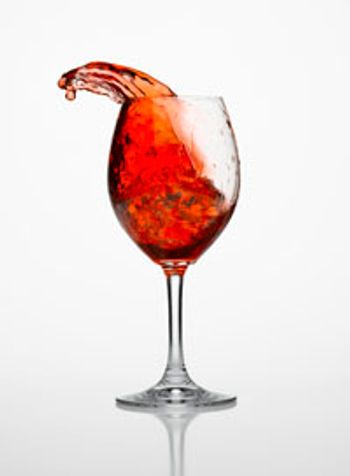
A team of scientists has performed a series of analyses on three sets of Spanish red wine to see how price affects aroma chemical composition.
The Column
HFL Sport Science (HFL), a part of the LGC Group (Teddington, Middlesex, UK) and one of the world’s largest sports drug surveillance laboratories, is preparing for its role testing the horses competing in equestrian events at the Olympic and Paralympic Games.

The Column
Traditionally GPC/SEC is a slow technique. A typical, non-optimized GPC/SEC run with 3 analytical columns and a precolumn needs about 45 to 60 min to be completed. This limits the number of samples that can be analysed.

The Column
In continuous flow analysis (CFA), a sample is injected into a flowing carrier solution passing rapidly through small-bore tubing. The sample is mixed with a reagent, which reacts with the sample to develop a color and determine the sample concentration. The use of carefully controlled flow conditions ensures that the color development reaction is reproducible, so that the color measurement need not wait until the reaction has gone to completion.