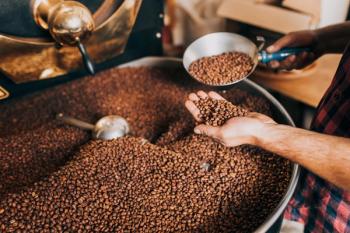
Liquid chromatography–tandem mass spectrometry (LC–MS/MS) finds low glyphosate residues of the weedkiller glyphosate in coffee beans.
Research conducted by the University of Tolima evaluated the effects of chromium-yeast supplementation at different doses and timepoints on physiological and molecular stress biomarkers in heat-stressed lambs, with chromium bioavailability assessed by blood levels using absorption chromatography.
Researchers at the University of Tolima (Ibagué, Colombia) assessed the effects of chromium (Cr)-yeast supplementation on stress biomarkers (hsp60, hsp70, and cortisol) in heat-stressed lambs by the testing of different doses of dietary Cr-yeast (0, 0.2, 0.4, and 0.8 mg/kg) during two time periods (30 and 60 d) to distinguish an ideal level for increase stress resistance and animal well-being. Chromium bioavailability in subject samples was assessed by blood levels using absorption chromatography. A paper based on this research was published in Veterinary Sciences (1).
Sheep production is a major contributor to worldwide food systems and environmental sustainability (2-4). In some regions, it supports rural economies through the provision of income and food security for small-scale farmers and indigenous communities (5,6). Rising temperatures and heat waves have become serious challenges to their welfare and productivity, particularly due to heat stress, which can impair thermoregulation and lead to a reduction in food intake and growth rate, as well as affect meat tenderness and increase the mortality of the animals (7-11).
For this study, a total of 48 non-castrated clinically healthy 6-month-old Katahdin lambs (average weight 20 ± 2.9 kg) were used in a 60-day factorial experiment (2 × 4), involving two environmental conditions—heat stress and thermoneutral—and four levels of Cr-yeast supplementation. Before the daily supplementation, to determine the availability of chromium in blood, animals received a single dose of each level of Cr-yeast. Blood samples were collected by jugular venipuncture at 0, 3, 6, 12, 24, 36, and 72 h to monitor and assess changes in blood chromium bioavailability using absorption chromatography, where separation is based on the differential absorption of the analytes onto the solid stationary phase; interactions between the compound and stationary phase cause analytes to be retained on the stationary phase to varying degrees (12).The researchers found that the blood chromium concentration in subject samples increased gradually with the ascending doses at the 12 h mark, with the 0.8 mg dose exhibiting a sustained elevation post-administration. This pattern was similar at 72 h post-treatment. In contrast, the control group (0.0 mg) maintained stable blood levels between 0.02 and 0.07 mg/L at 0 and 72 h, respectively (1).
The researchers believe that their results imply that supplementation of Cr-yeast lessens general stress within the test subjects, as evidenced by lower cortisol and glucose. Furthermore, Cr-yeast decreases molecular stress markers like hsp70, emphasizing the prospects of it improving thermotolerance and cellular recovery mechanisms under conditions of chronic heat stress. Although these findings are highly promising, the researchers suggest that future research could further explore the long-term adaptability of animals to chronic heat stress with supplementation, investigate the efficacy under more environmental conditions encountered in practical settings, and consider the potential influence of housing systems on animal welfare and stress responses (1).
References