Advances in HPLC: An LCGC International Supplement
HPLC is being reinvented on every front—smaller, greener instrumentation; smarter, AI-assisted method development; next-generation column materials; and new approaches to age-old method challenges. This special supplement from LCGC International brings together leading voices in separation science to explore exactly where the field is headed, from capillary-scale systems built for sustainability to data tools that cut through messy LC–MS/MS data sets. Whether you're developing methods for complex biopharmaceuticals or just want to stay ahead of where liquid chromatography is going next, this supplement delivers the research and expert insight to keep you there.
Magnetic molecularly imprinted polymer extraction with liquid chromatography-high resolution mass spectrometry (LC–HRMS) finds patulin in store-bought juice.
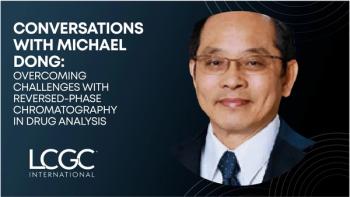
In this fifth part of " Conversations with Michael Dong," a series on fundamentals of HPLC in pharmaceutical analysis, LCGC International’s "Perspectives in HPLC" column editor discusses how to overcome challenges with reversed-phase chromatography in drug analysis.
This week on Chromatography Online, leading experts shared practical insights with LCGC International on sustainable affinity methods, siRNA impurity profiling, nontarget screening, peptide tech transfer, and AI in separation science.