This study demonstrates the performance of thermal desorption (TD) analysis for the monitoring of 'air toxic' compounds according to US EPA Method TO-17. The results show excellent precision, linearity, and low method detection limits for all 65 target compounds across a wide volatility range. Key capabilities highlighted include the ability to re-collect and re-analyse split samples, as well as determining safe sampling volumes through breakthrough testing. The application of TD-GC-MS for trace-level air toxics analysis is shown to be a robust and reliable technique, meeting the stringent requirements of the US EPA method.
Justin Miller-Schulze and Smith Purdum explain how machine learning and chemometrics can improve fire debris classification in forensic science applications.
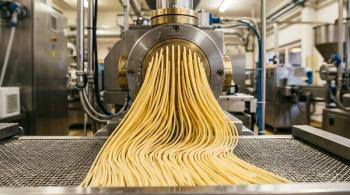
This week, the Chromatography Online website observed National Forensic Science Week with expert interviews on how chromatography helps solve cases, plus career stories from women in analytical science and new research on detecting rat poison in cats and tracking mold toxins in gluten-free pasta.
Kinjal Bhatt argues inclusion advocacy shouldn't fall on women alone, while Ina Varfaj credits sharing the load and learning to say no for avoiding burnout.
Steven Ray Wilson defines organ-on-a-chip as organoids on microfluidic devices, tracing their small, complex samples to the case for automated online LC–MS.