Sponsored Content
Measure ethylene oxide and other air toxics using US EPA Method 327, achieving 10 ppt detection limits without liquid cryogen.
Sponsored Content
Measure ethylene oxide and other air toxics using US EPA Method 327, achieving 10 ppt detection limits without liquid cryogen.
Sponsored Content
Methodology for assessing PFAS emissions from food contact materials under typical usage conditions using dynamic headspace sampling and TD-GC-MS/MS.
Sponsored Content
Understand the consumer aroma experience of fragrance-release products with automated time-resolved VOC sampling
Sponsored Content
Automated pairwise chromatogram comparison identifies key differences between GC-MS and GC×GC-MS data in minutes, simplifying data processing and reporting.
Sponsored Content
Enhance SPME sensitivity using multi-step enrichment for improved VOC and SVOC profiling and more effective short-duration sampling.
Sponsored Content
Single-run analysis of 117 VOCs including PAMS, air toxics and OVOCs, delivering compliant performance at 100% humidity without cryogen or extended cycle times.
Sponsored Content
Reliable TO-15 analysis of air toxics from canisters at up to 100% humidity, achieving low ppt detection limits with robust water management and consistent performance.
Sponsored Content
Enthalpy Analytical improves throughput and reliability for humid environmental air samples, overcoming moisture challenges while maintaining productivity and data quality.
Sponsored Content
Automated TD–GC–MS analysis of air toxics using sorbent tubes, delivering compliant TO-17 performance, low detection limits, and flexible sample re-analysis.
Sponsored Content
Continuous cryogen-free monitoring of ozone precursors and polar VOCs, enabling low detection limits and reliable analysis of humid air without compound losses.
Sponsored Content
PFAS in air: Validating ASTM D8591 for measuring airborne fluorotelomer alcohols, achieving low pg detection limits with robust data quality.
Sponsored
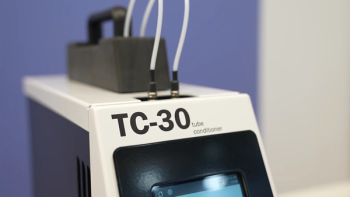
Paul Morris, Head of Product Management and Applications at Markes International, introduces the TC-30 tube conditioner, highlighting its ability to protect sample integrity and streamline laboratory workflows through automated sorbent tube cleaning.

Webcasts
Webinar Date/Time: Thu, Oct 23, 2025 10:00 AM EDT
Sponsored Content
Shows how TD-GC-MS enables rapid in-house screening of chemical emissions from construction and consumer materials.
Sponsored Content
Outlines a method for detecting trace PFAS emissions from packaging and cookware using dynamic headspace with TD-GC-MS.
Sponsored Content
Presents a TD-GC-MS method for ppt-level detection of PAHs in air, offering a simpler alternative to solvent-based protocols.
Sponsored Content
Details how sorbent-based breath sampling combines with TD-GC-MS supports VOC biomarker discovery and route screening.
Sponsored Content
A practical overview of the technique introduces the principles, instrumentation, and typical sample of workflows used in TD-GC-MS.
Sponsored Content
New automated workflow enables fast comparison of chromatograms, revealing sample differences and simplifying essential oil quality control.
Sponsored Content
Smart Subtract simplifies GC×GC–MS data analysis, helping identify trace odours in recycled plastics faster and more accurately.
Sponsored Content
Cryogen-free TD–GC–MS method enables 10 ppt detection of ethylene oxide from fugitive sources, compliant with draft US EPA Method 327.
Sponsored Content
Cryogen-free TD–GC–MS method enables ppt-level analysis of 30 volatile fluorinated compounds released during PFAS destruction, compliant with US EPA OTM-50.
Sponsored Content
High-capacity sorptive extraction with GC–MS enables trace analysis of odorants and chlorophenols in water, combining ppt sensitivity with full automation.
Sponsored Content
Trap-enhanced SPME Arrow analysis improves aroma profiling in food, enabling better peak shape, greater analyte coverage, and a wider concentration range.

Sponsored Content
This application note presents an advanced analytical system for the sensitive detection of trace-level air toxics in humid ambient air samples, in accordance with US EPA Method TO-15A. The cryogen-free preconcentration and thermal desorption approach, coupled to GC-MS, delivers exceptional chromatographic performance even for highly volatile and polar compounds. The system meets the stringent detection limit requirements of the latest air monitoring regulations, with method detection limits as low as 0.7 pptv. This innovative analytical solution provides a robust, cost-effective platform for the reliable quantification of hazardous air pollutants, enabling compliance with regulatory standards.
Sponsored Content
This application note explores an efficient, helium-free method for continuous monitoring of ozone precursors in ambient air, aligned with EPA PAMS requirements. By using hydrogen as the carrier gas, this approach achieves faster run times, stable retention times, and effective separation of volatile organic compounds. A case study from New York City highlights the system's performance in urban air quality monitoring, capturing shifts in pollutant levels during periods of reduced traffic. With remote operability and cryogen-free functionality, this method offers a reliable and sustainable solution for real-time air quality analysis in both urban and remote environments.
Sponsored Content
This application note demonstrates the use of high through-put automated thermal desorption (TD) coupled with GC-MS/MS for comprehensive PFAS measurement in indoor air. The method enables accurate quantification of a wide range of PFAS compounds, including neutral and volatile species, down to ultra-trace levels. Applying this approach, the study profiled PFAS contamination across different indoor environments, from workplaces to residences. When using sampling chambers to test materials, the PFAS they release into the indoor air can be identified, along with quantifying the emission rate of such releases.
Sponsored Content
This application note outlines a cryogen-free approach to collect and analyse ozone-depleting substances (ODS) and halogenated greenhouse gases (GHGs) in 100% humidity ambient air. The system uses automated canister sampling, a Nafion dryer for water vapour management, and GC-MS with selected ion monitoring to quantify 34 target compounds. The method achieves detection limits in the 0.08-0.30 ppt range, with good linearity, precision, and accuracy, meeting international requirements for monitoring these critical substances. The cryogen-free design and ability to handle highly humid samples make this a flexible and efficient solution for industrial ODS and GHG monitoring worldwide.
September 15th 2020
September 10th 2021
August 19th 2025