
Feature|Videos|August 5, 2026
Building Orthogonal Analytics Techniques for Molecule Characterization
Key Takeaways
- Identify which routine methods are typically used for release and in-process bioconjugate testing.
- Understand how decisions about routine versus extended characterization are based on throughput and regulatory risk.
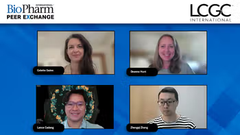
Two analytical experts explain how they use orthogonal methods to characterize bioconjugates without creating workflow bottlenecks.
Episodes in this series
Sponsored by Waters Corporation
Relying on multiple orthogonal analytical techniques to fully characterize a bioconjugate can create operational bottlenecks if routine and characterization are not clearly defined. Zhengqi Zhang, Associate Principal Scientist at Merck & Co., describes how his team addresses this by using standardized, routine methods—such as hydrophobic interaction chromatography ultra-violet (HIC-UV) for drug-to-antibody ratio (DAR), size exclusion chromatography (SEC) for high-molecular-weight species, capillary sodium dodecyl sulfate (CSDS) for size variants, and imaged capillary isoelectric focusing (icIEF) for charge variants—for release and in-process testing. Decisions about which method to use are based on throughput needs and regulatory risk, with high-resolution mass spectrometry (MS) methods such as SEC-MS, HIC-MS, and RPM reserved for extended characterization, investigations, or regulatory filings. Lance Cadang, Scientist, Synthetic Molecule Analytical Chemistry at Genentech adds that his team builds multi-attribute capability into methods from the start, while reserving techniques such as multiangle light scattering (MALS), analytical ultracentrifugation (AUC), and MS for cross-checking high-molecular-weight species at later development stages. Both speakers describe MALS used alongside SEC to estimate the size of material underneath a chromatographic peak, while AUC is generally reserved for later-stage confirmation.
Related to this article
In this fourth part of " Conversations with Michael Dong," a series on fundamentals of HPLC in pharmaceutical analysis, LCGC International’s "Perspectives in HPLC" column editor explains why buffers are most often used in Mobile Phase A in high-pressure liquid chromatography of pharmaceuticals.

Skipping solid-phase extraction (SPE) cleanup rarely hurt liquid chromatography–tandem mass spectrometry (LC–MS/MS) plant hormone results in tomato.

The panel considers how AI and automation could reshape peptide method development, and why scientific judgment will remain essential.
Gas chromatography–mass spectrometry (GC–MS) and docking reveal A. excelsa leaf compounds that may help in cancer treatment.

Gert Desmet offers his insights on the potential benefits AI/ML could offer the separation science community in the future.
Quantitative non-targeted screening with predicted response factors is not for regulation, but can rank environmental chemicals by concentration and toxicity.
Gert Desmet explores the current role of AI/ML in separation science.

Gas chromatography–mass spectrometry (GC–MS) reveals a four-stage polycyclic aromatic hydrocarbons (PAH) breakdown in oil sludge co-composted with manure.
Trending on LCGC International
1
Green Chemistry Meets Affinity Chromatography
2
AI ML Now: Gert Desmet on the State of Artificial Intelligence and Machine Learning in Separation Science
3
HILIC and the Shift Beyond TFA in GLP-1 Analysis
4
Conversations with Michael Dong: Reversed-Phase Chromatography: Retention Mechanism of Hydrophobic Interaction
5