

Feature|Videos|August 5, 2026
What Determines a Best-in-Class Antibody Drug Conjugate
Key Takeaways
- Recognize why best-in-class ADC design depends on integrating multiple attributes rather than a single innovation.
- Understand how real-time MS monitoring supports faster conjugation process decisions.
Understand why a best-in-class antibody drug conjugate (ADC) depends on balancing antibody, linker, conjugation chemistry, and payload together.
Episodes in this series
Sponsored by Waters Corporation
Identifying what separates a best-in-class ADC from an adequate one is complicated by the fact that no single technique or innovation determines success. Zhengqi Zhang, Associate Principal Scientist at Merck & Co., explains that achieving a best-in-class molecule requires integrating the antibody, conjugation chemistry, linker, and payload as a coordinated system. He describes how his team uses real-time mass spectrometry (MS) based methods—high-throughput size exclusion mass spectrometry (SEC-MS) and hydrophobic interaction chromatography mass spectrometry (HIC-MS)—to monitor conjugation and reduction reactions as they happen, supporting faster decision-making during process development. Linker stability and payload potency must be balanced against each other; a linker that is too stable can create payload-release issues, while one that is too labile can raise off-target toxicity. Determining the drug-to-antibody ratio (DAR), or DAR distribution requires weighing potency, pharmacokinetics, and linker and payload stability together rather than applying a fixed rule.
Related to this article

In this fourth part of " Conversations with Michael Dong," a series on fundamentals of HPLC in pharmaceutical analysis, LCGC International’s "Perspectives in HPLC" column editor explains why buffers are most often used in Mobile Phase A in high-pressure liquid chromatography of pharmaceuticals.

Skipping solid-phase extraction (SPE) cleanup rarely hurt liquid chromatography–tandem mass spectrometry (LC–MS/MS) plant hormone results in tomato.

The panel considers how AI and automation could reshape peptide method development, and why scientific judgment will remain essential.

Gas chromatography–mass spectrometry (GC–MS) and docking reveal A. excelsa leaf compounds that may help in cancer treatment.

Gert Desmet offers his insights on the potential benefits AI/ML could offer the separation science community in the future.

Quantitative non-targeted screening with predicted response factors is not for regulation, but can rank environmental chemicals by concentration and toxicity.
Gert Desmet explores the current role of AI/ML in separation science.
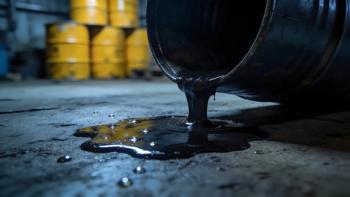
Gas chromatography–mass spectrometry (GC–MS) reveals a four-stage polycyclic aromatic hydrocarbons (PAH) breakdown in oil sludge co-composted with manure.
Trending on LCGC International
1
Green Chemistry Meets Affinity Chromatography
2
AI ML Now: Gert Desmet on the State of Artificial Intelligence and Machine Learning in Separation Science
3
HILIC and the Shift Beyond TFA in GLP-1 Analysis
4
Conversations with Michael Dong: Reversed-Phase Chromatography: Retention Mechanism of Hydrophobic Interaction
5