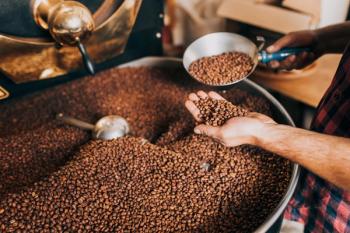
Liquid chromatography–tandem mass spectrometry (LC–MS/MS) finds low glyphosate residues of the weedkiller glyphosate in coffee beans.
Researchers identified two novel selenium-containing peptides from selenium-enriched oysters that strongly inhibit ACE, improve vascular function, and outperform captopril in vitro, highlighting their promise as natural antihypertensive ingredients.
A joint study published in Molecules (1) and conducted by researchers at Beibu Gulf University (Qinzhou, China) and South China Agricultural University (Guangzhou, China) used selenium (Se)-enriched oysters from the Beibu Gulf coast in Guangxi, China as a raw material to investigate their potential as a valuable source of angiotensin-I-converting enzyme (ACE) inhibitory peptides. The oysters were hydrolyzed using trypsin to obtain peptides with ACE inhibitory activity and purified by ultrafiltration and two-step reversed-phase high-performance liquid chromatography (RP-HPLC), yielding the most active fraction M4-2 (selenium content: 37.00 ± 0.56 mg/kg; IC50 0.774 mg/mL, significantly lower than the IC50 of the crude hydrolysate, 2.801 mg/mL). This fraction was further analyzed by liquid chromatography–tandem mass spectrometry (LC–MS/MS) and molecular docking, which led to the identification of 91 selenium-containing peptide sequences.
One of the most widely cultured shellfish globally (with a production exceeding 6.2 million tons in 2019), more than 80% of oysters are produced in China (2). A well-known medicinal food in traditional Chinese medicine, oysters emergeas a high-quality candidate for preparing bioactive peptides because of their high protein content (reaching up to 45–57% of the dry weight) (3).Many studies have verified the functional properties of oyster protein peptides, which include antioxidant (4–8). In addition, oysters are rich in trace elements such as zinc (Zn) and selenium (Se; considered an indispensable trace element for humans because of its crucial role in preventing cardiovascular and cerebrovascular diseases), with the selenium concentration tested to be 0.36–1.30 mg/kg (9,10).
Two novel peptides, SeMFRTSSK and QASeMNEATGGK (short chain peptides composed of 7 and 10 amino acid residues, respectively), showing strong binding affinities (-9.8 and -9.0 kcal/mol, respectively), were selected for synthesization for subsequent analysis. Molecular docking revealed that the SeMFRTSSK peptide bound to key residues in the ACE active pocket via hydrogen bonds, whereas the QASeMNEATGGK peptide interacted with the Zn2+ active center. Cellular assays using EA.hy926 cells demonstrated that both peptides were non-cytotoxic at concentrations up to 0.25 mg/mL. At 0.025 mg/mL, SeMFRTSSK and QASeMNEATGGK enhanced cellular NO release by 202.65% and 273.45%, respectively, while suppressing endothelin-1 (ET-1) secretion by 18.03% and 27.86% compared to the blank control group. Notably, these peptides induced higher levels of nitric oxide (NO) release and greater suppression of ET-1 secretion than those in the captopril-treated positive control group (1).
“These findings support selenium-enriched oyster-derived peptides as potential natural antihypertensive ingredients,” write the authors in their article, and “suggests a promising strategy for the high-value utilization of Se-enriched oysters in hypertension management.” (1)
Read More on Similar Topics
References