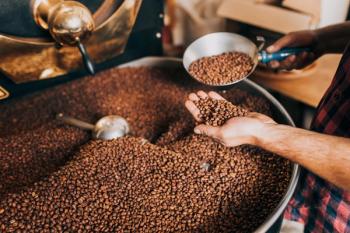
Liquid chromatography–tandem mass spectrometry (LC–MS/MS) finds low glyphosate residues of the weedkiller glyphosate in coffee beans.
A joint study conducted by United States Department of Agriculture and Pomona College developed a healthy, marketable juice by combining the nutritional benefits of noni fruit juice with the palatability of pineapple juice and then evaluating the physical, chemical, and sensory properties of the resulting blend.
While the juice from noni fruit offers a variety of health benefits, the unpleasant odor of the raw juice curbs wide adoption by purchasers. Juice manufacturers have adopted a two-step process to deodorize noni juice through rotary evaporation (rotovap) followed by mixing noni juice with pineapple juice creates a beverage that results in a more pleasant smell and thus is more acceptable by consumers. Analysis performed by researchers at the United States Department of Agriculture and Pomona College (Claremont, California) investigated noni juice volatiles after blending with pineapple juice using dynamic headspace sampling (HS) coupled to gas chromatography/mass spectrometry (GC-MS) with principal component analysis (PCA) of volatile profiles. A paper based on this study was published in Scientific Reports (1).
A small evergreen tree or shrub native to South Asia, noni (Morinda citrifolia L.) grows abundantly in the tropics, and has long been used as a medicinal plant in Polynesia, South Asia, and Northeastern Australia (2). It was the Polynesians that brought noni to the Hawaiian Islands, where the plant has gained a wide cultural appreciation through its use in traditional medicine for healing broken bones, offering relief for asthma, and reducing diabetes, hypertension, digestive disorders, and menstrual cramps by ancient islanders (2,3).
Read More on Fruit Analysis:
Studies have investigated the potential nutritional benefits of noni, based on its traditional medicinal uses in Hawaii and around the world. Evidence suggests that noni juice may offer several health benefits, including:
Additional studies have revealed that noni exhibits antibacterial, antifungal, antiviral, antioxidant, anti-inflammatory, cardiovascular, anti-cancer, and hypotensive activity (5). Unfortunately, noni juice possesses a sour, astringent flavor which drastically constrains its marketability (3). This cannot be said for pineapple (Ananas comosus), a highly palatable crop commercialized in Hawaii, with nearly 100% of the 168,020 metric tons of pineapples produced in the United States in 2021 being from that state (6). In recent years, pineapple juice has recently been combined with other fruit juices which are less palatable but possess functional capabilities (for example, turmeric and ginger) to augment the former’s nutritional capabilities and improve the latter’s taste (7-9).
Analysis of total soluble solids and titratable acidity confirmed that pineapple juice sweetens the taste profile. Sensory evaluation tests conducted with trained panelists yielded 80% pineapple with 20% rotovap (20 RVN) received higher scores for both sweetness and freshness than 80% pineapple and 20% original noni juice (20 OGN), highlighting the impact of noni juice volatiles on these organoleptic qualities (1).
The analysis conducted by the research team revealed that the total volatiles decreased in rotovap-treated juices, with pineapple juice and pineapple and noni juice mixtures grouped more closely while untreated (OGN) and the water fraction removed by rotovap were strongly associated (1).
The rotovap treatment removes unpleasant odors from noni juice, the researchers wrote. When mixed with pineapple juice, it creates a sweeter, fresher, and more palatable beverage that is better suited for the consumer market while also using local fruits, supporting sustainable agriculture in Hawaii, and preserving the cultural importance of noni (1).
References