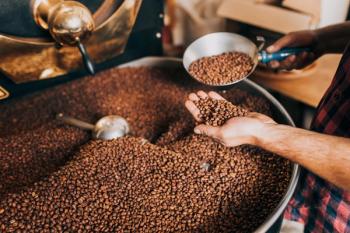
Liquid chromatography–tandem mass spectrometry (LC–MS/MS) finds low glyphosate residues of the weedkiller glyphosate in coffee beans.
A study to illustrate the metabolic changes in the adipose tissue metabolome of Holstein dairy cows transitioning from one lactation cycle to the next integrated liquid chromatography, flow injection, and electrospray ionization triple quadrupole MS.
Dairy cows experience acute metabolic challenges during the transition from lactation cessation to lactation resumption, with adipose tissue (AT), which serves as the primary energy reserve as well as an active endocrine organ. Researchers attempting to characterize the alterations in the AT metabolome in Holstein dairy cows before and during dry-off and around calving employed a targeted metabolomic approach, which enables precise quantification of known metabolites within key metabolic pathways. Liquid chromatography (LC), flow injection, and electrospray ionization triple quadrupole mass spectrometry (MS) were used in carrying out this work. A paper based on their research was published in the Journal of Dairy Science (1).
Research using metabolomics in dairy cow AT remains limited. According to the research team, there has only been one previous study investigating lipidomics in dairy cow AT in relation to ketosis (2), and one investigating AT steroid metabolomics in periparturient dairy cows with varying body classification scores (3). However, most of the available AT metabolomics data originated from studies on beef cattle. For example, previous studies (4,5) have reported on breed-specific differences in lipid metabolism within perirenal AT, underscoring significant variability in fat deposition and metabolic efficiency. In addition, another study (6) identified potential biomarkers that were linked to intramuscular adipogenesis through metabolomic analyses of intramuscular AT in Wagyu versus Holstein cattle.
In this study, a dozen Holstein dairy cows were dried off 6 weeks before calving dates and individually fed an ad libitum total mixed ration made up of grass silage, corn silage, and concentrate during lactation and a mixture of corn silage, barley straw, and concentrate during the dry period. The metabolome was characterized in subcutaneous AT samples which were collected on week -7 (before drying off), -5 (after drying off), and week -1 and 1 relative to calving. Multivariate analyses revealed distinct and dynamic alterations in the AT metabolome, with relatively small changes during the early dry period (week -7 to -5) followed by substantial metabolic reprogramming close to calving (week -1 to 1). Amino acid profiles in AT remained stable during late gestation but declined significantly in alpha-lipodic acid (Ala), aspartic acid (Asp), and glutamine (Gln) between week -1 and week 1, which was probably due to the increased utilization within AT, which redirected carbon skeletons from these AA toward glyceroneogenesis and the re-esterification of fatty acids (FA) into triglycerides. Such a shift in AA metabolism might also assist in interorgan nutrient exchange, with Ala export through the glucose-Ala cycle providing necessary gluconeogenic substrates to the liver during early lactation. Furthermore, the acylcarnitine profiles remained unchanged, which reflects the role of AT as a long-term lipid reservoir as opposed to a metabolically active site for FA oxidation (1).
The research exposed a biphasic pattern in diglycerides as well as an extensive remodeling of phosphatidylcholines, highlighting dynamic cellular membrane adaptations to heightened lipolytic activity and increased energy demands during the immediate postpartum period. Specifically, sphingomyelin (a lipid that has significant structural and functional roles in the cell, including participating in many signaling pathways [7]) remained stable throughout the transition, which suggests potential mechanisms in preserving membrane integrity and ensuring cellular stability under fluctuating metabolic stress. These data supports that AT functions are not merely a passive energy store, but rather a dynamic organ which actively coordinates metabolic homeostasis during the transition from lactation cessation to lactation resumption (1).
Read More on This Topic:
References