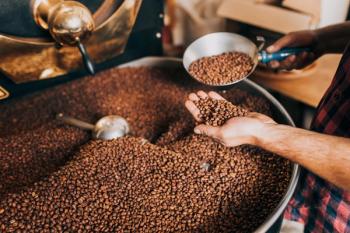
Liquid chromatography–tandem mass spectrometry (LC–MS/MS) finds low glyphosate residues of the weedkiller glyphosate in coffee beans.
Researchers used Design of Experiments approach to optimize gas chromatography with flame ionization detection (GC–FID) for essential oil analysis. The harmonized GC method enables robust, reproducible separation of 87 terpenes using a single column and sample preparation protocol, improving efficiency, standardization, and sustainability for essential oil quality control.
As interest in essential oils (EOs) for their therapeutic, antibacterial, and antifungal properties continues to grow—driving demand for high-quality products in both medicinal and industrial sectors—robust, precise, and efficient analytical methods are essential to meet increasingly stringent quality requirements. In response to this need, research conducted by the Institute of Pharmaceutical Sciences (Geneva, Switzerland) employed Design of Experiments (DoE) to optimize and harmonize existing gas chromatography (GC) methods, focusing on sample preparation and chromatographic parameters. This allowed the team to develop and present an optimized GC with flame ionization detection (FID) method for the separation and detection of terpenes in EOs officially recognized by international bodies. A paper based on their efforts was published in the Journal of Pharmaceutical and Biomedical Analysis (1).
Concentrated plant extracts known for their aromatic and therapeutic properties, EOs are rich in terpenes, a class of organic compounds that are responsible for their characteristic scents and biological activities (2–6). Terpenes also add to the unique profiles of EOs and are linked to a range of effects, such as mood enhancement, relaxation, and anti-inflammatory activity, thus representing an important screening set of possibly active molecules to use in drug discovery efforts (7,8).
“Gas chromatography remains the gold standard for EO analysis due to its sensitivity and resolution,” write the authors of this study (1). “Although numerous methods are available, primarily targeting similar analytes in varying combinations, standardization remains a challenge, with protocols differing across International Organization for Standardization (ISO) guidelines and international pharmacopoeias” (1).
In this study, a 60 m x 0.25 mm, 0.25-µm polar GC column was selected for its ability to effectively separate 87 terpenes, sesquiterpenes, and related compounds commonly found in EOs. The optimized temperature gradient enabled complete separation within a 75-min runtime, outperforming or matching existing methods in terms of resolution and reproducibility. Streamlined sample preparation protocols led to reduced solvent consumption and minimized sample requirements across all tested EOs. As a proof of concept, the final method was applied to 12 different essential oils, demonstrating comparable analytical performance and confirming its broad applicability and efficiency (1).
The authors of the study state that their method allows for many essential oils to be analyzed without the need to change the column or adjust chromatographic parameters, which, in their opinion, highlights its robustness and versatility. “A key advancement of this method,” they write, “is that a single sample preparation protocol can be used for analysis of most essential oils” (1). In addition, due to the optimization in chromatographic separation and sample preparation, the method both saves time and is environmentally friendly. “The proposed GC–FID method,” they conclude, “could facilitate quality control of essential oils and phytopharmaceuticals in general” (1).
Read More on Similar Topics
References