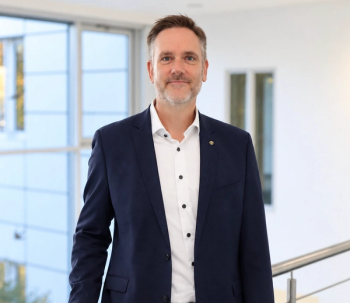
Florian Geistmann succeeded retiring Jürgen Semmler as Shimadzu Europa managing director on October 1.
The 2025 Gulf Coast Conference (GCC), scheduled for October 13–16 at Moody Gardens in Galveston, Texas, offers a platform for analytical chemists across petrochemical, environmental, and industrial laboratories to engage with the latest advancements in analytical science. This
The incorporation of chemometrics into chromatographic, spectroscopic, and elemental workflows demonstrates a maturation of analytical science in which statistical insight and computational tools are essential, not supplementary. Attention to reference standards, uncertainty evaluation, and method validation also illustrates the field’s alignment with accreditation and regulatory expectations.
GCC provides a lens into how separation science, once largely bench-bound, is now applied at process scale and to increasingly complex materials. Analytical chemists are evolving from instrument operators to designers of integrated systems that produce accurate, reliable data streams in real time. Here is a selection of sessions that will be particularly relevant to LCGC International readers attending the conference this year.
Key Sessions and Highlights
A notable session is led by Alex Lau, technical advisor at ASTM International, who will conduct a full-day training course on test method precision, bias, and statistical quality control. This course underscores the importance of statistical thinking in measurement, covering normal distribution, interlaboratory reproducibility, and control-chart methodologies such as the exponentially weighted moving average (EWMA) and moving range charts. This focus on measurement rigor reflects the growing expectation that analytical chemists not only generate data but also quantify and defend the uncertainty of their results.
Dan Wispinski, global standards manager at VUV Analytics, is presenting several sessions on applications of vacuum ultraviolet (VUV) spectroscopy for hydrocarbon analysis. His talks will cover simulated distillation of middle distillates using gas chromatography (GC)–VUV, quantitation of aromatics in jet fuel based on ASTM multi-method precision studies, and developments in emerging GC–VUV methods under revision in ASTM D8267 and D8368. These presentations highlight how VUV spectroscopy can enhance fuel characterization, provide greater analytical precision, and address complex petrochemical and biofuel matrices, reflecting the conference’s broader focus on innovation in separation science and process-scale analytics.
Chromatographic sessions highlight how chemometrics and data analysis are enhancing reproducibility. Brian Rohrback, president of Infometrix, presents “Adding Repeatability and Reliability in Chromatography,” exploring strategies to eliminate retention time variability and automate quality checks across chromatograms. In a complementary talk, “Streamlining Spectroscopic Calibration,” Rohrback examines the maintenance and automation of spectroscopic models, focusing on updating calibration factors in continuous process monitoring. These sessions underscore the increasing reliance on computational methods and statistical insight to bolster analytical reliability.
Fundamentals and training remain a core draw for GCC attendees. Lee Polite, founder and president of Axion Analytical Labs and Training Institute, teaches “Gas Chromatography: Beginner to Expert in Four Hours,” providing a condensed yet practical course on GC theory, method development, and troubleshooting. Polite’s session emphasizes the enduring importance of GC across a variety of analytical disciplines, where new sample matrices continually challenge laboratory workflows. Similarly, Leon Gilchrist, technical consultant at DCG Partnership, presents “Exploring Uncertainties of Reference Materials,” focusing on navigating between reference materials (RMs) and certified reference materials (CRMs) and understanding their impact on data quality—a critical consideration in laboratories adhering to ASTM, GPA, and ISO standards.
Emerging sample challenges are also central to the program. Rojin Belganeh, technical director at Frontier Laboratories, and William Pipkin of Frontier Laboratories lead a workshop on “Identification & Quantification of Microplastics Using Pyrolysis-GC/MS,” which demonstrates how pyrolysis gas chromatography–mass spectrometry can quantify polymer fragments and additives in environmental samples. Complementary abstracts address cryogenic milling and filter-based microplastic sampling, illustrating GCC’s focus on analytical solutions for complex, real-world matrices.
Several sessions expand the conference’s reach into process-scale analytics. Jason Lopez presents “From Hours to Seconds – Process Raman is Revolutionizing Sour Water Monitoring,” detailing inline Raman spectroscopy for real-time tracking of H₂S and NH₃ in industrial streams. Another, “On-line Raman Gas Analysis in Syngas and Hydrogen Production,” demonstrates how optical spectroscopy can monitor homonuclear diatomic gases in process conditions. “New Revolutionary Process GC with Capillary Chromatography” explores capillary GC adaptations for high-precision process monitoring, while “Optimizing the Total Workflow for Elemental Analysis in the Petrochemical Industry” addresses workflow integration from sampling through digestion and detection. Advanced elemental analysis is further explored in sessions on inductively coupled plasma–mass spectrometry (ICP-MS)-based detection of challenging elements and nanoparticles, highlighting innovations in ultra-trace measurement and matrix handling.