This study demonstrates high-throughput analysis of BTEX compounds from several matrices (air, water and soil). Detection limits in the single-digit part-per-billion concentration range (by volume) are readily achievable within seconds using SIFT-MS because sample analysis is achieved without chromatography, pre-concentration, or drying. We also present a calibration approach that enables speciation of ethylbenzene from the xylenes in real-time.
This week, Chromatography Online explored how the technique is advancing wastewater drug monitoring, siRNA method development, and food safety testing, with previews of RAFA 2026 and a return to HPLC fundamentals with Michael Dong.
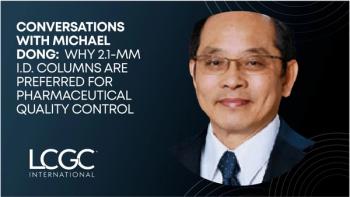
In this seventh part of " Conversations with Michael Dong," a series on fundamentals of HPLC in pharmaceutical analysis, LCGC International’s "Perspectives in HPLC" column editor explains why 2.1-mm i.d. columns are less preferred for pharmaceutical quality control.
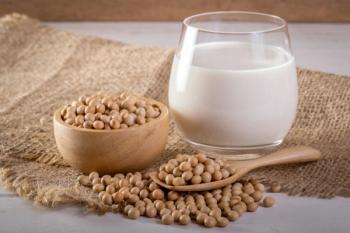
Ultrahigh-performance liquid chromatography–quadrupole time-of-flight mass spectrometry (UHPLC–QTOF-MS) shows how soaking and cooking break down soybean fats.
Nicolai Zederkopff explores chromatography’s role to help implement the maximum tolerable level (MTL) framework for food adulteration to translate analytical results into compliance decisions.
Franz Berthiller (BOKU University, Austria) discusses a multilaboratory study that used retention index markers to align mycotoxin liquid chromatography–mass spectrometry (LC–MS) data.
A QuEChERS/ultrahigh-performance liquid chromatography and high-resolution mass spectrometry (UHPLC-HRMS) method tracks 23 plant toxins in cereals and spices. Michele Suman discusses the method with LCGC International.