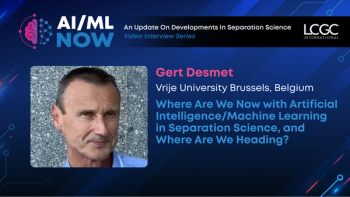
Gert Desmet offers his insights on the potential benefits AI/ML could offer the separation science community in the future.
The 55th International Symposium on High Performance Liquid Phase Separations and Related Techniques (HPLC 2026) conference will convene June 6–11, 2026, in Indianapolis, Indiana.
HPLC 2026, in Indianapolis, Indiana, will bring the global separation science community together for a week that begins with short courses and continues with a multi‑day scientific conference built around foundational chromatography and emerging analytical challenges. The conference will take place June 6–11, shortly after the 110th Indianapolis 500 and only weeks before the United States celebrates its 250th anniversary. Hosted at the JW Marriott Indianapolis, the meeting is expected to draw industrial and academic researchers, instrument developers, regulators, and trainees for one of the field’s flagship international gatherings.
HPLC has long served as an important meeting for liquid phase separations, and the 2026 program reflects both the maturity of the field and the pace at which it continues to evolve. The conference will highlight the broad scientific scope of modern separation science, spanning chromatographic theory, detection strategies, multidimensional chromatography, hyphenated techniques, supercritical fluid methods, novel stationary phases, and complex mixture analysis. At the same time, the program emphasizes how contemporary analytical challenges—particularly in biopharmaceutical analysis, omics research, therapeutic oligonucleotides, and data-rich workflows—are reshaping the tools and approaches used in separation science.
Short courses, substantial enough to function as a meeting within the meeting, will take place during the opening weekend. On Saturday, attendees can participate in full-day courses on topics such as two‑dimensional liquid chromatography, practical LC–MS/MS method development, artificial intelligence for liquid phase separations, and analytical strategies for oligonucleotide therapeutics. Sunday expands the offerings with half‑day courses covering supercritical fluid chromatography, sample preparation and extraction for LC workflows, (U)HPLC method development, multi‑detector size‑based separations, chiral chromatography, hydrophilic interaction chromatography, pharmaceutical quality and regulatory processes, and advanced chromatographic strategies for protein biopharmaceuticals. These sessions are designed to provide both foundational training and practical insights that attendees can immediately apply in laboratory settings.
The scientific program will be enriched by an exceptional lineup of plenary and keynote speakers representing leading institutions across the world. Susan Olesik of The Ohio State University will deliver the opening plenary lecture, focusing on separations and mass spectrometry enabled by carbon‑based materials. Daniel Armstrong of The University of Texas at Arlington will follow and discuss separations and mass spectrometry of peptide epimers. Additional plenary lectures will be delivered by Sarah O’Keeffe of Eli Lilly and Yasushi Ishihama of Japan’s Kytoto University, with closing plenaries presented by Luis Colón of the University at Buffalo and Gunda Köllensperger of the University of Vienna. These speakers reflect the diversity of scientific directions currently shaping the future of separation science.
A broad roster of internationally recognized keynote speakers will further expand the technical scope of the meeting. Topics will include two‑dimensional liquid chromatography in proteomics, advances in particle‑size distribution and column technologies, single-cell and low-input proteomics, multimodal LC for complex drug formulations, capillary LC column development, oligonucleotide analysis, affinity chromatography, and chemometric insights into brain metabolomics. Other featured talks point to important frontiers such as in vivo cross‑linking mass spectrometry, next‑generation biotherapeutics, UHPSFC/MS for lipidomics, wine analysis using LC×LC–ion mobility–high‑resolution mass spectrometry, and impurity and diastereomer profiling of small interfering ribonucleic acid oligonucleotides. The breadth of these presentations highlights a field that is simultaneously pushing toward greater resolving power, improved quantitative rigor, greener and more miniaturized platforms, and deeper integration with advanced mass spectrometry and computational analysis.
HPLC 2026 will also feature a large exhibition, vendor seminars, and an extensive sponsor presence, representing major analytical technology companies. This industry-academia interface is a defining characteristic of the HPLC symposium series. Many transformative advances in separation science emerge not only from conceptual breakthroughs in university laboratories but also from improvements in instruments, particles, columns, software, and integrated analytical workflows that ultimately enable robust applications in real analytical environments.
The conference will also serve as an important gateway for early-career scientists to connect with leaders in the field. Student travel grants supported by external organizations will help facilitate participation by young researchers, while the program structure provides opportunities for training-oriented short courses, poster presentations, and direct interaction with experts from academia, government laboratories, and industry. For a discipline that depends on both deep technical expertise and continual methodological reinvention, this combination of education, networking, and high‑level scientific exchange is central to what keeps the HPLC symposium series influential.
As separation science continues to advance rapidly, HPLC 2026 will provide a global forum for discussing both the fundamental principles and the technological innovations that will shape the next generation of analytical methods.
Website: