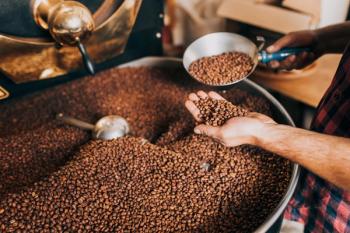
Liquid chromatography–tandem mass spectrometry (LC–MS/MS) finds low glyphosate residues of the weedkiller glyphosate in coffee beans.
Researchers developed a green, supramolecular solvent-based microextraction approach using naturally occurring components (decyl glucoside and linalool) to preconcentrate toxic benzimidazole fungicides (thiabendazole and carbendazim) from vegetable samples. Following the extraction, high-performance liquid chromatography with fluorescence detection (HPLC-FLD) was utilized to precisely determine the fungicide levels. This environmentally friendly chromatography method achieved high extraction recoveries (over 98%) and reliable precision in real vegetable matrices (such as potato, beetroot, and ginger), demonstrating its robust potential for monitoring hazardous agricultural residues and ensuring food safety.
In a study conducted by researchers at Saint Petersburg State University (Kazan and St. Petersburg, Russia) and Kazan National Research Technological University (Kazan, Russia) a green supramolecular solvent-based microextraction approach using naturally occurring components (decyl glucoside and linalool) for preconcentration of agricultural benzimidazole fungicides (thiabendazole and carbendazim) from vegetables was developed. The approach was utilized for the determination of benzimidazole fungicides in vegetables by high-performance liquid chromatography with fluorescence detection (HPLC-FLD). A paper based on this work was published in Journal of Chromatography A.1
Extensively utilized in agricultural contexts, a primary function of benzimidazole fungicides is the protection they provide other plants from diverse diseases.2 These fungicides are also employed as preservatives in finished products, helping toextend the shelf life of these goods.1 Thiabendazole and carbendazim, which belong to this group of fungicides present a possible risk to human health as well as the environment and human health; the World Health Organization classifies carbendazim as a hazardous chemical, and in most cases this substance is classified as carcinogenic. In addition, there is evidence which suggests that carbendazim can depress the endocrine system.3 Carbendazim is cytotoxic as well and instigates hematological abnormalities.4 Thiabendazole has been shown to display general toxicity, reproductive toxicity and immunotoxicity; in addition, it has been shown to be capable of causing cancer and depressing the human liver.5 As they exert dangerous effects on the human health when administered in large quantities, the presence of thiabendazole and carbendazim in food products is monitored closely. The European Union has determined that the maximum residue levels (MRLs) for thiabendazole and carbendazim in vegetables be from 10 to 40 μg kg-1 and 100 μg kg-1, respectively.6,7
Supramolecular solvent formation in aqueous solution of decyl glucoside in the presence of linalool was demonstrated for the first time through the research team’s newly developed approach, according to the team. The developed microextraction technique assumed mass-transfer of the analytes from sample matrix to micellar solution of decyl glucoside followed by injection of liquid linalool into the obtained supernatant for coacervation and enrichment of the target analytes. Different terpenes and terpenoids were evaluated for coacervation and supramolecular solvent formation. Linalool ensured high extraction recoveries (>98 %) and maximum enrichment factors for thiabendazole and carbendazim.1
The research team was able to use the technique successfully for determining fungicides in real vegetables (potato, beetroot and ginger samples) by HPLC-FLD. “The selection of HPLC-FLD for this study,” write the authors of the study,1 “is predicated on the established efficacy and reliability of this method for the resolution of problems pertaining to the analysis of objects with complex compositions.”
At optimal conditions providing the highest analytical signals (3 g of vegetable sample, extraction into 4.5 % solution of decyl glucoside, microextraction with 40 μL of linalool): for thiabendazole, limit of detection was 0.5 μg kg-1, and linear range was found to be 1.5-1000 μg kg-1; for carbendazim, these parameters were 4 and 12-10000 μg kg-1. The relative standard deviation for intra- and inter-day precision did not exceed 6 %.1
“This research,” write the authors of the paper,1 “proves that supramolecular solvent can be obtained from naturally occurring and available components such as alkyl polyglucosides and terpenoids.” They go on to state that the investigated solvents can possibly separate a wide range of substances from various aqueous media, including food products, biological liquids, and wastewaters, which should inspire future applications.1
References