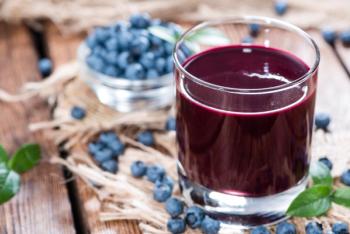
Magnetic molecularly imprinted polymer extraction with liquid chromatography-high resolution mass spectrometry (LC–HRMS) finds patulin in store-bought juice.
Scientists from China Pharmaceutical University in Nanjing, China recent developed a liquid chromatography-tandem mass spectrometry (LC–MS/MS)-based method for determining the presence of anti-colorectal cancer drugs in human plasma. Their findings were published in the Journal of Pharmaceutical and Biomedical Analysis (1).
Colorectal cancer is one of the most common malignant cancers in the world. Starting in the colon or the rectum, most colorectal cancers start as growths on the inner lining of the colon or rectum, with the growths also being known as polyps (2). According to the American Cancer Society, approximately 150,000 cases of CRC will occur in 2024, with approximately 53,010 deaths expected during 2024 (2). Current CRC treatments rely on surgical removal, local treatment, and chemotherapy. However, approximately 50% of patients will develop metastases, where cancer cells spread from the place they first formed to another part of the body. CRC is resistant to traditional chemotherapeutic drugs that can be used for metastatic CRC treatment; as such, additional treatment options must be found for metastatic CRC.
Read More:
For this study, the scientists created and fully validated a rapid and sensitive liquid chromatography-tandem mass spectrometry (LC–MS/MS) method. This method was created for the simultaneous determination of
The calibration ranges were 1.00–250 ng/mL for TPI, 8.00–8000 ng/mL for FTD, and 5.00–1250 ng/mL for FTY. The electivity, accuracy, precision, matrix effect, recovery, carryover, dilution integrity and stability test results all successfully met ICH acceptance criteria. After the initial procedures, the method was evaluated using the RGB model, one of the most widely used color representation methods in computer graphics (4). From there, it was successfully applied to a clinical study in patients with solid tumors. For TPI, FTD and FTY, the maximum
Scientists are also looking into other techniques for treating CRC. For example, a study out of the Chinese Academy of Sciences recently tested using ultrahigh-pressure liquid chromatography–mass spectrometry (UHPLC–MS) to treat colorectal cancer. To learn more about this news story, click
(1) Zhang, R.; Li, X.; Zhou, Q.; Zhang, X.; Shu, C.; Ding, Li. Simultaneous Determination of Tipiracil, Trifluridine and its Metabolite 5-Trifluoromethyluracil in Human Plasma Using Segmented Polarity LC-MS/MS: A Fully Validated Assay with Clinical Application. J. Pharm. Biomed. Anal. 2024, 239, 115885. DOI:
(2) Key Statistics for Colorectal Cancer. American Cancer Society 2024.
(3) Computer Graphics | The RGB Color Model. GeeksforGeeks 2022.