This application note outlines an analytical approach that meets the stringent requirements of EPA Method 327 for monitoring ethylene oxide and other hazardous air pollutants. The key innovation is the ability to achieve the required sensitivity without the need for liquid cryogen cooling, enabling more cost-effective and productive monitoring. Highlights include a 10 ppt method detection limit for ethylene oxide, effective management of sampling bias and chromatographic interferences, and straightforward method transfer between laboratories. The flexible, cryogen-free preconcentration system enables large-volume sampling to boost sensitivity while simplifying operation, making it an attractive solution for implementing the new EPA method.
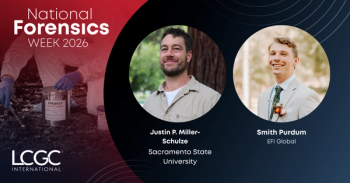
Justin Miller-Schulze and Smith Purdum explain how machine learning and chemometrics can improve fire debris classification in forensic science applications.
This week, the Chromatography Online website observed National Forensic Science Week with expert interviews on how chromatography helps solve cases, plus career stories from women in analytical science and new research on detecting rat poison in cats and tracking mold toxins in gluten-free pasta.
Kinjal Bhatt argues inclusion advocacy shouldn't fall on women alone, while Ina Varfaj credits sharing the load and learning to say no for avoiding burnout.
Steven Ray Wilson defines organ-on-a-chip as organoids on microfluidic devices, tracing their small, complex samples to the case for automated online LC–MS.