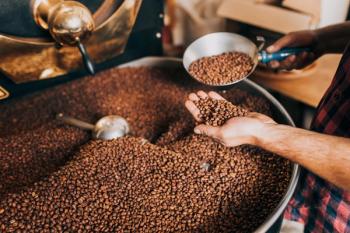
Liquid chromatography–tandem mass spectrometry (LC–MS/MS) finds low glyphosate residues of the weedkiller glyphosate in coffee beans.
Researchers from the University of Campinas (Campinas, Brazil) and the Waters Research Center (Budapest, Hungary) introduced a rapid, automated method using laser-assisted rapid evaporative ionization mass spectrometry (LA-REIMS) with high-resolution mass spectrometry to fingerprint coffee samples and predict sensory properties. LCGC International spoke to Leandro Wang Hantao of the University of Campinas regarding their work and the paper that resulted from it.
Researchers from the University of Campinas (Campinas, Brazil) and the Waters Research Center (Budapest, Hungary) introduced a rapid, automated method using laser-assisted rapid evaporative ionization mass spectrometry (LA-REIMS) with high-resolution mass spectrometry to fingerprint coffee samples and predict sensory properties. Using artificial neural networks (ANN), the method achieved high prediction accuracy (87–96%) and outperformed traditional PLS-DA models. Key contributors to sensory perception included sugars, chlorogenic acids, and fatty acids. The approach reduces reliance on subjective sensory panels and includes a novel algorithm to interpret ANN model weights for better understanding of compound relevance. LCGC International spoke to Leandro Wang Hantao of the University of Campinas regarding their work and the paper that resulted from it (1).
What motivated the development of an automated laser-assisted rapid evaporative ionization mass spectrometry (LA-REIMS) system for coffee sensory evaluation, and how does it improve upon traditional methods?
A Brazilian coffee cooperative sought to evaluate modern technologies to improve its quality control processes. Many colleagues collaborated with them to study different analytical techniques. Our specific focus was on identifying alternative methods for estimating coffee quality. The goal was not to replace professional tasters, but to provide them with a reliable tool for routine quality monitoring.
We required a rapid method to fingerprint analytes related to coffee aroma and found interesting articles on laser-based desorption and ionization techniques. This technology appeared ideal for fast analysis, and coupling it with high-resolution mass spectrometry offered the potential for information-rich fingerprints. We discussed this instrumental approach with our colleagues at Waters Corporation, who agreed to collaborate by loaning us a prototype. This prototype utilized laser-assisted rapid evaporative ionization (LA-REIMS) in a 96-well plate format, enabling individual analyses in under 10 seconds. This throughput met the cooperative's requirements.
To the best of our knowledge, LA-REIMS's primary advantage is speed; chromatography-based workflows struggle to match this pace. However, each analytical approach has distinct characteristics. In this project, we prioritized speed over sensitivity and resolution.
Can you explain why minimal sample preparation is advantageous for high-throughput coffee analysis?
Sample preparation is indispensable for any analytical method; however, its degree and complexity depend on the analytical scope and technique employed. For laser-assisted rapid evaporative ionization (LA-REIMS), preparation involved only grinding the coffee for representative sampling and adding moisture to facilitate laser absorption. This minimal preparation was key to achieving rapid analysis. In contrast, equilibrium-based techniques such as solid-phase microextraction (SPME) require at least several minutes for sample preparation, even under non-equilibrium conditions.
Why is it important to integrate both sensory panel results and instrumental analysis in coffee quality assessment?
Instrumental analysis should be integrated with chemometrics to support routine quality control for coffee sensory evaluation. This combination enables reproducible, reliable results. The sensory panel is essential for training the initial predictive model and for its ongoing validation and refinement, thereby improving the model's accuracy and precision over time. Building an extensive, representative database requires this continuous effort.
The study achieved prediction accuracies between 87–96% for coffee sensory properties. What do these results imply about the reliability of the LA-REIMS plus artificial neural networks (ANN) approach in industrial settings?
Given this is an initial model, we achieved results equivalent to the sensory panel's expected accuracy of approximately 80%. We anticipate that continued refinement will further improve the accuracy of the chemometric models.
Why did ANN models outperform partial least square-discriminant analysis (PLS-DA) in predicting coffee sensory properties? Could you elaborate on the benefits and limitations of ANN compared to linear models like PLS-DA?
I particularly value the saying of "performing the common, uncommonly well.” While linear models proved successful for most applications, we sometimes observed non-linear relationships between dependent and independent variables, evident in residual patterns and systematic prediction errors. In these cases, careful selection of alternative methods (like artificial neural networks, ANNs) is advised.
How does the novel algorithm developed for evaluating mass-to-charge ratio (m/z) importance in ANN models enhance interpretability of machine learning results in food analysis?
A key concern with machine learning is the inherent lack of transparency in how models utilize input data. Factor-based chemometrics addresses this by enabling us to evaluate how independent variables are combined (loadings and regression vectors). This novel algorithm provides an essential tool for assessing the chemical validity of predictive models using ANN.
Which compounds—such as sugars, chlorogenic acids, and fatty acids—were tentatively identified as influencing coffee sensory attributes, and why are they significant in coffee chemistry?
While profiling aroma-related compounds via GC×GC–MS and LC–HRMS effectively reveals links between chemical profiles and sensory attributes, our ANN model operates through direct and predominantly indirect correlations within the mass spectral fingerprint. Consequently, the interpretation of sensory predictions is less straightforward than desired.
How might the combination of mass spectrometry and machine learning reshape quality control processes in the broader food industry?
I see value in using instrumental analysis and chemometrics for routine coffee quality control. Professional tasters could help train and refine the models, freeing them to focus on product development and innovative work.
Is the prototype LA-REIMS system being commercialized?
Working with the prototype presented an engaging challenge, but we concluded the technology was mature and market ready. It's now commercially available through AmbiMass Kft.
In what ways do you see this research influencing the future of coffee production, consumer satisfaction, and even coffee marketing strategies?
Detailed, actionable data is fundamental for ensuring product consistency and, crucially, for driving product innovation.
What challenges might arise when deploying this system commercially, particularly with respect to equipment cost, operator training, or data interpretation?
Process and product innovation demand investment in human resources and infrastructure, making equipment cost a secondary consideration. Operator training remains essential to ensure measurement reliability and maximize instrument uptime. For routine analysis, data interpretation is streamlined: unlike complex model development, results are easily visualized through QC charts and graphs for immediate reporting.
How do you see the interpretability of ANN models—through the novel algorithm—helping bridge the gap between analytical chemistry and human sensory analysis in the coffee industry?
It provides an essential tool for decoding non-linear relationships in chemosensory studies.
Could the methodology presented here be adapted to other food products? If so, what adjustments might be necessary?
This workflow is readily transferable to other food products, requiring only minor adjustments, particularly in sampling and sample preparation protocols, to ensure aliquot representativeness.
References