Automated sequential tube sampling and chemometrics supplement GC–MS, adding time profiling and fast product-line comparison for real-world insight.
A recent study published in the Journal of Food Composition and Analysis examined a new method to optimize raisin production by demonstrating how pretreating grapes with extra-virgin olive oil (EVOO) before dehydration can significantly improve the retention of beneficial phenolic compounds during raisin production and storage (1). Led by a team of researchers from São Paulo State University (Unesp), this research illuminates some of the best practices for processing and storage conditions that can affect the stability of phenolics (1).
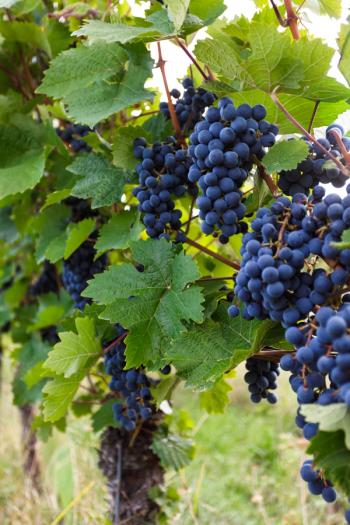
The researchers focused their study on analyzing BRS Vitoria grapes because they are known for its complex phenolic profile. These grapes are cultivated primarily in Brazil because of its climate (2). Because of increased consumer demand, production of these grapes have increased to 1.76 million tons harvested as recently in 2023, with these trends only expected to grow (2).
In their study as part of the experimental procedure, the researchers analyzed the grapes after dehydration, with and without EVOO pre-treatment, and monitored phenolic compound stability over 180 days at three storage temperatures (4, 25, and 35 °C) (1). Using high-performance liquid chromatography coupled with diode-array detection and electrospray ionization mass spectrometry (HPLC-DAD-ESI-MSn), the team tracked changes in anthocyanins, flavonols, and hydroxycinnamic acid derivatives (HCAD) (1).
Based on the findings, the researchers concluded that dehydration inevitably degrades phenolic compounds, particularly anthocyanins and flavonols, which are associated with antioxidant activity and potential health benefits. However, grapes pre-treated with EVOO retained anthocyanins at levels 1.9 to 2.9 times higher than untreated grapes during storage at 4 and 25 °C (1). The concentrations of malvidin-3-glucoside, a key anthocyanin, ranged from 0.69 to 183 mg per kilogram in EVOO-treated samples (1).
For flavonols, EVOO pre-treatment did not significantly influence overall retention, with levels ranging from 35.4 to 64.9 mg of quercetin-3-glucoside per kilogram (1). Instead, temperature emerged as the main factor: at 35 °C, nearly all flavonols and most anthocyanins degraded completely (1). By contrast, storage at 4 °C preserved compounds more effectively, underscoring the importance of cooler storage conditions in extending shelf life (1).
Another key finding in the study was that diglycosylated and diglycosylated coumarilated derivatives of malvidin remained stable until the end of the 180-day storage period. This observation highlighted how molecular structure influences compound stability. Hydroxycinnamic acid derivatives, which are less extractable, proved more resilient across all treatments, with concentrations between 143 and 270 mg caftaric acid per kilogram (1). Their stability may be linked to matrix release under acidic conditions, particularly at higher storage temperatures (1).
The researchers determined that physicochemical analysis proved that BRS Vitoria grapes are suitable for raisin production. They determined this because of the high initial moisture content (79.13%), pH of 3.89, and 17.33 °Brix soluble solids (1). The dehydration process concentrated key compounds such as flavonols and HCAD, although anthocyanins, especially cyanidin and delphinidin derivatives, were most affected (1).
Despite some degradation, the findings suggest that EVOO pre-treatment is a promising, natural alternative for reducing drying time while enhancing anthocyanin stability in raisins. Moreover, the study emphasizes that storage temperature is a critical determinant of phenolic preservation, with 4 °C identified as the optimal condition (1).
The research also raises new questions about how grape variety and phenolic complexity influence degradation pathways. As the demand for functional foods grows, it is expected that future studies will examine how to optimizw raisin production to preserve bioactive compounds that could deliver products with greater health benefits (1).