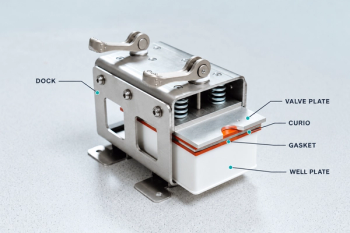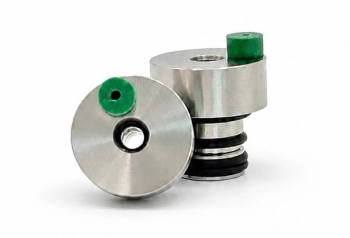
Markes International’s vacuum-assisted HiSorb extends analyte coverage for gas chromatography.
Gold-enhanced thin-layer chromatography–surface-enhanced Raman scattering (TLC–SERS) identifies toxic aromatics in firefighting water.
Quickly identifying harmful pollutants in messy environmental samples is still a big challenge during environmental emergencies. This is especially true for water left over from firefighting, which is often full of substances that interfere with testing and contains many different contaminants at once. In a recent study, researchers developed a new testing method that combines two techniques: thin-layer chromatography (TLC) to separate the chemicals in a sample on a thin coated plate, and surface-enhanced Raman scattering (SERS), which uses tiny gold particles to boost the unique light signal each chemical gives off, acting like a "fingerprint." Together, these allow the team to quickly separate, identify, and measure a group of harmful pollutants known as aromatic compounds. A paper based on this work was published in the journal Spectrochimica Acta Part A: Molecular and Biomolecular Spectroscopy.1
When a chemical fire breaks out, huge amounts of water are used to put out the flames, cool down equipment, and contain spills, and this water inevitably picks up a wide range of harmful substances from the scene.2,3Among these, a group of pollutants called aromatic compounds, especially certain chemicals known as aromatic amines and chlorinated phenols, are a major concern because they are widely used in industry, linger in the environment for a long time, and are highly toxic.4-6For example, the International Agency for Research on Cancer lists benzidine among the substances known to cause cancer in humans, while chemicals such as p-phenylenediamine, o-phenylenediamine, and 4-chlorophenol can severely irritate the lungs and airways and cause other health problems.7,8Once these pollutants escape, they can travel through drains into farmland, drinking water supplies, rivers, and lakes, endangering wildlife and people and causing further environmental disasters.7,9,10 “Therefore,” write the authors of the paper,1 “developing a portable, high-speed analytical platform to simultaneously identify and measure key aromatic pollutants in firefighting effluent is critical for emergency management.”
The researchers conducting the study made tiny gold particles by starting with very small "seed" particles and growing them to the right size. Using their new method, they were able to separate four harmful chemicals from a test mixture: p-phenylenediamine and o-phenylenediamine (used in hair dyes and industrial products), benzidine (used in making dyes), and 4-chlorophenol (used in disinfectants and pesticides). Each chemical was identified by comparing its unique light "fingerprint" with that of a pure sample. The team also created reference scales for each chemical so they could measure how much was present after separating them and testing each one in turn. Compared with using the light-boosting technique on its own, separating the chemicals first prevented their signals from overlapping, making it possible to analyze each one individually. When the researchers tested firefighting wastewater to which known amounts of chemicals had been added, the method successfully identified and measured p-phenylenediamine, o-phenylenediamine, and 4-chlorophenol, and the amounts it detected matched the amounts that had been added.1
“These results,” write the authors of the paper,1 “demonstrate analytical performance for added analytes in a real wastewater matrix. With filtration as the only sample pretreatment before TLC, the platform provides an approach to multicomponent analysis of substituted aromatic pollutants and a basis for on-site environmental monitoring and emergency screening of hazardous aromatic contaminants in natural waters and industrial wastewater systems.”
Read More on Similar Topics
References