The Column
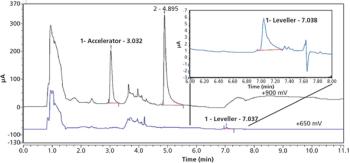
A novel approach is described for the quantitation of three additives typically used in copper plating using a dual LC system with an ECD and a CAD.
The Column
A novel approach is described for the quantitation of three additives typically used in copper plating using a dual LC system with an ECD and a CAD.

The Column
Surfactants present a real challenge to the analytical chemist as they are a very complex class of chemical compounds.
LCGC North America
HPLC with diode-array and electrochemical-array detection overcomes sensitivity and specificity limitations in natural products analysis.

The Application Notebook
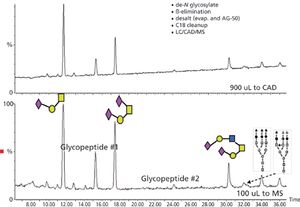
Simple, rapid and accurate methods have been developed for the analysis of simple carbohydrates including mono- or disaccharides, or as fairly small glycans (6–11 residues) liberated from glycoproteins using charged aerosol detection combined with mass spectrometry techniques.

The Application Notebook
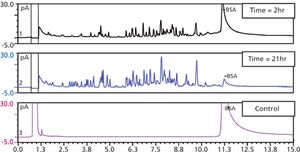
Selective cleavage of proteins by the enzyme trypsin helps characterize larger proteins. While MS provides structural information, quantitative analysis is often based on detection by UV at 214 nm.
The Application Notebook
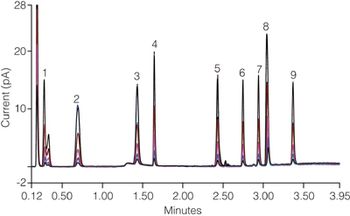
Quantification of substances, such as drug impurities or library compounds when pure standards are not available is difficult yet often necessary.

LCGC Asia Pacific
ESA - a Dionex Company Application Note
The Application Notebook
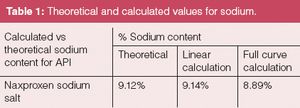
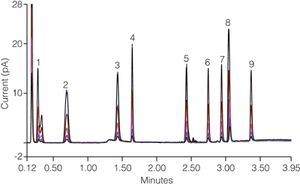
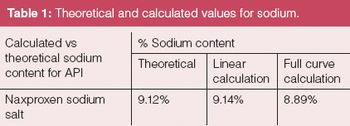
The characterization of pharmaceutical salts is critical to the drug development process. Active pharmaceutical ingredient (API) salts influence the solubility, stability and hygroscopicity of pharmaceuticals and affect the final drug formulation. Traditionally, the analysis of the API and its counterion salt requires separate applications. Nanopolymer silica hybrid (NSH) technology in the Acclaim Trinity P1 column along with the Corona ultra charged aerosol detector (CAD) enables simultaneous analysis of the API and counterion over four orders of magnitude.