

The panel closes with a shared message: define your question first, and remember every result is an estimate.
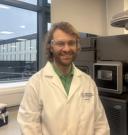
David Megson is currently a reader in chemistry and environmental forensics at Manchester Metropolitan University (UK). He also works on pollution litigation cases as a senior environmental consultant at Chemistry Matters (Canada). Megson investigates sources of legacy and emerging persistent organic pollutants and monitors them in the environment using advanced analytical techniques, including multidimensional chromatography and high-resolution mass spectrometry. Much of Megson’s research has an environmental forensics aspect, which involves identifying sources of contamination, transport pathways, and the magnitude of pollutant exposure. As a recognized international expert in this area, he regularly contributes to expert witness reports for large (>$100 million) litigation cases involving environmental pollution in North America.
The panel closes with a shared message: define your question first, and remember every result is an estimate.
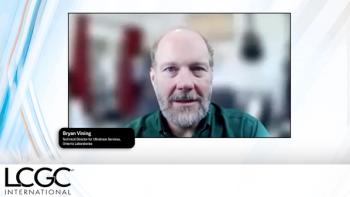
Asked for one change to ease PFAS analysis, the panel points to better communication and smarter use of AI tools.
The experts compare direct injection and solid-phase extraction for handling PFAS in complex matrices.

The panel tackles the paradox of background contamination: the lower detection limits go, the more PFAS turn up everywhere.

Bryan Vining, David Megson, and Pasquale Avino examine why ultrashort-chain PFAS like TFA are reshaping analytical priorities.
The panel weighs non-targeted screening against total PFAS measurement to catch the compounds routine targeted methods may miss entirely.
The panelists debate how to harmonize PFAS methods across a rapidly expanding, poorly standardized universe of compounds.
The panel unpacks the defining challenge of PFAS analysis: a chemical class so vast and diverse it pushes current methods to their limits.
Meet the expert panel exploring the analytical challenges of environmental PFAS detection in this LCGC International Peer Exchange®.

The Column
Populations worldwide are exposed to polychlorinated biphenyls (PCBs) that can be harmful to human health. The Column spoke to David Megson from Ryerson University in Toronto, Canada, about recent developments in assessing human exposure to PCBs and chiral enantiomer fractions (EFs) in the workplace.

June 30th 2026

November 5th 2015