Immersive sorptive extraction coupled with comprehensive two-dimensional gas chromatography and time-of-flight mass spectrometry (GC×GC–TOF-MS) was used to compare flavour profiles from popular brand soft drinks with those of imitation products.
Elinor Hughes obtained her B.Sc. in chemistry and Ph.D. in organic chemistry at Bangor University, UK. After working for a chemical manufacturing company for three years, she moved to the Royal Society of Chemistry where she worked in journals publishing for six years and on Chemistry World magazine for four years. This was followed by five years as a freelance copyeditor and science writer. Her current role is technical copywriter at Markes International.
Immersive sorptive extraction coupled with comprehensive two-dimensional gas chromatography and time-of-flight mass spectrometry (GC×GC–TOF-MS) was used to compare flavour profiles from popular brand soft drinks with those of imitation products.

A broad range of trace-level volatile organic compounds was detected in drinking water using headspace–trap sampling.

A TD–GC×GC–TOF-MS method for malodour detection

This study demonstrates the analysis of live chemical warfare agents and simulants at trace and higher levels.

Analysis of polyaromatic hydrocarbons (PAHs) in air demonstrates that a TD–GC–MS system can operate with hydrogen carrier gas as well as it does with helium.

The potential of SPME when combined with MSE for the characterization of olive oil aroma profiles is presented.

The benefits that GC×GC–TOF-MS with tandem ionization and chemometrics offer for fragrance profiling and authenticity evaluation.

Laura McGregor, Stefan Koschinski, and Elinor Hughes, SepSolve Analytical Assessing aroma profiles with high-capacity sorptive extraction combined with GC×GC–TOF-MS and powerful data mining software.

High-capacity sorptive extraction combined with thermal desorption–gas chromatography–mass spectrometry (TD–GC–MS) can improve on traditional methods for the analysis of VOCs and other trace analytes that contribute to the aroma, flavor, and safety of food products.

This study demonstrates how the technique can improve on traditional methods in the analysis of VOCs that contribute to the aroma and flavour of a breakfast cereal and in identifying other compounds of interest, such as food additives, contaminants, and potentially toxic compounds at trace levels.
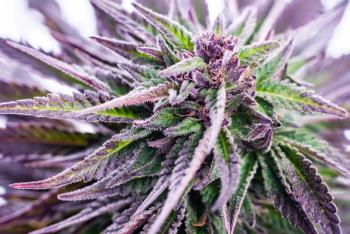
There are three main sub-species of cannabis—indica, sativa, and ruderalis—but there are hundreds of commercial strains based on these sub-species and their hybrids. Profiling the terpene content in these strains is vital to provide accurate labelling of cannabis-based products, but it can be very challenging. The usual technique for this—one-dimensional gas chromatography (GC)—is not always reliable when it comes to separating the diverse classes of terpenes. This article illustrates how two-dimensional GC (GC×GC) coupled with mass spectrometry (MS) can be used to profile cannabis terpenes with enhanced separation, resulting in the confident identification of terpenes and improved flavour interpretation.

February 1st 2021