Waters' Erin Chambers says combining column chemistry and particle-physics innovation cut a GLP-1 impurity profiling workflow from three hours to under one.

Erin Chambers is a scientific leader with more than 30 years of experience spanning LC, MS, and chemistry consumables across research, development, and engineering. She earned her undergraduate chemistry degree from Yale University and her PhD in analytical chemistry from Kings College London. Before Waters, Chambers conducted DMPK studies at Pfizer and held roles at AB Sciex as a service engineer and in R&D, helping bring the Tof-Tof product line to market. Across more than 25 years at Waters, she has made her mark in high-end MS sales, proteomics, and LC instrument development before joining the Chemistry Consumables group in 2005, advancing from applications chemist to consulting scientist. She is widely recognized for establishing Waters’ reputation in large molecule quantification and for her research in diabetes and Alzheimer’s disease. After a series of leadership roles, she serves as Global VP/GM for Waters Consumables and Lab Automation, leading product management, marketing and R&DE, and owning strategic planning and execution, portfolio management, end-to-end product development and lifecycle management, R&D pipelines, and M&A target recommendations. As vice-chair of the Waters Corporation Innovation Board, she identifies emerging technologies, guides ongoing programs, and shapes the decisions that keep Waters ahead of evolving customer and market needs.
Waters' Erin Chambers says combining column chemistry and particle-physics innovation cut a GLP-1 impurity profiling workflow from three hours to under one.

Erin Chambers reflects on two leadership philosophies and a personal mantra that have shaped her approach to leading teams.
Erin Chambers shares her near-term and long-term view of how artificial intelligence will shape the chromatography community.
Erin Chambers connects trustworthy data to scientific confidence and describes how Waters builds regulatory readiness into development.
Erin Chambers outlines the signals Waters tracks when deciding where to invest R&D across GLP-1s, lipid nanoparticles, mRNA, and ADCs.
Erin Chambers explains why she views column chemistry, not hardware, as chromatography's real differentiator, citing two recent Waters launches.

The Column
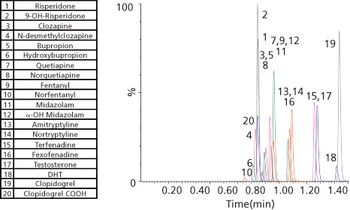
Advances in Sample Preparation: Removing Phospholipids from Biological Samples
The Application Notebook
Waters Corporation

The Application Notebook
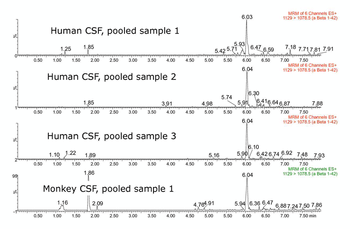
Fast, flexible platforms for peptide quantification are needed, particularly for a discovery setting. This type of methodology would be especially advantageous in the case of amyloid beta (a?) peptides.

Special Issues
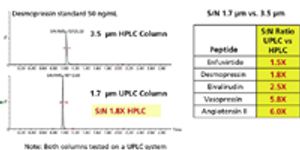
The growing market for biotherapeutic peptides and the development of quantitative methods for those analytes has brought to light the challenges facing the analysis of this broad range of compounds. Market forces and regulatory requirements are encouraging analytical groups to develop methodologies that are time- and cost-effective, while still producing assays that are sensitive enough to cope with biological matrices.
LCGC Asia Pacific
Waters Application Note

The Application Notebook
Streamlined sample prep, LC and MS method development.
LCGC Asia Pacific
Streamlined sample prep, LC and MS method development.

The Application Notebook
Zhe Yin, Kenneth J. Fountain, Erin E. Chambers and Diane M. Diehl, Waters Corporation, Milford, Massachusetts, USA.

The Application Notebook
Morphine is an effective pain-relieving drug that is primarily metabolized into morphine-3-glucuronide (M3G) and morphine-6-glucuronide (M6G). The highly potent M6G may have adverse effects, such as respiratory depression and renal failure, if accumulated in the body. As morphine abuse continues to affect modern society, an effective method must be established to analyse morphine and its structurally related compounds in biological fluid samples. In this work, a UPLC–MS-MS method was developed to separate six morphine-related compounds on a 2.1 Ã- 100 mm, 1.8 μm ACQUITY UPLC HSS T3 column in a single run using an ACQUITY UPLC system connected to a fast-scanning triple-quadrupole MS detector (TQD). The method achieved adequate retention of these very polar compounds by reversed-phase (RP) chromatography in an 8-min total run time.

The Application Notebook
A highly sensitive analytical method for the analysis of tamsulosin in human plasma has been developed for use in bioanalytical studies. The solid-phase extraction (SPE) and UPLC–MS–MS methodologies are described, as well as performance against validation parameters.

The Application Notebook
Several common birth control formulations contain both drospirenone and ethinyl estradiol. A highly selective and sensitive analytical method for the analysis of drospirenone in human plasma has been developed for use in bioequivalence studies. The solid-phase extraction (SPE) and UPLC–MS–MS methodologies are described as well as performance against validation parameters.

The Application Notebook
Several common birth control formulations contain both drospirenone and ethinyl estradiol. A highly selective and sensitive analytical method for the analysis of drospirenone in human plasma has been developed for use in bioequivalence studies. The solid-phase extraction (SPE) and UPLC®–MS–MS methodologies are described as well as performance against validation parameters.

LCGC Asia Pacific
Using ACQUITY UPLC technology with triple quadrupole MS detection enhances the selectivity, sensitivity and throughput in quantitative bioanalytical studies. Detection limits for these methods are being driven lower and lower as drugs become more potent.

The Application Notebook
The use of 30 mm UPLC columns coupled with Oasis SPE in µElution format was investigated to increase the speed of quantitative bioanalytical methods while maintaining sensitivity and resolution of closely related analytes.

September 2nd 2026
September 1st 2026
September 4th 2026