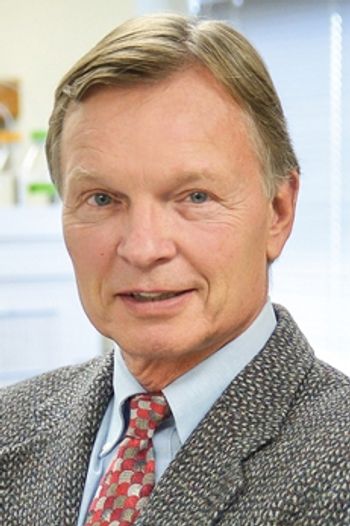
James P. Grinias is an Associate Professor in the Department of Chemistry & Biochemistry at Rowan University in Glassboro, New Jersey, and the winner of the 2022 Emerging Leader in Chromatography Award, which is presented by LCGC magazine.
Jerome Workman, Jr. serves on the Editorial Advisory Board of Spectroscopy and is the Executive Editor for LCGC and Spectroscopy. He is the co-host of the Analytically Speaking podcast and has published multiple reference text volumes, including the three-volume Academic Press Handbook of Organic Compounds, the five-volume The Concise Handbook of Analytical Spectroscopy, the 2nd edition of Practical Guide and Spectral Atlas for Interpretive Near-Infrared Spectroscopy, the 2nd edition of Chemometrics in Spectroscopy, and the 4th edition of The Handbook of Near-Infrared Analysis. Direct correspondence to: jworkman@mjhlifesciences.com

James P. Grinias is an Associate Professor in the Department of Chemistry & Biochemistry at Rowan University in Glassboro, New Jersey, and the winner of the 2022 Emerging Leader in Chromatography Award, which is presented by LCGC magazine.

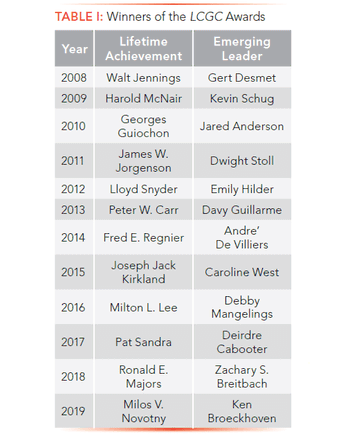
Barry L. Karger and James P. Grinias are the winners of the 15th annual LCGC Lifetime Achievement and Emerging Leader in Chromatography Awards, respectively, for 2022. Here, we review their achievements.

Our annual LCGC salary survey takes a look at employment conditions, salary, benefits, and other workplace concerns affecting scientists and technicians working in the chromatography and separation sciences field, and assesses where things stand after more than 18 months since the start of the coronavirus pandemic.

Mary Ellen McNally knows how to solve complex and pressing problems in the industry.

Erik Regalado is constantly developing and implementing enabling technologies for pharmaceutical development—such as automated methods, ultrafast and computer-assisted analysis, and multidimensional chromatography.

Paul Haddad, of the University of Tasmania, is well known for developing mathematical models to improve fundamental understanding of chromatographic techniques. He recently spoke to us about his research work and career.

Paul Haddad and Erik L. Regalado are the winners of the 14th annual LCGC Lifetime Achievement and Emerging Leader in Chromatography Awards, respectively. We review their achievements.

In addition to analyzing salary trends, the 2020 edition of our annual survey of separation scientists expands its view to focus on broader issues, such as job security, professional concerns and challenges (especially in the era of COVID), workplace discrimination, and the outlook for 2021 and beyond.

Our interview explores Dan Armstrong’s career of contributions, spanning enantiomeric separations, molecular recognition, ionic liquids, ordered media, mass spectrometry, drug development, environmental research, and food analysis.

Szabolcs Fekete tells us about his work characterizing therapeutic proteins, studying liquid chromatography column technology, and optimizing methods.

Daniel W. Armstrong, of the University of Texas at Arlington, is the winner of the 2020 LCGC Lifetime Achievement in Chromatography Award, which honors an outstanding and seasoned professional for a lifetime of contributions to the advancement of chromatographic techniques and applications. He recently spoke to us about his work and his career.

Szabolcs Feketeis currently a scientific collaborator at the University of Geneva. He is actively investigating aspects of retention modeling and fundamental attributes of LC. He is the 2020 winner of the LCGC Emerging Leader in Chromatography Award which recognizes the achievements and aspirations of a talented young separation scientist who has made strides early in his or her career toward the advancement of chromatographic techniques and applications. He recently spoke to us about his current research work and his career aspirations.

Daniel W. Armstrong and Szabolcs Fekete are the winners of the 13th annual LCGC Lifetime Achievement and Emerging Leader in Chromatography Awards, respectively. Here, we review their achievements.

New developments in measurement science are providing chemical information on single cells. Single-cell chemical assays provide unique information on cell heterogeneity and allow detailed studies of the metabolome and proteome for both snapshot and time-resolved studies. Recent papers describe multimodal chemical imaging, single-cell MALDI-MS supervised by immunocytochemical classification, integrating mass spectrometry with microphysiological systems for improved neurochemical studies, high throughput approaches, and others. This interview with Jonathan Sweedler explores the latest developments in mass spectrometry and separations for single cell analysis.

The 2019 LCGC salary and employment survey extracted from calendar years 2018–2019 trends shows a slight increase in average salaries over previous years, and a narrowing of the gender gap in several categories.

Ken Broeckhoven explains his pursuit of ever higher performance in HPLC.

Prof. Novotny discusses the joys of mentoring and the future of separation science.

The contributions of Milos V. Novotny and Ken Broeckhoven, the winners of the 2019 LCGC Lifetime Achievement and Emerging Leader in Chromatography Awards, are presented.

These Wednesday morning and afternoon sessions in Exhibit Hall A4 highlight the advanced applications of Gas Chromatography.

Tuesday morning and afternoon presentations taking place in the Daffodil Room highlight the use of GC–MS for analysis of multiple constituents in hydrocarbons, as well as a workshop for the use of pyrolysis in GC and GC–MS.