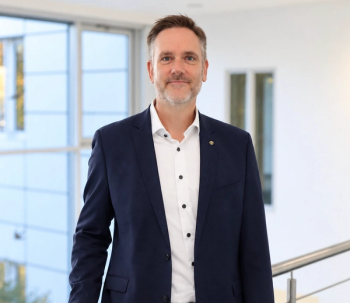
Florian Geistmann succeeded retiring Jürgen Semmler as Shimadzu Europa managing director on October 1.
Top articles published this week include several clips from a recent panel discussion featuring female chromatographers and an inside look at how artificial intelligence (AI) is impacting separation science.
This past week, LCGC International published a variety of articles on hot topics in separation science. Andrew Anderson of ACD/Labs discusses how digital integration and AI is reshaping the scientific method, Jonathan Shackman discusses the pros and cons of AI in chromatography, and Susanne Boye, Daniela Held, and Claudia Zielke answer some of the most pressing career-related questions for analytical scientists
This is the Best of the Week.
LCGC International interviewed Andrew Anderson of ACD/Labs about how AI and digital integration are reshaping the scientific method through the AI–digital–physical DMTA cycle. Anderson highlights that although automation and machine-driven collaboration are accelerating discovery, human creativity and intuition remain indispensable (1). He also reflects on how this evolving framework may guide the next major leap in pharmaceutical informatics strategy, emphasizing a future where digital and physical experimentation are increasingly interconnected (1).
Jonathan Shackman’s LCGC Blog reflects on how early experiences with a modest home computer taught him the core logic of programming, which are skills that proved more valuable than mastering low-level technical details. He draws parallels to today’s AI tools, which shift focus from process to end goals, allowing scientists to emphasize creativity and analytical thinking (2). Shackman argues that while AI can simplify workflows and generate custom teaching or analytical tools, human understanding and guidance remain essential for meaningful, accurate results (2).
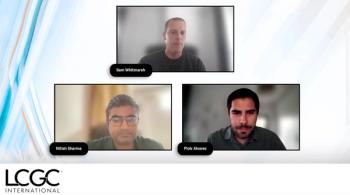
This roundtable video features Susanne Boye, Daniela Held, and Claudia Zielke discussing their journeys in chromatography and the lessons they’ve learned as women in scientific leadership. Susanne Boye is a biochemical engineer specializing in polymer separation. After completing her PhD on branched polymer fractionation at the Technical University of Dresden and the IPF, she established AF4 capabilities at the IPF, where she now leads the FFF laboratories and serves as deputy head of Advanced Macromolecular Structure Analysis (3). Daniela Held, an analytical industry leader with more than 20 years of experience, earned her PhD in chemistry in 2000 and advanced from product management at PSS to Managing Director, later becoming R&D Director after the company’s acquisition by Agilent (3). Claudia Zielke is an analytical chemist with expertise in separation science, earning her PhD from Lund University in 2017 and completing postdoctoral work at Santa Clara University and Stanford (3). She is now a research scientist at Vaxcyte, developing next-generation vaccines.
In this video, Boye, Held, and Zielke discuss how their careers led them to chromatography. The panelists share what inspired their careers, the skills and strategies that supported their advancement, and the role of mentorship in navigating STEM pathways (4). They also highlight how inclusive lab cultures and emerging technologies are expanding opportunities for women in analytical chemistry. Together, their insights offer practical guidance for building fulfilling, resilient careers in separation science (4).
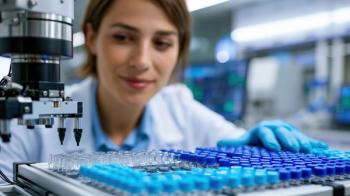
High-throughput mass spectrometry (HT-MS) is transforming drug discovery by combining ultra-fast, chromatography-free analysis with powerful digital ecosystems. Modern HT-MS platforms can process tens of thousands of samples per day, but this speed creates massive data volumes that require structured pipelines, automation, cloud infrastructure, and AI-driven analytics (5). Integrated digital ecosystems now enable standardized data capture, real-time visualization, and rapid, collaborative decision-making across global teams. With AI and machine learning (ML) improving peak detection, identification, and predictive insights, HT-MS is evolving from a high-speed instrument into a fully automated, intelligent engine that accelerates discovery, reduces costs, and strengthens data-driven research (5).