

LCGC Asia Pacific
A look at the effect of two overlapping peaks on peak quantificiation and resolution
LCGC Asia Pacific
A look at the effect of two overlapping peaks on peak quantificiation and resolution

LCGC North America
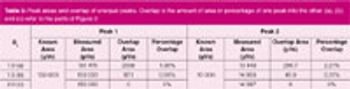
This month's "GC Connections" addresses the effects of two overlapping tailing peaks on peak resolution and quantitation.

LCGC Europe
This instalment addreses the effects on peak resolution and quantification of two overlapping peaks.
LCGC Asia Pacific
The regular maintenance of gas chromatography components, including symptons, causes and remedies.
LCGC North America
John Hinshaw presents his annual review of all that was new in the field of gas chromatography at Pittcon 2010.
LCGC North America
In this month's "GC Connections," John Hinshaw addresses GC components that can become contaminated, including symptoms, causes, and cleaning procedures.

LCGC Asia Pacific
This month in "GC Connections," John Hinshaw discusses issues that can arise when deciding to upgrade or replace gas chromatography technologies.
LCGC Europe
The regular maintenance of gas chromatography components, including symptons, causes and remedies.
LCGC Europe
This month's "GC Connections" explores the issues that can arise when deciding to upgrade or replace GC technologies.
LCGC North America
This month in "GC Connections," John Hinshaw discusses issues that can arise when deciding to upgrade or replace gas chromatography technologies.

LCGC North America
In this month's "GC Connections," John Hinshaw investigates how much air enters a gas stream in the face of extreme leaks in an attempt to gauge the potential effects of carrier gas leaks on GC system performance.
LCGC Europe
Continuing a series on peak tailing in chromatography, John Hinshaw discusses the effects that peak tailing has on quantitative measurement of peak height and area.
LCGC North America
John Hinshaw takes a break from the technical and visits a number of chromatography forums and discussion groups.
LCGC North America
John Hinshaw discusses the effects that peak tailing has on quantitative measurement of peak height and area.

LCGC Europe
In this month's "GC Connections", John Hinshaw addresses the causes and effects of peak tailing, as well as ways in which chromatographers can measure and report their misshapen peaks.

LCGC North America
John Hinshaw presents his review of all that was new and innovative at Pittcon 2009 in the field of gas chromatography.
LCGC North America
The causes and cures for peak tailing are discussed, along with the various ways that chromatographers measure tailing peaks.

LCGC Europe
Detectors are another link in the chain of signals that a chromatographic analysis generates. After separation, a detector transduces the chemical signals of eluted analytes to an electrical signal that is then recorded and measured. The identities and amounts of analytes are determined from this information. This month in "GC Connections", John Hinshaw examines the environment, set-up and operating conditions necessary to ensure high gas chromatography detector performance and reliability.
LCGC North America
This month, John Hinshaw examines the environment, setup, and operating conditions necessary to ensure high gas chromatography detector performance and reliability.

LCGC Europe
Chromatographers are choosing hydrogen carrier gas more often for its performance and, in the face of increasing helium prices, cost. In this instalment of "GC Connections", John Hinshaw addresses some of the more frequently asked questions he encounters regarding hydrogen as a carrier gas.
LCGC North America
In this installment of "GC Connections," John Hinshaw addresses some of the more frequently asked questions he encounters about hydrogen as carrier gas.
LCGC Europe
This month in "GC Connections", in the first of a two-part series, John Hinshaw relates what happens when high-voltage spikes attack modern electronic equipment, what to do when they occur, and how to set up equipment to minimize damage and loss of data.
LCGC North America
John Hinshaw concludes his two-part series on electrical issues in the laboratory.
LCGC North America
This month in "GC Connections," in the first of a two-part series, John Hinshaw relates what happens when high-voltage spikes attack modern electronic equipment, what to do when they occur, and more.

LCGC Europe
Successful gas chromatography (GC), akin to many other disciplines, requires regular attention to a number of routine procedures. Chromatographers, similar to anyone else, develop habits in their daily work. Some of these help create a successful laboratory environment, while others can be ineffective or worse, can create more problems than they solve. This month, "GC Connections" presents a few of the best and worse laboratory habits.
LCGC North America
This annual "GC Connections" installment reviews GC instrumentation and accessories shown at this year's Pittcon and also includes some products from Analytica in Munich.
LCGC Europe
Computerized pneumatic control adds a very capable multipurpose tool to the chromatographer's tool belt.
LCGC North America
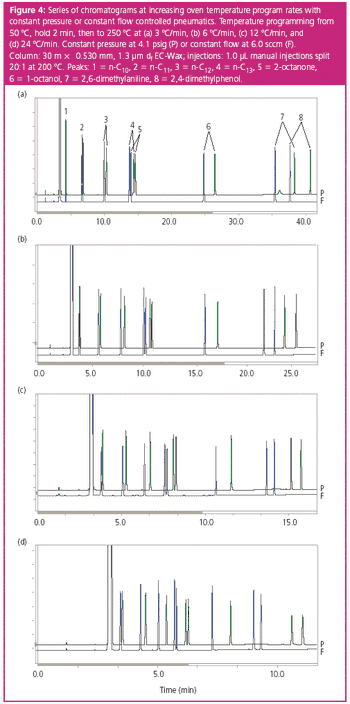
The second part of the series takes a look at what happens to the pneumatic operating conditions and chromatography with GC oven temperature programming of a wide-bore column.

LCGC Europe
In this month's "GC Connections" instalment, John Hinshaw discusses computerized pneumatics for gas chromatography. This is the first of a two-part series that reviews computerized pneumatics and some important considerations that arise in the course of normal use.

LCGC North America
In this month's "GC Connections" installment, John Hinshaw discusses computerized pneumatics for gas chromatography. This is the first of a two-part series that reviews computerized pneumatics and some important considerations that arise in the course of normal use.