


LCGC Europe
This month’s “GC Connections” continues the discussion of procedures for safe setup, use, and disposal of compressed gas cylinders in the chromatography laboratory.
LCGC Europe
This month’s “GC Connections” continues the discussion of procedures for safe setup, use, and disposal of compressed gas cylinders in the chromatography laboratory.
LCGC Asia Pacific
Many gas chromatographers are not fully aware of safe practices for handling high-pressure gas cylinders. Gas chromatography (GC) operators should be trained to properly transport, install, connect, and maintain their gas supplies, as well as to deal with emergencies. In the first of a two-part series, this month’s “GC Connections” examines the principal hazards and safety issues surrounding the compressed gas cylinder. Next month’s instalment will present safe procedures for routine cylinder use.

LCGC North America
Many gas chromatographers are not fully aware of safe practices for handling high-pressure gas cylinders. GC operators should be trained to properly transport, install, connect, and maintain their gas supplies, as well to deal with emergencies. In the first of a two-part series, this month’s GC Connections examines the principal hazards and safety issues surrounding the compressed gas cylinder. Next month’s installment will present safe procedures for routine cylinder use.

LCGC Europe
Many gas chromatographers are not fully aware of safe practices for handling high-pressure gas cylinders. Gas chromatography (GC) operators should be trained to properly transport, install, connect, and maintain their gas supplies, as well as to deal with emergencies. In the first of a two-part series, this month’s “GC Connections” examines the principal hazards and safety issues surrounding the compressed gas cylinder. Next month’s instalment will present safe procedures for routine cylinder use.
LCGC Asia Pacific
While gas chromatographers may take their septa for granted, in fact these small and seemingly unremarkable polymer disks keep air out of the carrier-gas stream when used in an inlet and keep samples intact and uncontaminated when used in sample vials. Choosing the wrong septa can compromise method accuracy and repeatability as well as reduce column life in extreme cases. This instalment addresses septa for inlets and sample vials.
LCGC North America
While gas chromatographers may take their septa for granted, in fact these small and seemingly unremarkable polymer discs keep air out of the carrier gas stream when used in an inlet and keep sample intact and uncontaminated when used in a sample vial. Choosing the wrong septa can compromise method accuracy and repeatability as well as reduce column lifetime in extreme cases. This installment addresses septa for inlets and sample vials.
LCGC Europe
While gas chromatographers may take their septa for granted, in fact these small and seemingly unremarkable polymer disks keep air out of the carrier-gas stream when used in an inlet and keep samples intact and uncontaminated when used in sample vials. Choosing the wrong septa can compromise method accuracy and repeatability as well as reduce column life in extreme cases. This instalment addresses septa for inlets and sample vials.

LCGC Asia Pacific
John Hinshaw presents his annual review of new developments in the field of gas chromatography (GC) seen at Pittcon and other venues in the past year.
LCGC Europe
John Hinshaw presents his annual review of new developments in the field of gas chromatography (GC) seen at Pittcon and other venues in the past year.
LCGC North America
John Hinshaw presents his annual review of new developments in the field of gas chromatography seen at Pittcon and other venues in the past 12 months.
LCGC Asia Pacific
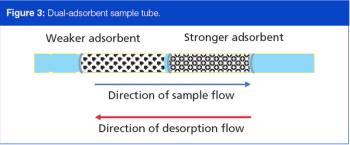
Thermal desorption sampling often provides a means for bringing otherwise intractable samples to a gas chromatography (GC) column for separation and detection. In this instalment, John Hinshaw describes the principles of thermal desorption sampling in relationship to other analysis techniques for volatile solutes.
LCGC North America
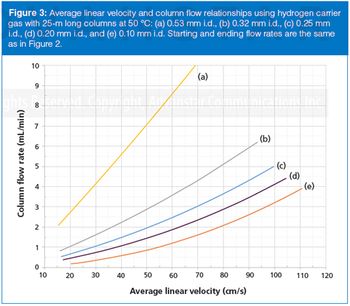
Chromatographers often use the term carrier-gas flow and velocity interchangeably when discussing column parameters. In LC, the two terms scale together, but in GC they do not: Doubling the flow does not double the velocity. This month's “GC Connections” investigates the reasons for this non-intuitive behavior and how it affects best practices for gas chromatographers.
LCGC Europe
Chromatographers often use the terms carrier-gas flow and velocity interchangeably when discussing column parameters. In liquid chromatography, the two terms scale together, but in gas chromatography they do not. This month’s “GC Connections” investigates the reasons for this non-intuitive behaviour and how it affects best practices for gas chromatographers.

LCGC Europe
Thermal desorption sampling often provides a means for bringing otherwise intractable samples to a gas chromatography (GC) column for separation and detection. In this instalment, John Hinshaw describes the principles of thermal desorption sampling in relationship to other analysis techniques for volatile solutes.

LCGC North America
Thermal desorption sampling often provides a means for bringing otherwise intractable samples to a gas chromatography (GC) column for separation and detection. In this installment, John Hinshaw describes the principles of thermal desorption sampling in relationship to other analysis techniques for volatile solutes.

LCGC North America
The term “dead” volume often comes up in chromatography discussions and literature. This month, GC Connections addresses the nature of this phenomenon, when it can become a problem that affects chromatographic results, and how to understand and take control of it.

LCGC Europe
The term dead volume often comes up in chromatography discussions and literature. This month we address the nature of this phenomenon, when it can become a problem that affects chromatographic results, and how to understand and take control of it.
LCGC Asia Pacific
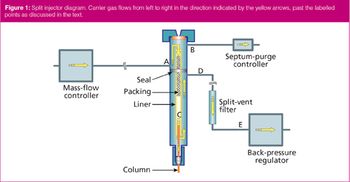
In gas chromatography (GC) split injection systems, as much as 99% or more of the injected sample never enters the column: It is released downstream of the inlet where it can encounter and possibly perturb precision gas control devices. The split-vent trap acts to prevent or at least moderate such effects. This month’s instalment addresses the operation and maintenance of split-vent traps.
LCGC North America
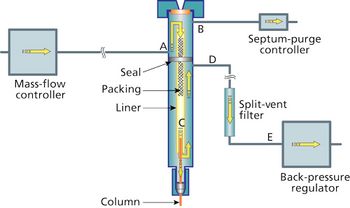
In GC split injection systems as much as 99% or more of the injected sample never enters the column: It is released downstream of the inlet where it can encounter and possibly perturb precision gas control devices. The split vent trap acts to prevent or at least moderate such effects. This month's installment addresses the operation and maintenance of split-vent traps..
LCGC Europe
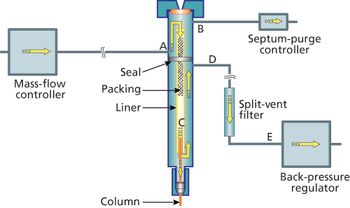
In GC split injection systems as much as 99% or more of the injected sample never enters the column: It is released downstream of the inlet where it can encounter and possibly perturb precision gas control devices. The split-vent trap acts to prevent or at least moderate such effects. This month’s instalment addresses the operation and maintenance of split-vent traps.

LCGC Asia Pacific
As flame ionization detection (FID) approaches its 60th anniversary in 2017, this instalment examines the crucial role that it has played and continues to play for all types of gas chromatography (GC). Without FID, the early development of GC would have proceeded more slowly, especially in the petroleum industry and related hydrocarbon application areas.

LCGC North America
As the flame ionization detector (FID) approaches its 60th anniversary in 2017, this installment examines the crucial role that it has played and continues to play for all types of gas chromatography. Without the FID, the early development of gas chromatography (GC) would have proceeded more slowly especially in the petroleum industry and related hydrocarbon application areas.
LCGC Europe
As flame ionization detection (FID) approaches its 60th anniversary in 2017, this instalment examines the crucial role that it has played and continues to play for all types of gas chromatography (GC). Without FID, the early development of GC would have proceeded more slowly, especially in the petroleum industry and related hydrocarbon application areas.

LCGC Asia Pacific
In this instalment, John Hinshaw reviews gas chromatography (GC) instruments, columns, and accessories that were newly on display at the Pittsburgh Conference in New Orleans, Louisiana, USA, during March 2015, or were introduced to the marketplace in the preceding year.
LCGC Europe
In this instalment, John Hinshaw reviews gas chromatography (GC) instruments, columns, and accessories that were newly on display at the Pittsburgh Conference in New Orleans, Louisiana, USA, during March 2015, or were introduced to the marketplace in the preceding year.

LCGC North America
In this installment, John Hinshaw reviews gas chromatography (GC) instruments, columns, and accessories that were newly on display at the Pittsburgh Conference in New Orleans, Louisiana, during March 2015, or were introduced to the marketplace in the preceding year.
LCGC Asia Pacific
The transit of peaks through a gas chromatography (GC) column depends strongly on the thermal profile they encounter on the way. Gas chromatographers primarily rely on the classic hot?air?bath type of oven, but several alternatives are also in use. This instalment examines ovens for GC in several forms plus how oven thermals affect peak retention behaviour.

LCGC North America
The transit of peaks through a gas chromatography (GC) column depends strongly on the thermal profile they encounter on the way.
LCGC Europe
This instalment examines ovens for GC in several forms plus how oven thermals affect peak retention behaviour.

LCGC Europe
A brief history of GC detectors is presented.