
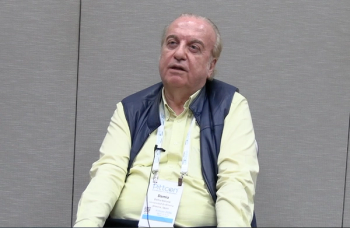
At Pittcon 2026, Damià Barceló of the Universidad de Almería sat down with LCGC International to discuss sustainable analytical approaches for microplastics detection and the open challenges facing the field.

Kate Jones is the Associate Editorial Director at LCGC International/The Column, MJH Life Sciences.
At Pittcon 2026, Damià Barceló of the Universidad de Almería sat down with LCGC International to discuss sustainable analytical approaches for microplastics detection and the open challenges facing the field.

At Pittcon 2026, Damià Barceló of the Universidad de Almería sat down with LCGC International to discuss sustainable analytical approaches for microplastics detection and the open challenges facing the field.

Knauer's leaders discuss sustainability, AI integration, and strategic growth, highlighting their commitment to eco-friendly practices and gender balance in STEM.
At Pittcon 2026, Damià Barceló of the Universidad de Almería sat down with LCGC International to discuss sustainable analytical approaches for microplastics detection and the open challenges facing the field.
At Pittcon 2026, Damià Barceló of the Universidad de Almería sat down with LCGC International to discuss sustainable analytical approaches for microplastics detection and the open challenges facing the field.
At Pittcon 2026, Damià Barceló of the Universidad de Almería sat down with LCGC International to discuss sustainable analytical approaches for microplastics detection and the open challenges facing the field.
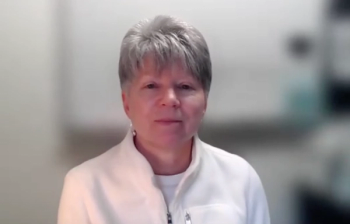
At Pittcon 2026, Jennifer Field of Oregon State University sat down with LCGC International to discuss her laboratory's forensic approach to tracing PFAS sources in watersheds.
At Pittcon 2026, Jennifer Field of Oregon State University sat down with LCGC International to discuss her laboratory's forensic approach to tracing PFAS sources in watersheds.


On the International Day of Women and Girls in Science 2026, LCGC International spotlights women in chromatography advancing analytics, careers, lab culture, and sustainable methods.
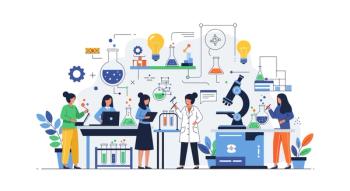
On the International Day of Women and Girls in Science 2026, LCGC highlights the women shaping chromatography, their curiosity-driven journeys, technical contributions, and the importance of representation, mentorship, and confidence in building a more inclusive scientific future.
Waters has announced the completion of its acquisition of BD’s Biosciences and Diagnostic Solutions businesses.

A liquid chromatography–tandem mass spectrometry (LC–MS/MS) method for the determination of 39 emerging contaminants in water at ultra trace concentrations has been developed and validated.
Thermo Fisher Scientific has entered a strategic collaboration with NVIDIA to integrate advanced AI technologies into scientific instruments and laboratory workflows.
Waters Corporation has announced that its shareholders approved the issuance of Waters common stock to shareholders of Becton, Dickinson and Company (BD) in connection with the proposed combination of BD’s Biosciences and Diagnostic Solutions business with Waters.

Restek Corporation has launched its next-generation RMX gas chromatography (GC) columns incorporating a new TriMax deactivation technology onto the market.
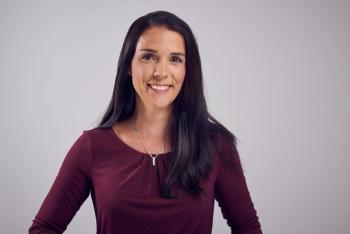
Susanne Boye discusses the future of chromatography, with a particular focus on FFF.
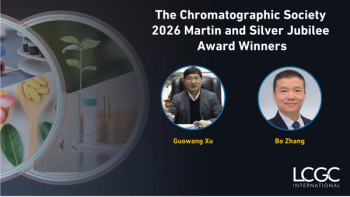
The Chromatographic Society has announced the winners of the Martin Medal and the Silver Jubilee Medal for 2026. Professor Guowang Xu of the Dalian Institute of Chemical Physics in China, has been awarded the Martin Medal, and the Silver Jubilee Medal has been awarded to Professor Bo Zhang of Xiamen University in China.

Bingchuan Wei discusses the latest trends in chromatography.

Thomas Letzel discusses the latest trends in non-targeted screening and chromatography.
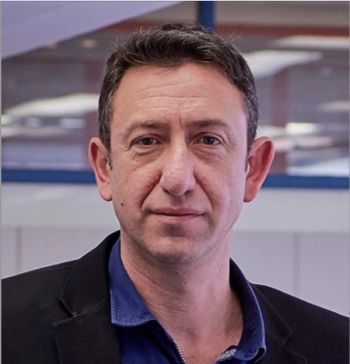
Brett Paull explores the latest trends in chromatography, with a focus on portable LC instruments and miniaturization.

Dave Bell explores the latest trends in chromatography, with a focus on miniaturization and green technologies.

Tony Edge explores 2026 trends in chromatography, highlighting the impact of AI and automation on the industry.
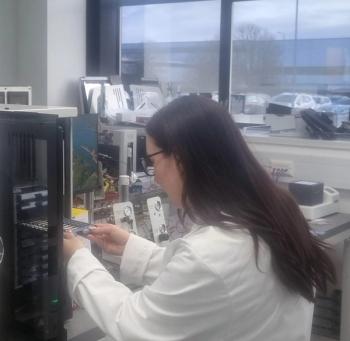
Velaris has acquired Markes International from Schauenburg International, strengthening its automated sample preparation portfolio, expanding its global presence, and enhancing support for laboratories across multiple end markets.

In its 2025 industry survey, LCGC International looked beyond the numbers to uncover the challenges, priorities, and outlook shaping the chromatography community, and what lies ahead in 2026.
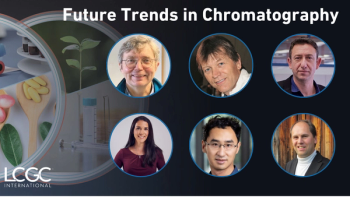
To capture an early view of what lies ahead in 2026, LCGC International convened a panel of leading voices from academia and industry to reflect on the trends they believe will most strongly influence the field in the coming year.
Join us as we explore the innovations that defined 2025—and what they mean for the future of the field.

In the final part of this roundtable discussion focused on the experiences, challenges, and contributions of women in chromatography, LCGC International spoke to Susanne Boye, Daniela Held, and Claudia Zielke about the future of chromatography and what excites them most about the field.

In the seventh part of this roundtable discussion focused on the experiences, challenges, and contributions of women in chromatography, LCGC International spoke to Susanne Boye, Daniela Held, and Claudia Zielke about how changes in lab cultures can positively impact women in chromatography.

In the sixth part of this roundtable discussion focused on the experiences, challenges, and contributions of women in chromatography, LCGC International spoke to Susanne Boye, Daniela Held, and Claudia Zielke about the practical skills needed to lead a lab.