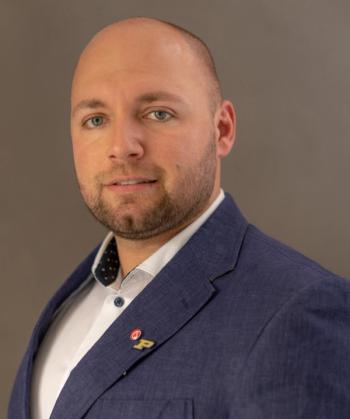
The Column interviewed Varoon Singh from the National Dope Testing Laboratory in India, about his work in sample preparation using chromatography with mass spectrometry (MS), and the development of novel materials for analytical applications.

The Column interviewed Varoon Singh from the National Dope Testing Laboratory in India, about his work in sample preparation using chromatography with mass spectrometry (MS), and the development of novel materials for analytical applications.

This month we interview Martina Catani from the University of Ferrara, Italy, about her work on the separation of enantiomers by high performance liquid chromatography/ultrahigh-pressure liquid chromatography (HPLC/UHPLC) and the study of the kinetic and thermodynamic properties of chiral stationary phases, and the separation and purification using LC analysis (single-column and continuous multi-column) of biomolecules of high therapeutic interest.

The Column interviewed Maiken Ueland, an ARC discovery early career research fellow at the Centre for Forensic Science and deputy director of The Australian Facility for Taphonomic Experimental Research (AFTER) at the University of Technology Sydney in Australia, on her work in forensic taphonomy, where she uses analytical, biochemical, and spectroscopic techniques to conduct human post-mortem investigations.

This month we interview Raviraj Chandrakant Shinde from India, about his work on the analysis of various food contaminants using chromatography and mass spectrometry, and the challenges involved in analyzing polar and ionic pesticides.

This month we interview Jessica Pandohee about her work in foodomics in prebiotics research for gut health, and the role of GC–O in aroma analysis for coffee-flavoured milk.

A snapshot of key trends and developments in sample preparation according to selected panellists from the chromatography sector.

This month we interview Simona Felletti, a postdoctoral researcher in analytical chemistry in the Department of Chemical, Pharmaceutical and Agricultural Sciences at the University of Ferrara, Italy, about her work in the mass transfer phenomena and thermodynamic properties of packed columns under both LC and SFC conditions, and the hazardous potential that uncharacterized minor cannabinoids pose.

A snapshot of key trends and developments in GC/GC–MS according to selected panellists from the chromatography sector.

This month we interview Natalia Manousi, from the Laboratory of Analytical Chemistry at the Department of Chemistry of the Aristotle University of Thessaloniki in Thessaloniki, Greece, about her work in the development and application of novel sample preparation techniques.

This month we interview Sara Carillo, Bioanalytical Research Lead at NIBRT, about her work developing new analytical approaches in biopharma, what attracted her to this research, and the benefits of a multi-attribute method (MAM) workflow in her work.

This month we interview Alexandre Goyon, Senior Scientist in the Small Molecule Pharmaceutical Sciences Organization of Genentech, about his work focused on the online digestion and analysis of RNA molecules using immobilized RNase cartridges attached to a mDLC–MS system, and why the accurate sequencing of sgRNA is important.

Agilent Technologies Inc. has announced that it has joined the NIIMBL, demonstrating Agilent’s commitment to supporting biopharmaceutical and biotherapeutics customer challenges through partnership and innovation using tools and workflows.

BioMed X has announced the start of its “Ukraine Refugee Funding Programme” that supports doctoral students and masters-level researchers in the life sciences who cannot continue their work at institutions in Ukraine.

We interviewed Lotte Schreuders, Noor Abdulhussain, and Mimi Den Uijl, the “Sisters in Science”, about challenging common stereotypes associated with studying chemistry, and their mission to put women front and centre in science.

The Column spoke to Andrea Hochegger, a postdoctoral researcher at the Graz University of Technology in Austria, about her work analyzing MOHs, and the importance of packaging to reduce the migration of MOH into foods.

This month we interview Victor U. Weiss, Assistant Professor at TU Wien, about his focus on the analysis and electrophoretic separation of nanoparticles from organic, inorganic, and biological sources, and the concept behind nES GEMMA.

This month we interview Hedvika Raabová, a graduate student at the Charles University, Faculty of Pharmacy in Hradec Kralove, Czech Republic, about her work using novel micro- and nanofibres during sample preparation, and the concept behind composite micro/nanofibre extractions.

The Column spoke to Nadin Boegelsack and Gwen O’Sullivan from Mount Royal University in Calgary, Canada, about their work creating a workflow for use in the two-dimensional gas chromatography (GC×GC) analysis of ignitable liquid residues in arson investigations.

This month we interview Jelle De Vos, Senior Postdoctoral Researcher at the Department of Chemical Engineering, Vrije Universiteit Brussel, Belgium, about his recent work to develop a chromatographic method to characterize nucleocapsid proteins from SARS-CoV-2, and the development of spatial three‑dimensional liquid chromatography (3D-LC) as a separation concept.

This month we interview Emanuela Gionfriddo, Assistant Professor of Chemistry at the Department of Chemistry and Biochemistry of the University of Toledo in Ohio, USA, about her work quantifying per- and polyfluoroalkyl (PFAS) in water using SPME–LC–MS/MS and the evolving field of sample preparation.

A panel discussion on the latest advances and future developments in sample preparation.

Aogu Furusho from the Graduate School of Pharmaceutical Sciences in Kyushu University, Fukuoka, Japan, spoke to us about his development of a highly selective three-dimensional chiral high performance liquid chromatography (HPLC) system for the determination of extraterrestrial amino acids in carbonaceous chondrites.

The Column spoke to Nelson Roberto Antoniosi Filho, a professor at the Chemistry Institute of the Federal University of Goiás (UFG), in Goiânia, Brazil, about his development of a gas chromatography–mass spectrometry (GC–MS) method for cancer diagnosis using cerumen.

The Column spoke to Richard Shannon from AstraZeneca about his work characterizing monoclonal antibodies (mAbs), why ion-exchange chromatography (IEC) is his technique of choice for analyzing mAbs, and offers his advice for anyone wanting to use the technique.

Pascal Cardinael and Valérie Agasse from the University of Rouen, in Mont‑Saint-Aignan, France, reveal the rationale behind miniaturization and the latest developments in miniaturized gas chromatography (GC).

A group of researchers has investigated the impact of combined sewer overflow (CSO) on pharmaceutical and illicit drug use in central London using liquid chromatography–high-resolution mass spectrometry (LC–HRMS).

The Column spoke to Jane Hill from Dartmouth College, USA, about her group’s development of a breath analysis method for tuberculosis diagnosis using multidimensional GC×GC–TOF-MS.