


If given the need to determine drug A or its metabolite in blood, 99% of the time I would choose to start with liquid chromatography–mass spectrometry (LC–MS).
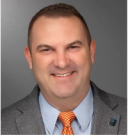
Kevin A. Schug is a Full Professor and Shimadzu Distinguished Professor of Analytical Chemistry in the Department of Chemistry & Biochemistry at The University of Texas (UT) at Arlington. He joined the faculty at UT Arlington in 2005 after completing a Ph.D. in Chemistry at Virginia Tech under the direction of Prof. Harold M. McNair and a post-doctoral fellowship at the University of Vienna under Prof. Wolfgang Lindner. Research in the Schug group spans fundamental and applied areas of separation science and mass spectrometry. Schug was named the LCGC Emerging Leader in Chromatography in 2009, and the American Chemical Society Division of Analytical Chemistry Young Investigator in Separation Science awardee in 2012. More recently, he has been honored with the Silver Jubilee Medal from The Chromatographic Society (UK) in 2024.
If given the need to determine drug A or its metabolite in blood, 99% of the time I would choose to start with liquid chromatography–mass spectrometry (LC–MS).

The Column
What type of mass spectrometry (MS) instrumentation provides the best specificity during trace quantitative analysis from complex mixtures?
What type of mass spectrometry (MS) instrumentation provides the best specificity during trace quantitative analysis from complex mixtures?

The Column
I do not remember the application, but I remember very clearly Professor McNair telling us that soil is one of the most challenging sample matrices, if not the toughest, from which to perform analytical determinations. Sources indicate the composition of soil ideal for growing plants to be 25% air, 25% water, 45% minerals, and 5% organic matter. That does not seem like a daunting makeup, but the reality is that the relative proportion of the constituents can vary dramatically.
One of the initiatives that the SCSC oversees is the nomination process and awarding of the Satinder Ahuja Award for Young Investigators in Separation Science. Where are all of the young investigators in separation science? Certainly, those that have been honored to date have been worthy; however, there must be more eligible parties out there.
I do not remember the application, but I remember very clearly Professor McNair telling us that soil is one of the most challenging sample matrices, if not the toughest, from which to perform analytical determinations. Sources indicate the composition of soil ideal for growing plants to be 25% air, 25% water, 45% minerals, and 5% organic matter. That does not seem like a daunting makeup, but the reality is that the relative proportion of the constituents can vary dramatically.
Several years ago, I would have held the stance that environmental analysis was fairly boring. How complicated can water be? I am not ashamed to say that was a naïve view. It is clear from our research and related research by others on similar topics that much more work in these areas is needed. Standard methods cannot solely accommodate the growing list of targets and the multitude of unknowns associated with complex samples taken from the interface between the petroleum industry and the environment.
I always think of a conference presentation to be like a rock band concert. Sure, the band is going to play some of their biggest hits, but they also want to propagate their new stuff. More importantly, they want to put on a show so that people are entertained. I do think there should be more emphasis on entertaining the audience during oral presentations.

The Column
Evaluating the ability of gas chromatography–vacuum ultraviolet detection (GC–VUV) to distinguish and correctly identify various isomer and isotopologue forms of an analyte through the lens of spectral similarity.
E-Separation Solutions
Two things were surprising about some recent research we reported. First, with regard to chemically impaired groundwater quality, it may not always be the chemicals that are most worrisome for human health impacts. Second, the primary methodology we used in that work for microorganism identification, matrix-assisted laser desorption–ionization mass spectrometry (MALDI-MS), is a vastly underappreciated tool, especially outside the clinical realm in areas such as environmental monitoring.
When I want to hear some humorous stories, there are few friends in the instrument manufacturing and sales business I can contact. If I ask them about their recent experiences with the cannabis industry, their stories will cover topics ranging from instruments purchased using duffel bags of cash (cue images of large men in suits and sunglasses packing heat) to recent college graduates who cleared $25 million in their first year of business selling cannabis butter (cue images of large men at breakfast laughing uncontrollably).

The Column
As part of the Earth Day celebration in Dallas, Texas, USA, earlier this year, the Collaborative Laboratories for Environmental Analysis and Remediation (CLEAR) at U.T. Arlington hosted the first annual Responsible Shale Energy Extraction (RSEE) symposium. Even though Kevin Schug and his group have been very involved in this conversation for the past several years, several points stood out.
Internal standards (IS) are commonly incorporated into quantitative methods to increase accuracy and precision. An IS is a compound that is different than the analyte of interest, has similar physicochemical properties to the analyte, and is added to samples, calibration standards, and quality control samples in a known quantity. It should not be present in the sample, it should be available in high purity, and it should be easily differentiable from the analyte of interest.

The Column
The ability to rapidly screen stationary phases through column-switching capabilities provides significantly greater efficiency in method development than was previously possible. The approach does require some additional hardware and software. And, while such capabilities may limit the ability to expand one’s literary knowledge during excessive months in the laboratory developing separation methods, real progress to key decision points for method optimization can be realized instead.
As the fall semester starts, I begin my 13th year as a chemistry professor. Let me get right to the point-if you do not love this job, you will hate it!
The ability to rapidly screen stationary phases through column-switching capabilities provides significantly greater efficiency in method development than was previously possible. The approach does require some additional hardware and software. And, while such capabilities may limit the ability to expand one’s literary knowledge during excessive months in the laboratory developing separation methods, real progress to key decision points for method optimization can be realized instead.
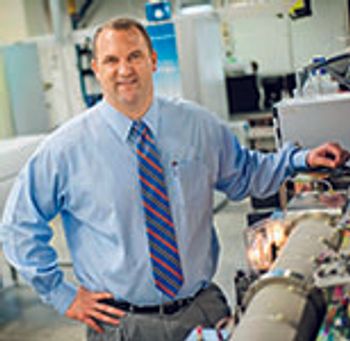
I believe that the term “top-down proteomics” holds a particular connotation with respect to the use of ultrahigh-resolution mass spectrometers in people’s minds. And rightfully so. If one is to determine with confidence the sequence and charge state of a particular fragment ion generated in the gas phase, then high mass accuracy is a must. From the discovery side of things, where qualitative analysis is most important, this is not likely to change. However, when you turn to quantitative analysis, where you want to now monitor levels of a particular protein biomarker for the purpose of disease diagnosis, prognosis, or treatment, then invariably bottom-up strategies are the norm. Protein quantitation using top-down strategies, especially on low-resolution triple-quadrupole systems, have been largely ignored, until recently .
Precise and accurate quantitative analysis based on chromatographic measurements has historically relied very heavily on careful peak integration. Seasoned analysts know that while automated algorithms exist in modern chromatography software, it is a best practice to manually check that the integration points-the points at the beginning and end of a peak, between which the peak will be integrated to obtain a peak area-are appropriately specified.
The LCGC Blog
As part of the Earth Day celebration in Dallas, Texas, last month, the Collaborative Laboratories for Environmental Analysis and Remediation (CLEAR) at U.T. Arlington hosted the first annual Responsible Shale Energy Extraction (RSEE) symposium (www.shalescience.org). We had an exceptional range of speakers who conveyed all sides of the issue, including U.S. Secretary of Energy Rick Perry and atmospheric scientist Dr. Katherine Hayhoe from Texas Tech University, one of Time’s top 100 most influential people. We had representatives from major oil producers, environmental groups, land management groups, water recycling service companies, and scientists conversant on many key issues related to unconventional oil and gas (UOG) extraction. Even though we have been very involved in this conversation for the past several years, several points stood out.
I have written previously about occupying the middle ground in the debate over the environmental implications of unconventional oil and gas extraction operations. It seems we are just in the right place, when we are criticized and praised at separate times by proponents of both extreme views-namely those who think UOG is perfectly safe and those who think it cannot be done without ruining the environment.
Students who have an internship on their resume, and are seeking jobs in a particular sector, are doing so with an informed opinion. While an internship comes in many forms, that real-world experience has provided a clear touchstone of understanding of what it would be like to work in a given sector.
The LCGC Blog
For the most part, we are still instructing undergraduate students in the same way as when I went to school, and I think this is a disservice to the students and to the nature of chemistry. No wonder chemistry programs have trouble attracting students compared to other science disciplines, like biology and psychology. Students will take general chemistry, but they cannot see where it may lead. I want to change that.

The Column
As I wrote the title of this LCGC Blog instalment, I could not help but wonder where the cliché “more than one way to skin a cat” came from. Turns out it is from Mark Twain in his 1889 work, A Connecticut Yankee in King Arthur’s Court. I have never read that book, but I certainly have heard this saying used more than once - even if it might offend some cat lovers. Of course, it means simply that there is more than one way to do something.
In order to contemplate and test your knowledge, Kevin A. Schug provides a sampling of some of his chromatography true–false questions from his senior-level Instrumental Analysis course.
In 2011, when we first began field and laboratory studies to help assess the potential environmental impacts of unconventional oil and gas extraction (UOG), there was very little literature on the subject. Further, the polarizing nature of the topic made it quite difficult to navigate the middle ground. While some voices contended that UOG was perfectly safe, others insisted that it should be banned in its entirety because it is destroying the environment. As with any topic that is both complex and elicits the attention of a large number of people (like our past election or politics, in general), my skepticism forces me to believe that the answer actually lies somewhere in the middle of extreme views.
As I wrote the title of this month’s installment, I could not help but wonder where the cliché “more than one way to skin a cat” came from. Turns out it is from Mark Twain in his 1889 work, A Connecticut Yankee in King Arthur’s Court. I have never read that book, but I certainly have heard this saying used more than once-even if it might offend some cat lovers. Of course, it means simply that there is more than one way to do something.

The Column
Kevin A. Schug reveals the major method validation protocol deficiencies he discovered when he reviewed a blood alcohol investigation and discusses how matrix effects possibly resulted in blood alcohol concentrations being over-estimated, resulting in a potentially significant injustice.
The LCGC Blog
I am quite excited about some recent work we and others have performed related to fuels analysis using gas chromatography and vacuum ultraviolet spectroscopy (GC–VUV).

The Column
Kevin A. Schug discusses how matrix-assisted laser desorption–ionization time-of-flight mass spectrometry (MALDI-TOF-MS) is one of the most versatile tools for fingerprinting mixtures.