Kevin Schug explains how surrogate optimization streamlines SFE–SFC–MS method development, achieving R² values up to 0.97 while boosting sensitivity by 15%
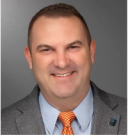
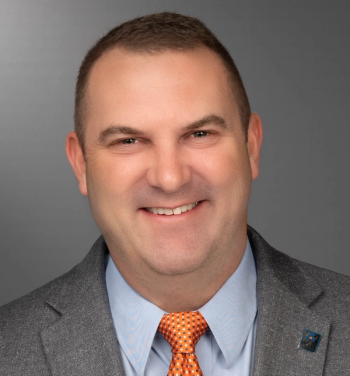
Kevin A. Schug is a Full Professor and Shimadzu Distinguished Professor of Analytical Chemistry in the Department of Chemistry & Biochemistry at The University of Texas (UT) at Arlington. He joined the faculty at UT Arlington in 2005 after completing a Ph.D. in Chemistry at Virginia Tech under the direction of Prof. Harold M. McNair and a post-doctoral fellowship at the University of Vienna under Prof. Wolfgang Lindner. Research in the Schug group spans fundamental and applied areas of separation science and mass spectrometry. Schug was named the LCGC Emerging Leader in Chromatography in 2009, and the American Chemical Society Division of Analytical Chemistry Young Investigator in Separation Science awardee in 2012. More recently, he has been honored with the Silver Jubilee Medal from The Chromatographic Society (UK) in 2024.
Kevin Schug explains how surrogate optimization streamlines SFE–SFC–MS method development, achieving R² values up to 0.97 while boosting sensitivity by 15%
Kevin Schug identifies the key challenges preventing wider uptake of molecular encoding and machine learning tools in everyday analytical laboratory settings.
Kevin Schug examines how models trained on known compounds perform when applied to unseen molecules or transferred to new experimental setups.
Kevin Schug outlines the criteria used to select machine learning methods for analytical problems and how success is defined and evaluated.
Kevin Schug explores how molecular encoding bridges chemistry and data science to enhance precision and intelligence in analytical measurements.
Kevin Schug reviews the increasing presence of artificial intelligence in analytical chemistry.

In this edition of the LCGC Blog, Zacariah Hildenbrand, Melissa Giguere, and Kevin Schug discuss the complexities of cannabis regulations, forensic testing challenges, and the risks of unregulated products in the evolving landscape of cannabis forensics.
In this LCGC Blog, Kevin Schug discusses the potential machine learning has in helping predict physicochemical properties of molecules and optimizing chemical analysis processes.
In this LCGC Blog, Kevin Schug shares his plans for the future as a Fulbright–Palacky University Distinguished Scholar in the Czech Republic, and discusses why it is important to share analytical chemistry with communities around the world.

Vacuum-assisted headspace solid-phase microextraction (Vac-HS-SPME) is quickly becoming popular for enhancing the extraction of semi-volatile compounds.

Untargeted analysis using liquid chromatography with tandem mass spectrometry (LC–MS/MS) chemical profiling is a valuable tool, but care needs to be taken with experimental design.

The level of uncertainty provided by most forensic laboratories for reported blood alcohol results has been woefully underassessed. Not only is this bad science, but someone’s civil liberties may be at stake.

Forensic laboratories need to revise their procedures for uncertainty assessment in blood alcohol determinations. We explain why.
The level of uncertainty provided by most forensic laboratories for reported blood alcohol results has been woefully underassessed. Not only is this bad science, but someone’s civil liberties may be at stake.

This instalment of the LCGC Blog investigates fundamental relationships between the structures of molecules and their interaction with different materials, in the context of online supercritical fluid extraction–supercritical fluid chromatography (SFE–SFC).

We analytical chemists have a lot to gain by applying machine learning to our field—such as by using it to efficiently reach optimal conditions for challenging separations.

The lack of proper method validation has important implications in blood alcohol concentration (BAC) determinations. We examine this issue, addressing the importance of gas chromatography (GC) for BAC determination, why certain validation procedures are important, and why accreditation bodies need to step up their game.

We are investigating fundamental relationships between the structures of molecules and their interaction with different materials, in the context of on-line supercritical fluid extraction–supercritical fluid chromatography (SFE–SFC).

Reviewing your contract laboratory’s QA/QC protocols can reveal much about the accuracy of the data the lab generates. Here is what to look for.

How can you know for sure if the analytical laboratory producing your results is processing reliable data?
If your decision making relies on analytical chemistry, then you want to be confident that the measurements are an accurate representation of the matrix that is being analyzed, and that they are of “publication” quality. But how can you know for sure if the analytical laboratory that you’ve selected is producing reliable data?

Method validation processes will need to be refined to better suit forensic laboratories.

How can we monitor the source and environmental impact of neglected oil and gas acquisition sites, and assess their impact over time?

The deficiency in method validation for forensics laboratories regularly manifests itself in two steps.

How can we monitor the source and environmental impact of neglected oil and gas acquisition sites, and assess their impact over time?

Recycling plastics involves catalytically cracking polymers back into their constituent monomer mixtures, which require careful characterization for further processing. There is a resurging need for detectors that can detect and characterize heteroatom-containing species.

Kevin A. Schug suggests that now is the time to fast-track industry–academic partnerships for greater sustainability.

In April 2020, on the heels of the pandemic shutdown, the price of crude oil fell to a negative value for the first time ever. The shutdown hit many oil and gas companies hard. But while companies lick their wounds and decide their next moves, an important concept called environmental and social corporate governance (ESG) has come greater into focus.

Kevin Schug takes a break from his popular blog and reveals an exciting new collaboration between LCGC and the American Chemical Society Analytical Division, Subdivision on Chromatography and Separations Chemistry, to keep readers abreast of the latest trends and developments in separation science with a new series of blogs from members of this group.

LCGC North America
After a few months of the coronavirus shutdown, the author has found some effective approaches to teaching and holding research meetings remotely.