


A polydimethylsiloxane (PDMS) silicone rubber band sampler was used to collect volatile organic compounds (VOCs) from the skin of both tuberculosis (TB)-positive and TB-negative subjects.
Patrick Lavery is an Editor for the MJH Life Sciences brands LCGC and Spectroscopy, and their respective websites, chromatographyonline.com and spectroscopyonline.com. He previously spent nearly a decade as a news anchor, reporter, and producer at New Jersey 101.5 FM.
A polydimethylsiloxane (PDMS) silicone rubber band sampler was used to collect volatile organic compounds (VOCs) from the skin of both tuberculosis (TB)-positive and TB-negative subjects.

Herbert Knauer founded his namesake laboratory equipment company with his wife Roswitha in Berlin in 1962.
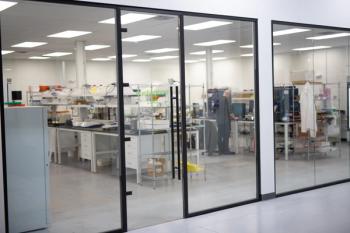
LCGC and Spectroscopy Editor Patrick Lavery spoke with Oligo Factory CEO Chris Boggess about the company’s recently attained compliance with Good Manufacturing Practice (GMP) International Conference on Harmonisation of Technical Requirements for Registration of Pharmaceuticals for Human Use (ICH) Expert Working Group (Q7) guidance and its distinction from Research Use Only (RUO) and International Organization for Standardization (ISO) 13485 designations.

The UK-based Chromatographic Society (ChromSoc) has announced its two 2024 recipients of its most prestigious honor, the Martin Medal, in addition to three professors who have been chosen for the organization’s Silver Jubilee Medal.

In addition, the company gained nearly 400 square meters of office space thanks to the renovation of a building adjacent to its Berlin headquarters.
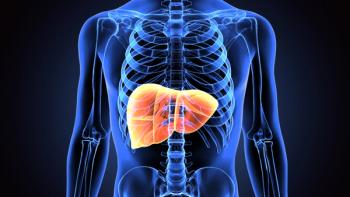
A variety of chromatographic techniques have been used to quantify the full range of acyl-CoAs, formed when a fatty acid bonds with coenzyme A, but added complexity and analysis time adversely affect the level of throughput.
The Chromatographic Society will honor five scientists and academics next year, conferring its highest honor, the Martin Medal, to David McCalley and Fabrice Gritti.

The hyphenated method was combined with a gradient ultracentrifugation technique that allowed for lipoprotein fraction separations.

While lipid oxidation in food is a serious problem, lipid species in both oxidized and non-oxidized forms at varying concentrations make detection and identification of the less abundant species difficult.

Ion suppression is a known matrix effect in electrospray ionization (ESI), ambient pressure chemical ionization (APCI), and desorption electrospray ionization (DESI).

Chromatography is predicted to be a major player among instrument technologies, but spectroscopy and electrophoresis may also increase their market shares.

Agilent Technologies presents this award to industry leaders as a means of supporting them through financial aid, products, and expertise, along with recognition.

For the first time, inhibitors of a cyclooxygenase isoform were found in Allium ampeloprasum L., specifically the giant or “elephant” garlic grown in the Chiloé Archipelago.

Mary Ellen McNally and Doug Raynie covered green chemistry and sustainable separations, from sample preparation through analysis with chromatographic techniques, at EAS 2023.
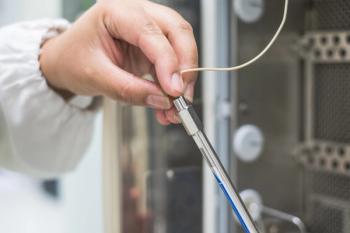
At EAS 2023, Michael Dong and Szabolcs Fekete reviewed certain innovations in high performance liquid chromatography (HPLC), and in what ways scientists can continue to improve the quality of their experiments.

Ethylene-vinyl acetate (EVA) was used in tandem with high-resolution mass spectrometry (HRMS) because it was non-invasive and non-damaging to three letters written in the second half of the 15th century by Vlad III of Wallachia.

Among the chlorinated byproducts of water disinfection within the fresh-cut industry, haloacetic acids (HAAs) are known to pose a consumer health risk if they remain present in the treated product.

The α-glucosidase inhibitors (AGIs) were isolated from extracts of Agrimonia pilosa Ledeb (APL), which is a perennial herb used in traditional Chinese medicine (TCM).

L-thryoxine was proposed as the label at the end of a DNA aptamer that comprised a reporter agent complementary to a capture agent in this experimental design.

Three different metrics were used experimentally, based on measurements of both NIST Standard Reference Material (SRM) 1950 and data obtained from murine kidney tissue.

FDA scientists have expanded the number of analytes in their analytical method for per- and polyfluoroalkyl substances (PFAS), partly in response to updated guidance out of the European Union (EU) on method parameters and limits of quantification (LOQs).

Alexander Makarov was awarded the honor first introduced by the British Mass Spectrometry Society in 1987.

In a presentation at the 2023 edition of the Cannabis Science Conference, Scott Churchill made two main recommendations for growers to head off the spread and invasiveness of pathogens.

Okadaic acid (OA) is considered a marine toxin with distributed hydroxyl, polycyclic ether, and carboxyl groups, easily accumulated in shellfish and known to cause food poisoning in humans.
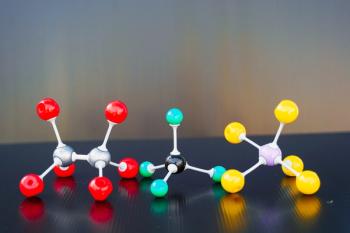
This review of pharmaceutical analysis in the last three years includes three categories of chiral liquid chromatography stationary phases: saccharides, macrocyclic substances, and porous organic materials.

This report not only focused on the different types of portable X-ray fluorescence (pXRF) spectrometers available, but also their capacities for limits of detection and quantification (LOD and LOQ, respectively), linearity, and calibration strategies.

Optimal reaction conditions for the desired deethylation were found to be mild, using only water and oxygen at or close to ambient temperatures.

To determine the practical applications of newly synthesized diquat (DQ) derivatives, they must be prepared in an enantiomerically pure form, and effective separation is needed to control that purity.

Divinylbenzene (DVB) monoliths were nested within a melamine-formaldehyde sponge for solid-phase extraction (SPE) of bisphenols from aqueous solutions.
The combination of the “bottom-up” approach with digest-free, direct-sequencing proteomics, along with the addition of a proteogenomics pipeline that identified missing data, yielded the determination of almost 3000 proteins.