


The eggs of the yellow-legged gull and Audouin’s gull and the blood of the greater flamingo were studied to assess their exposure to perfluoroalkyl substances (PFAS) as bioindicators of chemical pollution.
Patrick Lavery is an Editor for the MJH Life Sciences brands LCGC and Spectroscopy, and their respective websites, chromatographyonline.com and spectroscopyonline.com. He previously spent nearly a decade as a news anchor, reporter, and producer at New Jersey 101.5 FM.
The eggs of the yellow-legged gull and Audouin’s gull and the blood of the greater flamingo were studied to assess their exposure to perfluoroalkyl substances (PFAS) as bioindicators of chemical pollution.
A biomarker with significant clinical and analytical potential in an enzyme present in many human diseases was determined at higher efficiency using liquid chromatography coupled to tandem mass spectrometry (LC–MS/MS).
The retention parameters defined in gas chromatography (GC) analysis using multiple temperature programs were comparable to those determined using isothermal GC measurements.
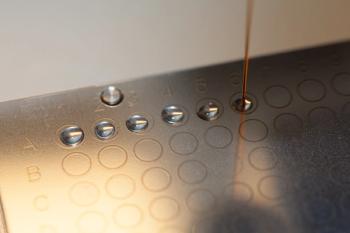
The liquid atmospheric pressure-matrix-assisted laser desorption/ionization (LAP-MALDI) mass spectrometry (MS) technique showed potential to enhance protein sample acquisition rates.
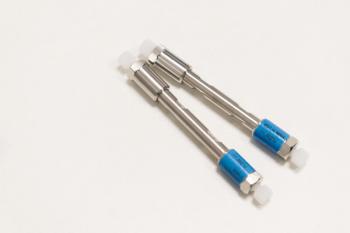
Mono-type, blending-type, coating-type, and bonding-type chromatographic packings based on chiral metal-organic frameworks (CMOFs) were analyzed regarding their effectiveness in enantioseparation.
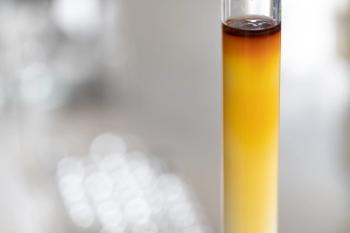
A newly proposed concept in liquid chromatography (LC) positions spherical particles, either individually or stacked, in pockets forming microgrooves that act as perfectly aligned chromatographic columns.
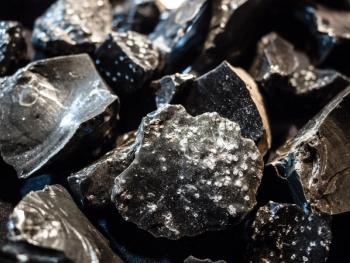
Researchers compared two widely used equations to identify pitfalls in normalizing specific retention volume for inverse gas chromatography (IGC) analysis.

A solid-phase microextraction (SPME) Arrow combined with comprehensive two-dimensional gas chromatography coupled to mass spectrometry (GC×GC–MS) identified about 40 more volatile compounds in a variety of whiskeys compared to conventional SPME.

Samples of the prefrontal cortex, striatum, and hippocampus of rats were analyzed by LC–MS to assess brain tissue response to combined consumption of ethanol and cocaine.

Trace amounts of polychlorinated biphenyls (PCBs) in a river and lake in China were detected using a custom coating for stir bar sorptive extraction (SBSE) followed by high performance liquid chromatography with diode array detection (HPLC-DAD).

The reliability of column chromatography for GC–MS analysis of hopanes was tested in oil samples of three different types, using neutral alumina as a solid-phase adsorbent and a Pasteur pipette as a separation device.
Researchers have used comprehensive two-dimensional gas chromatography with time of flight mass spectrometry and Fisher-ratio analysis to evaluate the breakdown of organic-based getters used to absorb gases and vapors from their surroundings.

Researchers have developed a new approach to extract chloramphenicol (CAP) from milk and chicken samples using magnetic nanofluid-based deep eutectic solvents (DES), which was combined with high performance liquid chromatography-ultraviolet (HPLC-UV) analysis. The method was found to be low-cost, green, efficient, and effective in detecting even trace amounts of CAP.

High performance liquid chromatography–mass spectrometry and gas chromatography–mass spectrometry, along with numerous extraction methods, are helping to find organosulfur compounds in food more easily, providing researchers better information about the health benefits of these substances.

Pesticides in local surface and groundwaters were purified and enriched with solid-phase extraction, then analyzed using multidimensional gas chromatography coupled to mass spectrometry, with the results compared to those found by gas chromatography–quadrupole mass spectrometry.

GC-MS technology has been used to study the inflammatory mechanism in COVID-19 patients, revealing the possible mechanism of inflammatory response in patients from the perspective of metabolomics.

A new approach combining high performance liquid chromatography–mass spectrometry with ultrafiltration, along with enzyme channel blocking and directional enrichment, has been found effective for screening natural histidine decarboxylase inhibitors in Radix Paeoniae alba, while reducing both false-positive and false-negative results.