


Informative panel discussions featuring key opinion leaders from the separation science sector discussing the latest technology trends and developments in liquid chromatography, gas chromatography, sample preparation, and data handling.
Patrick Lavery is an Editor for the MJH Life Sciences brands LCGC and Spectroscopy, and their respective websites, chromatographyonline.com and spectroscopyonline.com. He previously spent nearly a decade as a news anchor, reporter, and producer at New Jersey 101.5 FM.
Informative panel discussions featuring key opinion leaders from the separation science sector discussing the latest technology trends and developments in liquid chromatography, gas chromatography, sample preparation, and data handling.

Researchers from Austria, Greece, and Italy conducted a study to analyze volatile organic compounds (VOCs) present in Irish and Scotch whiskys using solid-phase microextraction (SPME) Arrow with comprehensive two-dimensional gas chromatography coupled to mass spectrometry (GC×GC–MS) to examine the organoleptic characteristics that influence the taste of spirits.

A study has used gas chromatography coupled to a time-of-flight mass spectrometer to build an electron ionization mass spectra database of more than 250 chemicals classified as either volatile or semi-volatile compounds. An additional, confirmatory layer of liquid chromatography–mass spectrometry analysis was subsequently performed.

Limited toxicokinetic and toxicologic information is available about a diverse set of per- and polyfluoroalkyl substances (PFAS), but methods based on gas chromatography–tandem mass spectrometry (GC–MS/MS) can help unravel some of the mystery.
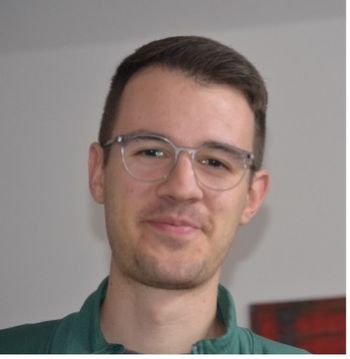
Jonathan Zweigle of the University Tübingen spoke with LCGC International about his work using non-targeted screening based on high-resolution mass spectrometry (HRMS) to detect PFAS in soil samples. HRMS allows scientists to determine the elemental and isotopic composition of a sample with high accuracy.
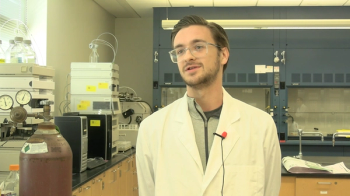
In this continuing series from LCGC, we go on location to the Grinias Research Lab at Rowan University, where graduate students gave advice for up and coming separation scientists following in their footsteps.

LCGC International spoke with Shawn Anderson, Associate Vice President of Digital Lab Innovations at Agilent Technologies; Marco Kleine, Head of the Informatics Department at Shimadzu Europa GmbH; Trish Meek, Senior Director, Connected Science, Waters Corporation and Todor Petrov, Senior Director, QA/QC, Waters Corporation; and Crystal Welch, Product Marketing Manager at Thermo Fisher Scientific about the latest trends in data handling.

LCGC International spoke with Quang-Dong Bui, a second-year PhD student at Vrije Universiteit Brussels to discuss his work in oligonucleotide analysis.
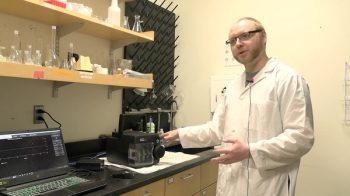
In this continuing series from LCGC, we go on location to the Grinias Research Lab at Rowan University to see a liquid chromatographic analyzer in action.

In this continuing series from LCGC, we go on location to the Grinias Research Lab at Rowan University and speak to graduate students about their backgrounds, research interests, and future plans.

The “farmer-managed natural regeneration,” or FMNR, project has been ongoing for more than two years, aimed at re-greening deforested land.

As opposed to targeted metabolomics which looks only at a predetermined set of metabolites or their pathways, an untargeted approach was preferred by this research team because of its unbiased yet still comprehensive nature.

Robust linear regression, stepwise linear regression, and linear regression were tested, compared, and combined in this experimental setup, in an effort to address an environmental problem with short- and long-term effects.
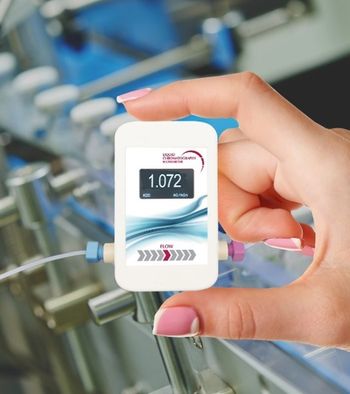
The flowmeter, Testa said in a press release, was compared favorably as an alternative to more traditional flow calibration methods for HPLC pumps.

Xinyi Biyan is a Chinese patent medicine with significant therapeutic effects, widely used clinically to treat acute and chronic rhinitis or allergic rhinitis.

The still relatively new technique has distinct advantages, but a few of those benefits make it incompatible with some of the currently accepted principles of green sample preparation.

Brivaracetam has been approved for prescription use in the last decade for treatment of patients experiencing focal, or partial, seizures.

The 72nd American Society for Mass Spectrometry Conference on Mass Spectrometry and Allied Topics will take place 2–6 June 2024 in Anaheim, California.

Michelle Colgrave of Edith Cowan University and Australia’s national science agency is the recipient of the 2024 Harvey W. Wiley Award.

The allocation, which amounts to more than $62 million in U.S. dollars, is part of a larger package targeting five new projects in total.

At issue in this study was the certified value of decabromodiphenyl ether (BDE 209) in a polystyrene matrix CRM relative to its regulated value in the EU Restriction of Hazardous Substances Directive.

Ultrahigh-pressure liquid chromatography coupled to high-resolution mass spectrometry (UHPLC-HRMS) had been previously proposed for untargeted lipidomics analysis, but this updated approach was reported by the authors to reduce run time to 4 min.

The serum/plasma estradiol is useful for diagnosis, pathology, and therapeutic efficacy monitoring of estrogen-dependent diseases, according to the authors.

On the occasion of Earth Day, University of Wisconsin-Madison graduate student and chemist Katelyn Michael speaks with LCGC about the methods she has been using to attempt to degrade known PFAS.
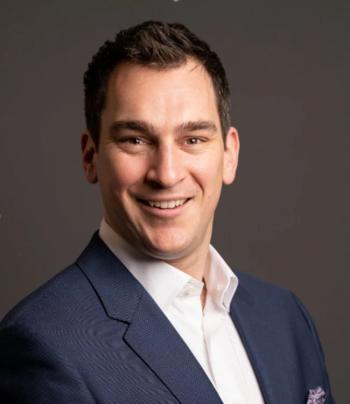
On this Earth Day, LCGC sits down with Toby Astill of Thermo Fisher Scientific to talk about laboratory testing of PFAS and how companies and industry work in tandem with governments and regulatory agencies to share information and effect changes in standards.

A 10-day exhibit at Milan Design Week in Italy is drawing to a close, but Shimadzu hopes that visitors have recognized the link between science and technology, and art and design.
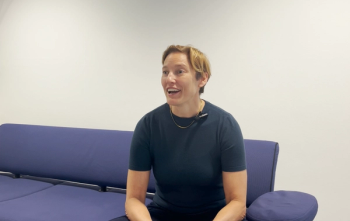
Bendt, of SLING, or Singapore Lipidomics Incubator, spoke with LCGC at Analytica 2024 about her research in the field of lipidomics, and about her work laying the ground for the Females in Mass Spectrometry group.

Causon, of the University of Natural Resources and Life Sciences in Austria, spoke with LCGC at Analytica 2024 about his newest ion mobility–mass spectrometry (IM-MS) project, MobiliTraIN.
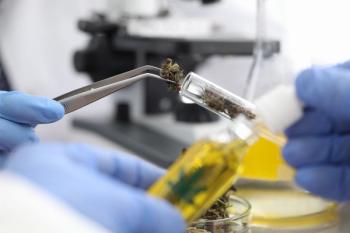
Chromatographic and spectroscopic techniques alike were reviewed for their current effectiveness and future potential in this lecture session at Analytica 2024.

At Analytica 2024, four speakers tackled the issue of water quality and how the detection of what is contained therein continues to evolve.

Published: July 3rd 2024 | Updated: July 8th 2024


