


Gas chromatography coupled to mass spectrometry (GC–MS) has been the gold standard in this application, but its limitations in differentiating cancer subtypes have led to the exploration of newer related technologies.
Patrick Lavery is an Editor for the MJH Life Sciences brands LCGC and Spectroscopy, and their respective websites, chromatographyonline.com and spectroscopyonline.com. He previously spent nearly a decade as a news anchor, reporter, and producer at New Jersey 101.5 FM.
Gas chromatography coupled to mass spectrometry (GC–MS) has been the gold standard in this application, but its limitations in differentiating cancer subtypes have led to the exploration of newer related technologies.

The subatmospheric pressure laser desorption ionization-mass spectrometry platform proposed here showed potential for mapping low-abundance biomarkers.

Researchers said they have devised a novel setup using a secondary electrospray ionization-high resolution mass spectrometry (SESI-HRMS) platform to detect bacterial cultures in cells that are vital to immune and memory functions.

The team of researchers found that components with the same retention time can have different migration patterns, and discussed the different scenarios for decreasing column pressure resistance.

Representatives of three subclasses of flavonoids were targeted for identification and quantitation in non-destructive single seed evaluation of Medicago sativa and Melilotus officinalis.

An ultrahigh-pressure liquid chromatography–tandem mass spectrometry method (UHPLC–MS/MS) using polarity switching, preceded by solid-phase extraction (SPE), was used to quantify eight ultraviolet filter (UVF) compounds in chlorinated outdoor pools in Winnipeg.

Fresh garlic and aged garlic, both brown and black, were all analyzed for their bioactives, in an attempt to expand those compounds’ applications as food ingredients and dietary supplements.

Organic acids, flavonoids, iridoids, and saponins were among the compounds discovered, with significant α-glucosidase inhibitory behavior in vitro that was inconsistent with substance content level.
Internal energy distributions of five classes of ion sources based on dielectric barrier discharge (DBD) were measured, with results suggesting that one particular type of DBD can minimize fragmentation of ions with labile bonds.

A simultaneous, single-run analysis was sought for metabolites of the central carbon metabolism pathway, which is closely related to the occurrence and development of most diseases in humans.
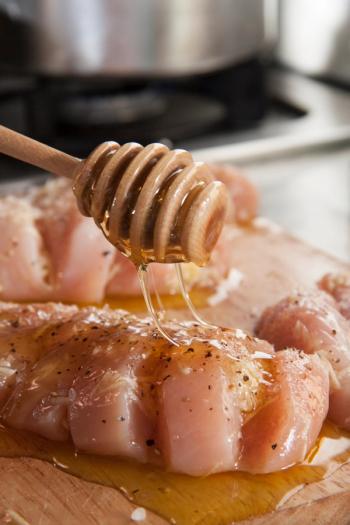
Samples of honey, chicken breast, and environmental water were analyzed for residue of nitroimidazoles, which are common antibiotics but can have detrimental effects on humans.

Nails were evaluated for their suitability as non-invasive biomarkers for exposure to antibiotics, even those that are commonly prescribed.

At ASMS, Brandon Ruotolo of the University of Michigan will be recognized as the 2023 Biemann Medal recipient. Here's a summary of the award session.

On Tuesday, June 6, from 8:30–10:30 am at ASMS, an oral session on drug metabolism and pharmacokinetics is taking place. We provide a summary about this session here.

On Tuesday, June 6, from 8:30–10:30 am at ASMS, an oral session on exposomics, toxicology, and health outcomes is taking place. We provide a summary about this session here.

On Tuesday, June 6, from 2:30–4:30 am at ASMS, an oral session on plants and natural products is taking place. We provide an overview about this session here.
On Tuesday, June 6, from 8:30–10:30 am at ASMS, an oral session on clinical analysis took place. We provide a summary about this session here.

At ASMS 2023, Sarah Rogstad of the US Food and Drug Administration reviewed and updated a retrospective analysis originally published in 2016.

Recombinant adeno-associated viruses (rAAV) have been the subject of much scientific investigation as their use in gene therapy enters the mainstream.

A new method for monitoring tricyclic antidepressants (TCA) in biological fluids and tissues in real time was proposed for the purposes of improving their effects or determining causes of death.

In a talk at ASMS 2023, Rebecca L. Beres of the University of North Carolina at Chapel Hill focused on two types of analysis methods: liquid chromatography coupled to tandem mass spectrometry (LC–MS/MS) and a liquid chromatography, ion mobility spectrometry, and mass spectrometry (LC–IMS-MS) platform.

At ASMS 2023, Bayan Almasri of the University of Lille proposed a combination of techniques for the deciphering of insoluble polyester polymer structure.
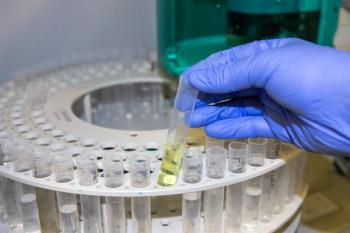
Extraction phase processes are well covered in literature, but lack of attention to the mechanism of these systems deprives researchers of information needed to evaluate their current and future use.
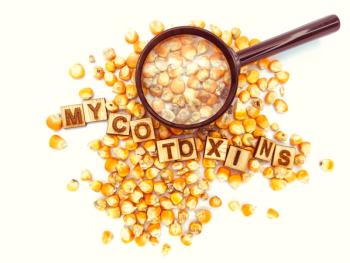
A selective adsorption material was sought to capture and possibly remove ochratoxin A (OTA) from food and environmental samples prior to high performance liquid chromatography (HPLC) analysis.

Rosuvastatin, lovastatin, and simvastatin were determined for dosage quality control in pharmaceutical formulations using hybrid micellar liquid chromatography (HMLC).

A new approach was sought for the simultaneous verification of carboxyl and aldehyde metabolites, including analytes that were previously undetectable.
Using intact protein separation (IPS) together with traditional peptide separation (PS) enhanced detection for LC–MS/MS better than either method could do independently.

Extraction of gasoline and its major aromatic groups was promising using a carbon nanotube-assisted solid-phase microextraction (CNT-SPME) fiber.

New MSPE-CE-DAD study indicates that efficiency remained above 75% even when a magnetic solid-phase extraction (MSPE) method was repeated five times, noting that the magnetic porous carbon (MPC) used in the extraction can be easily recycled.

Eighty drugs prohibited in athletic competition were analyzed, with seven samples returning adverse findings compared to previous methods.