
This LCGC Blog installment explains how NIST categorizes and certifies reference materials, and why they underpin reliable results in science and medicine.

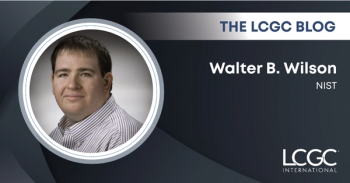
Walter Brent Wilson received his Ph. D. in analytical chemistry from the University of Central Florida (UCF) in August 2014, under the direction of Andres D. Campiglia. His research involved developing new methods for the extraction, separation, and spectroscopic detection of polycyclic aromatic compounds (PACs) from environmental samples. Prior to attending UCF, he earned a Bachelor of Science from Greensboro College and a Master of Science from the University of North Carolina at Greensboro. In February 2015, he was awarded a 2-year National Research Council postdoctoral fellowship at the National Institute of Standards and Technology (NIST) under the direction of Stephen A. Wise and Lane C. Sander. His research focused on shape-selective separations of PACs using normal-phase and reversed-phase liquid chromatography. After completion of this fellowship, he joined the Organic Chemical Measurement Science Group at NIST as a research chemist. He is currently coordinating their efforts to develop Cannabis Reference Materials and accurate analytical methods for determining Δ9-THC and other cannabinoids in Cannabis products across different sample matrices. He has published over 50 papers in international peer-reviewed journals or research reports.
This LCGC Blog installment explains how NIST categorizes and certifies reference materials, and why they underpin reliable results in science and medicine.

LCGC North America
Gas chromatography–mass spectrometry (GC–MS), reversed-phase LC with stop-flow fluorescence (FL), and constant energy synchronous fluorescence spectroscopy (CESFS) are explored to determine PAH isomers in three combustion-related standard reference materials.
